
How to Write a Book Summary: Expert-Backed Tips & Advice.
Writing a book summary helps you truly understand what you read while creating a handy reference you can return to at any time. Start by reading the book attentively and taking notes on key ideas, major plot developments, and important characters. Once you’ve gathered your notes, use them to draft a clear, concise summary, then revise and proofread it to make sure it accurately captures the book’s main points.
Method1 .Taking Notes of the Book

Step 1: Annotate the Text as You Read
Annotating while you read makes it much easier to locate important passages when it’s time to write your summary. Highlight, underline, or add notes to anything that feels confusing, important, surprising, or especially interesting. Pay attention to repeated ideas, inconsistencies, and connections between different sections of the book.
If the book is your own, don’t hesitate to write directly in it. If it isn’t, use sticky notes or annotation tabs to mark key passages instead.
Helpful resource:
- Cornell Note-Taking Method – overview and examples
https://lsc.cornell.edu/how-to-study/taking-notes/cornell-note-taking-system/
Step 2: Write Notes While Reading
Keep a notebook or digital document open as you read so you can capture ideas in real time. Writing notes as you go helps you record details accurately and saves you from having to search for information later.
Consider organizing your notes into different categories:
- General impressions and quick thoughts
- Lists of characters and major events
- Key themes, arguments, or ideas
You can also jot down unfamiliar words and look them up in a dictionary, recording their meanings for later reference.
Recommended tools:
- Merriam-Webster Dictionary
https://www.merriam-webster.com/ - Cambridge Dictionary
https://dictionary.cambridge.org/
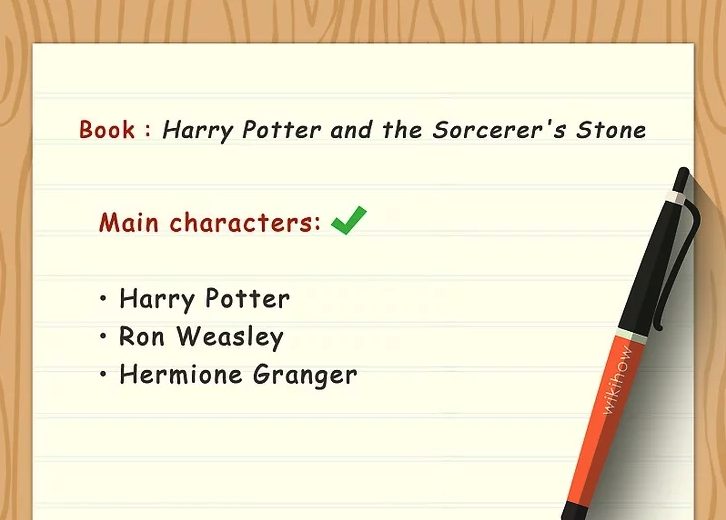
Step 3: Keep a Running List of Main Characters
As you read, maintain an updated list of the main characters. Include each character’s name, personality traits, motivations, and goals. These notes will help you understand how each character supports the book’s central themes.
If the story has a complex structure or shifts between timelines, creating a visual timeline of key events can also be very helpful—especially for novels with flashbacks or multiple plotlines.
Reference:
- How to Analyze Characters in Literature
https://www.masterclass.com/articles/how-to-analyze-characters-in-literature
Step 4: Break the Book into Sections
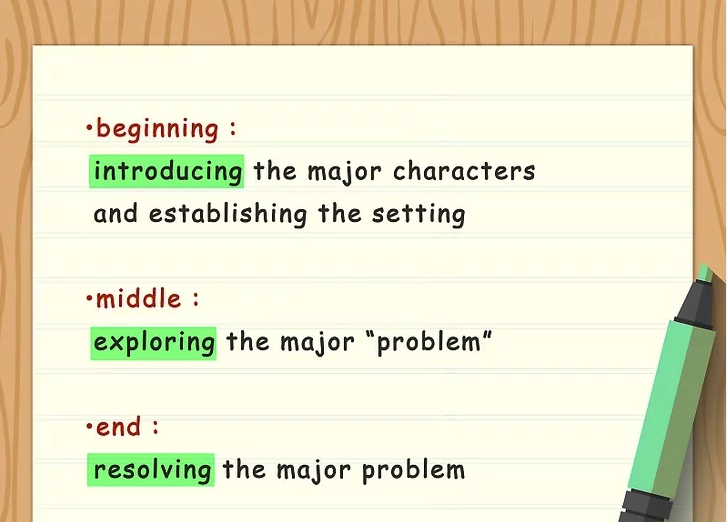
To avoid feeling overwhelmed, divide the book into three major parts: beginning, middle, and end. Organize your notes according to these sections.
- Beginning: Introduces the main characters and establishes the setting
- Middle: Develops the central conflict or problem
- End: Resolves the main conflict and concludes the story
This structure makes it easier to see how the narrative progresses and how ideas build on one another.
Further reading:
- Narrative Structure Explained
https://literarydevices.net/plot/
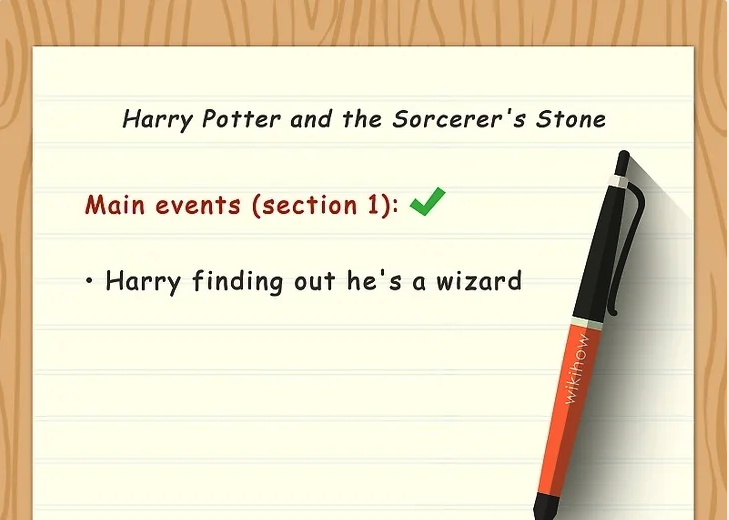
Step 5: Identify the Main Point of Each Section
Each section of the book serves a specific purpose. Ask yourself what the author emphasizes most in each part and how it contributes to the overall message. Also consider how the sections connect and build toward the conclusion.
This step ensures your summary reflects the book’s structure rather than just listing events.
Reference:
- Theme vs. Main Idea Explained
https://www.readingrockets.org/topics/comprehension/articles/theme-and-main-idea
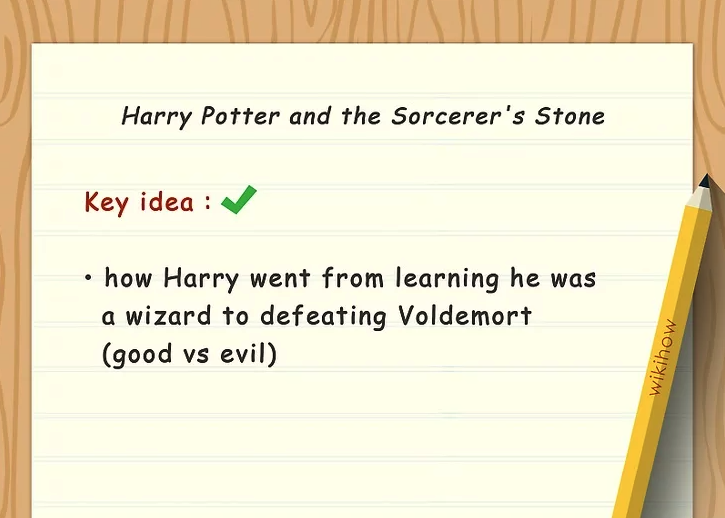
Step 6: Determine the Book’s One Key Idea
Finally, identify the single most important idea or lesson the book communicates. Look for themes that appear repeatedly, such as character flaws, moral lessons, or recurring arguments.
For example, a novel might emphasize how pride leads to poor decision-making by repeatedly placing the protagonist in situations they can’t handle. In nonfiction, the key idea may relate to society, history, or science—supported by evidence and examples throughout the text.
Additional resources:
- How to Find the Central Idea
https://owl.purdue.edu/owl/general_writing/academic_writing/reading_and_writing_about_texts/finding_the_central_idea.html
Method2 Drafting and Editing Your Summary

Step 1: Check the Length Requirements
Before you start writing, confirm whether there is a required word count for your summary. If this is a school assignment, teachers usually specify a minimum or maximum length. Aim to stay as close to that limit as possible.
A summary that’s too short may suggest you didn’t fully read the book, while one that’s too long may indicate you’re retelling rather than summarizing.
- For example, if the limit is 200 words, aim for 190–200 words.
- Even for personal use, keeping your summary under 500 words makes it easier to review later.
Reference:
- Academic Summary Length Guidelines
https://writingcenter.unc.edu/tips-and-tools/summary/
Step 2: Write the Summary in Chronological Order
A strong summary follows the order of events as they occur in the book. Begin at the start and move steadily toward the ending. Avoid jumping between chapters or timelines unless absolutely necessary.
Maintaining chronological order helps preserve the original structure and makes your summary easier to follow.
Further reading:
- How to Write a Clear Plot Summary
https://literarydevices.net/summary/
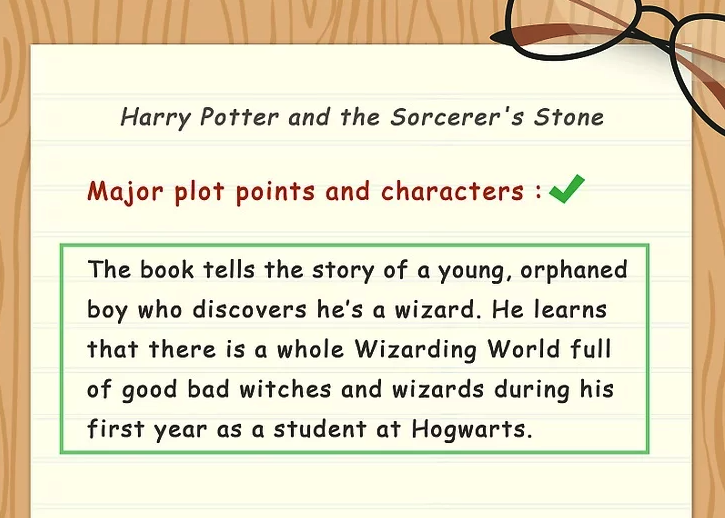
Step 3: Describe Major Plot Points and Characters
Start by introducing the book title and author, then briefly explain the central storyline and main characters. This should only take a few sentences and acts as the foundation of your summary.
For example:
J.K. Rowling’s Harry Potter and the Sorcerer’s Stone follows a young orphan who discovers he is a wizard and enters a hidden magical world while attending Hogwarts School of Witchcraft and Wizardry.
Helpful guide:
- How to Write a Book Introduction
https://www.masterclass.com/articles/how-to-write-a-book-summary
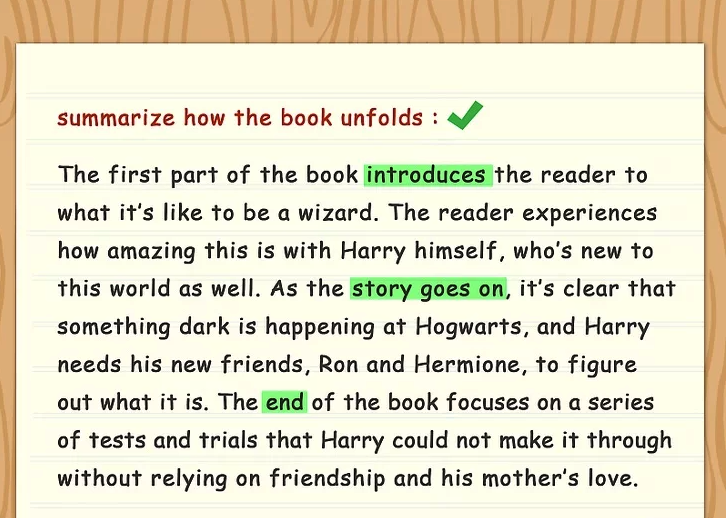
Step 4: Explain the Main Points of Each Section
Using your notes, summarize how the book develops from beginning to end. Spend a few sentences explaining what happens in each major section, how these parts connect, and why they matter to the overall story or argument.
This section should highlight progression—not minor details.
Reference:
- Understanding Plot Structure
https://www.storyboardthat.com/articles/e/plot-diagram
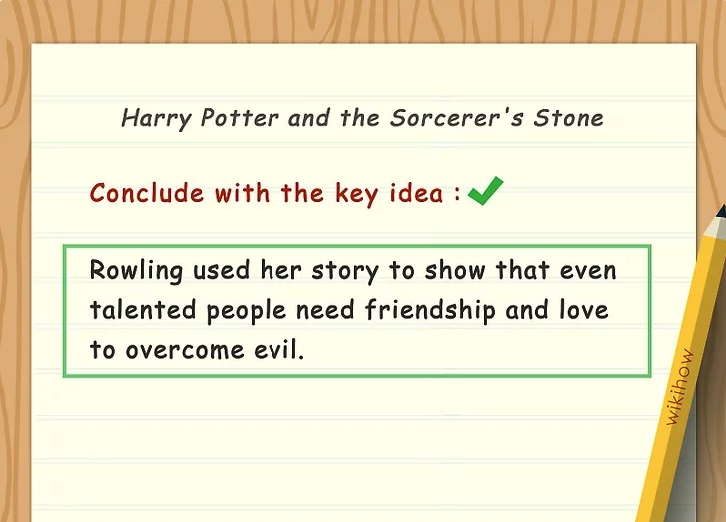
Step 5: Conclude with the Book’s Key Idea
End your summary by clearly stating the book’s central message or lesson. This should be based on recurring themes or ideas you noticed while reading. The final sentence should leave the reader with a clear understanding of the book’s purpose.
For example:
Rowling ultimately shows that friendship, love, and courage are more powerful than talent or ambition alone.
Further reading:
- Identifying Themes and Central Ideas
https://owl.purdue.edu/owl/general_writing/academic_writing/reading_and_writing_about_texts/finding_the_central_idea.html
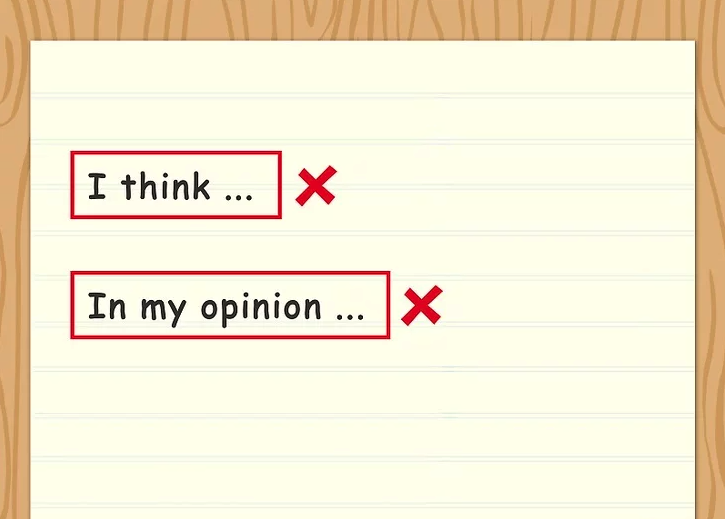
Step 6: Keep the Summary Objective
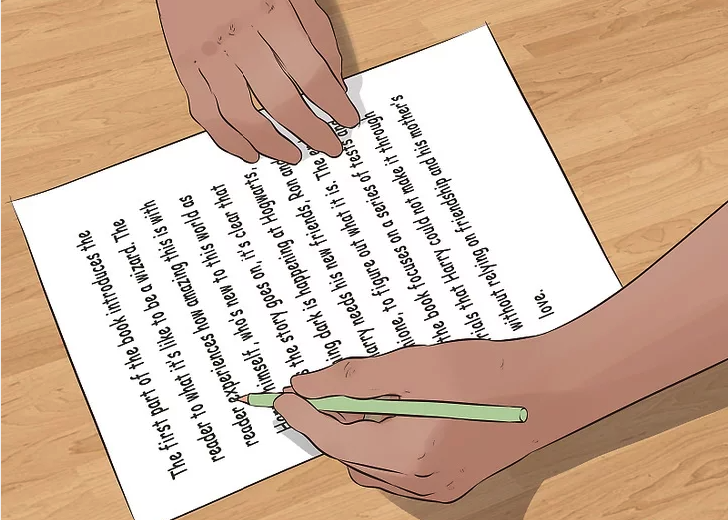
A summary should remain neutral and fact-based. Do not include personal opinions, emotional reactions, or judgments about the book or the author.
For instance, write:
Both Professor Quirrell and Lord Voldemort disappear after failing to obtain the Sorcerer’s Stone.
Instead of expressing how you feel about the outcome.
Reference:
- Objective vs. Subjective Writing
https://academicguides.waldenu.edu/writingcenter/scholarlyvoice/objective

Step 7: Proofread for Accuracy and Clarity
Carefully review your summary for spelling, grammar, and punctuation errors. Reading it out loud can help you spot awkward phrasing or missing words. Also, double-check your word count.
Spell-check tools are helpful, but they can’t catch contextual errors like confusing there, their, and they’re.
Editing tips:
- Proofreading Strategies
https://writingcenter.gmu.edu/writing-resources/revising-editing-and-proofreading
Step 8: Share Your Summary for Feedback
Having someone else read your summary is one of the best ways to improve it. A friend, classmate, or family member can catch mistakes you may have missed and point out unclear sections.
If you’re a student, exchanging summaries with classmates can also help both of you better understand the material.
Additional resource:
- Peer Review in Academic Writing
https://writingcenter.unc.edu/tips-and-tools/peer-review/
Reader Experiences
“I used to include far too many details, but this step-by-step method helped me focus on themes and structure.” — Emmanuel M.
“Learning how to track central ideas completely changed how I summarize books.” — Myrtha S.
“Summarizing used to stress me out—now it’s quick and painless.” — Manzi D.
Method3 Reading Carefully

Step 1: Find a Quiet, Distraction-Free Reading Space
Choose a calm environment where you can focus fully on reading. Stay away from the TV, silence your phone, and place it out of reach so it doesn’t distract you. Give your full attention to the book and enjoy the dedicated reading time.
Also make sure the lighting is good—sit near a window or use a desk lamp to avoid eye strain.
Helpful resource:
- How to Create a Distraction-Free Study Space
https://www.verywellmind.com/how-to-create-a-distraction-free-study-space-5199909
Step 2: Read the Book in Small Blocks
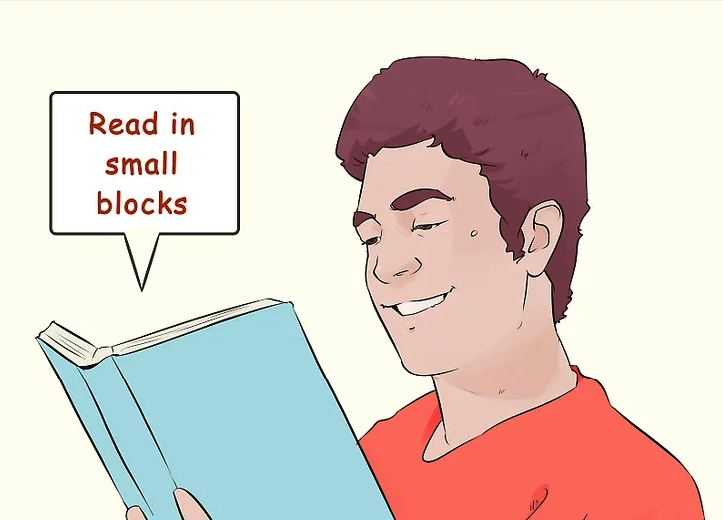
Instead of reading for hours straight, break your reading into manageable sessions. Aim for 20-minute blocks to avoid feeling overwhelmed. If you’re especially engaged, extending a session to an hour or two is fine.
Reading in smaller chunks helps you process information more effectively and retain key ideas.
Reference:
- The Science Behind Short Study Sessions
https://learningcenter.unc.edu/tips-and-tools/studying-101-study-smarter-not-harder/

Step 3: Plan Ahead If You’re on a Deadline
If you’re working with a deadline, plan your reading schedule early. Avoid cramming the entire book and summary into one exhausting night.
As a general guideline:
- Shorter books: allow about two weeks
- Longer books: allow around one month
Read a little each day to stay on track. For school or book club assignments, start as soon as the book is assigned—deadlines are usually designed to be manageable if you pace yourself.
Further reading:
- Time Management for Students
https://www.mindtools.com/ahk6x4u/time-management-skills
Step 4: Re-Read Important Passages
Key moments in a book often stand out naturally. If a main character experiences a major realization, a conflict escalates, or a sudden plot twist occurs, take time to re-read those sections carefully.
These passages typically focus on turning points rather than long descriptions and are essential for understanding the book’s core message.
Reference:
- Identifying Key Moments in Literature
https://literarydevices.net/climax/

Step 5: Focus on the Main Characters
The main characters drive the story and reveal its deeper meaning through their decisions, mistakes, and emotions. Pay close attention whenever they appear, as their actions often highlight the book’s central themes.
Tracking how these characters change over time will help you write a stronger, more accurate summary.
Helpful guide:
- Character Development Explained
https://www.masterclass.com/articles/what-is-character-development
Step 6: Don’t Get Lost in Minor Details
When preparing to write a summary, remember that not every detail belongs in it. Secondary characters, extended descriptions, and small side plots usually aren’t essential.
While these elements add depth to the story, a summary should focus on the main narrative and key ideas rather than minor details.
Reference:
- How to Distinguish Main Ideas from Details
https://www.readingrockets.org/topics/comprehension/articles/main-idea-and-details