How to Choose a Dictionary . Dictionaries are essential tools for language learners, writers, students, and professionals, but not all dictionaries are the same. The best one for you depends on your specific needs, such as whether you want definitions, pronunciation guidance, etymology, synonyms, usage examples, or specialized vocabulary. Before selecting a dictionary, consider factors like your purpose (e.g., everyday use, academic writing, language learning, or professional work), preferred format (print, online, or app), language focus (monolingual or bilingual), and features like audio pronunciations, usage notes, or illustrations. Popular options include Oxford, Merriam-Webster, Collins, and Cambridge, each with strengths in different areas.
Steps
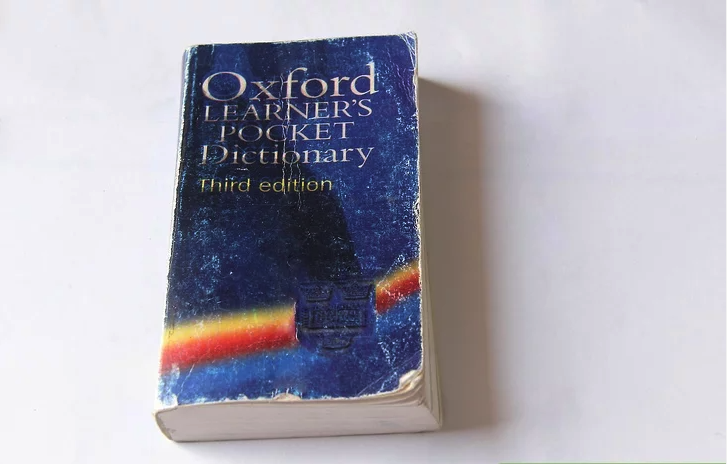
Step 1: Know What General Type of Dictionary You Need
Decide on these basics before shopping:
- Languages: Do you want a monolingual dictionary (definitions in the same language, e.g., English-to-English) or a bilingual/translating dictionary (e.g., English-to-Spanish or vice versa)?
- Size: For print versions, will you carry it in a pocket or purse (compact edition) or keep it on a desk (full-size or desk edition)?
- Scope: General-purpose dictionary or specialized (e.g., medical, legal, technical, music, or science terms)?
- Binding: Hardcover (more durable) or paperback (lighter)? Does it lie flat when open?
- Format: Print (no batteries needed, but updates require a new purchase) or digital (apps, online, or e-book versions with frequent updates and search features)?
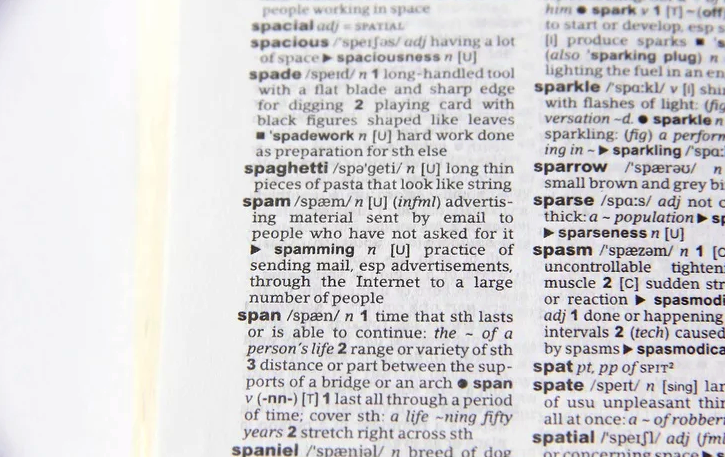
Step 2: Look for Newer Words
Check if the dictionary includes recent additions to the language, such as current technology terms (e.g., “NFT,” “AI,” “metaverse,” “cryptocurrency”) or modern slang.
New words are added regularly, so look for recent publication dates or update histories.
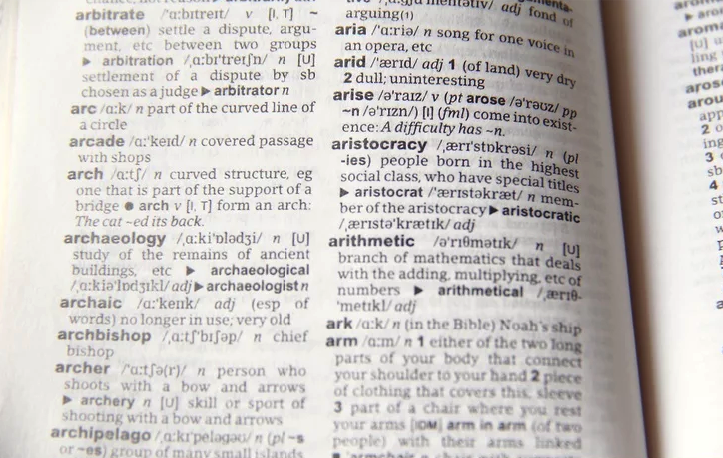
Step 3: Check for Proper Nouns
See if it includes place names (e.g., “Arizona”), famous people, historical figures, or brands (e.g., “Shakespeare,” “Elon Musk”). Some dictionaries include these in appendices or main entries.
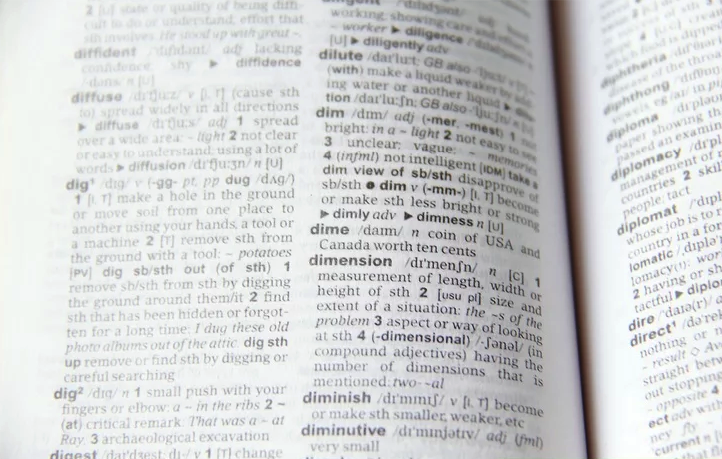
Step 4: Look for Slang and Vulgar Words
Even if you don’t plan to use them, understanding slang, idioms, and vulgar language helps you comprehend conversations or texts in the target language. Check sample entries for terms like “ghosting,” “lit,” or common profanities.
Step 5: Check for Regional Variations
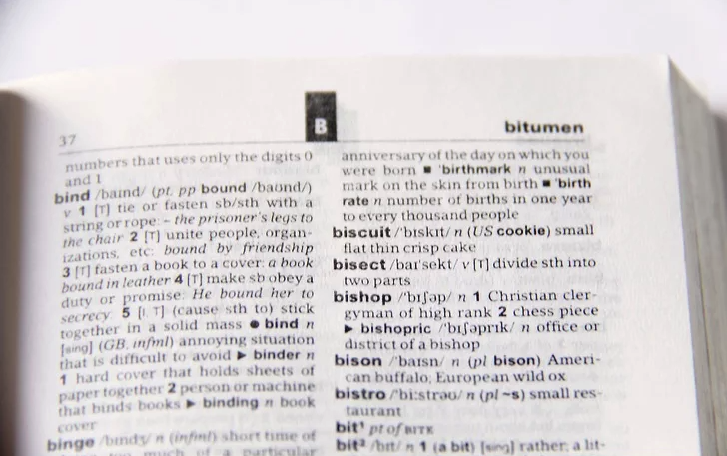
If the dictionary covers English or another language with regional differences, verify which variety it prioritizes (e.g., American vs. British English).
Examples: “Biscuit” (UK: small baked good; US: cookie-like), “chips” (UK: fries; US: crisps), or “rubber” (UK: eraser; US: condom).
Step 6: Examine the Front and Back Matter
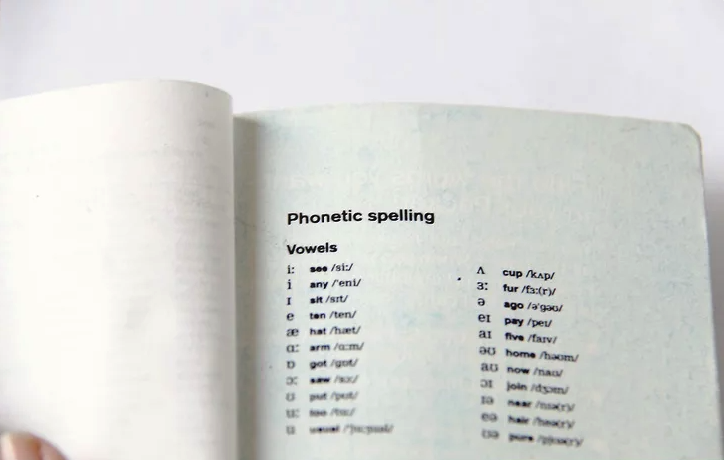
Review the pronunciation guide, usage notes, grammar sections, or phrasebooks. Is the pronunciation system intuitive (e.g., IPA vs. respelling)? For bilingual dictionaries, look for usage tips or appendices with common phrases.
Step 7: See How It Handles Words with Multiple Meanings
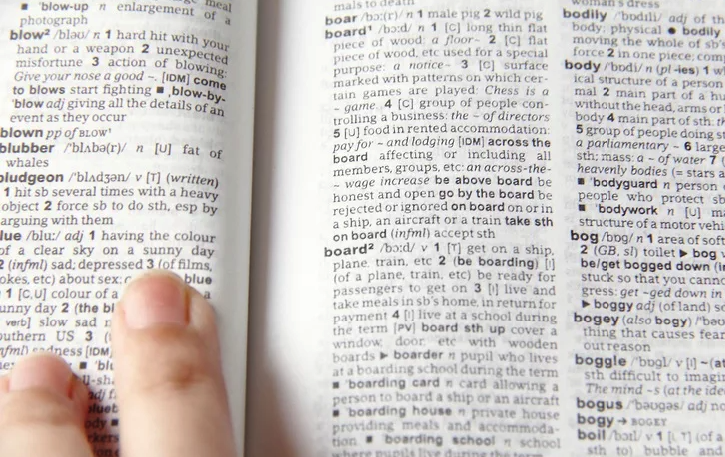
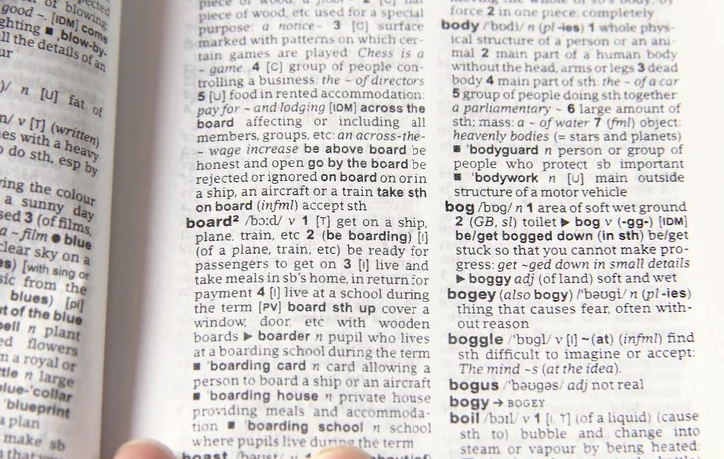
Test polysemous words like “board” (wood vs. committee) or “bank” (river side vs. financial institution). Good dictionaries number meanings and provide context or examples to clarify translations or usage.
Step 8: Check for Phrases and Idioms
Look for idiomatic expressions (e.g., “kick the bucket,” “spill the beans”). See if regional variations are noted and how they’re explained.
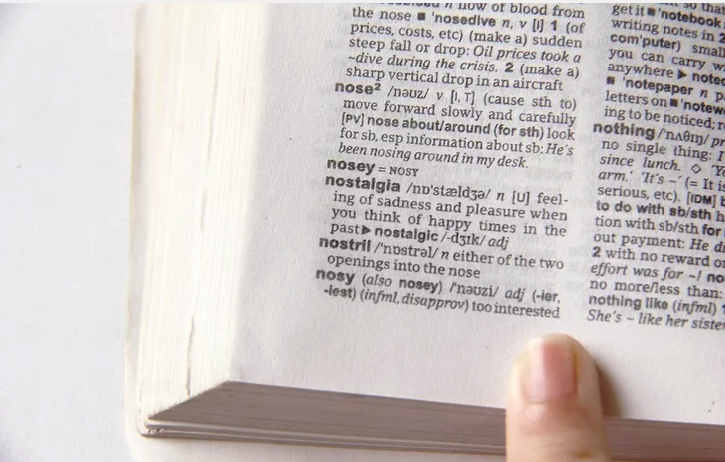
Step 9: Read Sample Definitions
Test both familiar and unfamiliar words. Are definitions clear and concise? Do they include:
- Etymologies (word origins)
- Usage examples or sentences
- Synonyms/antonyms
- Citations from real texts
- Illustrations or audio (in digital versions)?
References & Useful Links
- Merriam-Webster (American English): https://www.merriam-webster.com/
- Oxford English Dictionary (comprehensive, British-focused): https://www.oed.com/
- Cambridge Dictionary (learners’ focus, British/American): https://dictionary.cambridge.org/
- Collins Dictionary (strong on regional English and slang): https://www.collinsdictionary.com/
- Wiktionary (free, user-edited, includes slang and proper nouns): https://www.wiktionary.org/
- Guide to choosing dictionaries (from Oxford): https://languages.oup.com/choosing-a-dictionary/
- Article on modern dictionary features: https://www.theguardian.com/books/2023/sep/15/how-to-choose-the-best-dictionary
Note: Digital dictionaries (e.g., apps or online versions) often provide free access to core features and regular updates, making them ideal for many users in 2025. For print, check recent editions for the latest vocabulary.