Tag: dividends

  • Dividend Investing: Building a Passive Income Stream

    Dividend Investing: Building a Passive Income Stream

    Dividend investing provides one of the most reliable paths to building passive income and long-term wealth. According to Hartford Funds research, dividends have contributed approximately 40% of the S&P 500’s total return since 1930, making them a critical component of equity performance.

    Dividend Aristocrats Performance and Yield Analysis

    The Power of Dividend Compounding

    Since 1930, dividends have contributed approximately 40% of the S&P 500’s total return. When reinvested, dividends compound dramatically over time. A $10,000 investment in dividend-growing stocks in 1990 would be worth over $200,000 today with dividends reinvested, versus approximately $120,000 without reinvestment.

    Key Dividend Metrics

    Metric Definition Healthy Range Red Flag
    Dividend Yield Annual dividend / Price 2–6% >8% (likely unsustainable)
    Payout Ratio Dividends / Earnings 30–60% >80%
    Dividend Growth Annual increase rate 5–10% <3% or cuts
    Coverage Ratio Free Cash Flow / Dividend >1.5x <1.2x

    Dividend Aristocrats and Kings

    Dividend Aristocrats are S&P 500 companies that have increased dividends for 25+ consecutive years. Dividend Kings have raised dividends for 50+ years. These companies demonstrate exceptional financial resilience and shareholder commitment. Notable examples include Johnson & Johnson (62 years), Coca-Cola (62 years), and Procter & Gamble (68 years).

    Dividend Growth vs High Yield Strategy Comparison

    Dividend Growth vs. High Yield Strategy

    Investors face a fundamental choice between current income (high yield) and growing income (dividend growth). High-yield strategies provide more income today but carry reinvestment risk and sustainability concerns. Dividend growth strategies start with lower yields but produce substantially higher income over time.

    Tax Treatment of Qualified vs Non-Qualified Dividends

    Tax Optimization for Dividend Investors

    Qualified dividends are taxed at preferential capital gains rates (0%, 15%, or 20%), while non-qualified dividends face ordinary income tax rates. Place high-yield, non-qualified dividend payers in tax-advantaged accounts and qualified dividend stocks in taxable accounts for maximum tax efficiency. See our tax optimization guide for more strategies.

    Risk Warning

    Dividend cuts are devastating—both financially and psychologically. During the 2008–2009 financial crisis, S&P 500 dividend cuts exceeded $60 billion. Always evaluate dividend sustainability through payout ratios, cash flow coverage, and business fundamentals rather than chasing the highest yields.

    References & Further Reading

    1. Hartford Funds — Dividend Research
    2. S&P Dow Jones — Dividend Aristocrats Index

    Take the next step—explore our Financial Tools or Learning Center for more in-depth guidance.

  • Real Estate Investment Trusts (REITs): A Guide for Income Investors

    Real Estate Investment Trusts (REITs): A Guide for Income Investors

    Real Estate Investment Trusts (REITs) offer one of the most accessible ways to invest in real estate without the hassles of property management. By law, REITs must distribute at least 90% of taxable income as dividends, making them particularly attractive for income-focused investors. According to NAREIT, the FTSE Nareit All Equity REITs Index has delivered an average annual total return of 11.4% since 1972, combining price appreciation with substantial dividend income.

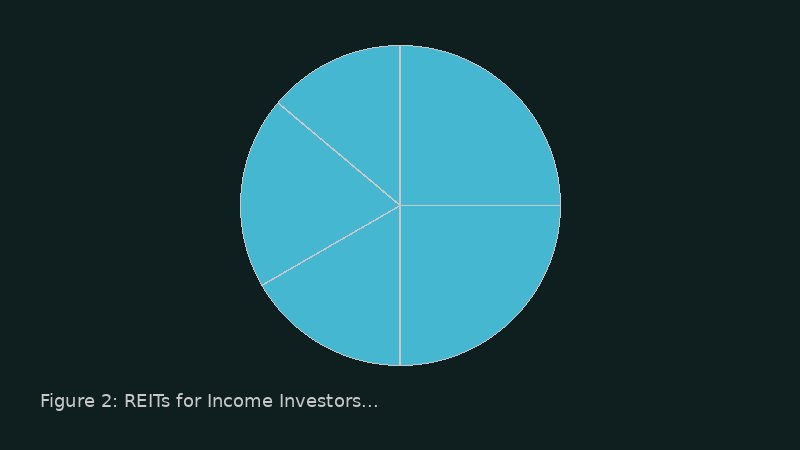
    REIT Sector Performance and Dividend Yield Comparison

    Types of REITs

    Equity REITs

    Own and manage income-producing real estate. Revenue comes primarily from rental income. These represent the majority of publicly traded REITs and offer the most direct exposure to property market fundamentals.

    Mortgage REITs (mREITs)

    Finance real estate by originating or purchasing mortgages and mortgage-backed securities. They earn the spread between their borrowing costs and the interest income on mortgage assets. mREITs offer higher yields but carry significant interest rate risk.

    Hybrid REITs

    Combine both equity and mortgage strategies, though these have become less common in recent years.

    REIT Sector Allocation and Performance by Property Type

    REIT Sector Dividend Yield YTD Return Key Risk
    Industrial/Logistics 3.2% +8.5% E-commerce slowdown
    Data Centers 3.8% +15.2% Tech spending cuts
    Residential 4.1% +5.3% Oversupply risk
    Healthcare 5.2% +3.1% Occupancy pressure
    Office 6.8% -2.4% Remote work trend
    Retail 5.5% +4.7% Consumer spending

    Benefits and Risks of REIT Investing

    Key Benefits

    • High Dividend Income: Average yield of 4–6%, significantly above the S&P 500 average
    • Inflation Protection: Property values and rents typically rise with inflation
    • Diversification: Low correlation with stocks and bonds (0.55–0.65 with S&P 500)
    • Liquidity: Publicly traded REITs can be bought and sold instantly, unlike physical property

    Key Risks

    • Interest Rate Sensitivity: REITs underperform during rising rate environments (see our Fed rate analysis)
    • Sector-Specific Risks: Office REITs face structural headwinds from remote work
    • Economic Sensitivity: Recession reduces occupancy and rental income
    • Leverage: Most REITs carry 30–50% debt-to-asset ratios

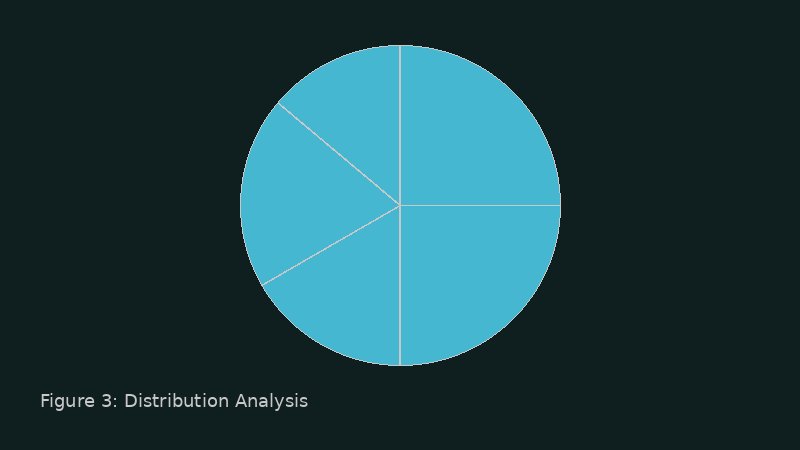
    REIT Correlation with Other Asset Classes

    How to Invest in REITs

    For most investors, broad REIT ETFs provide the best combination of diversification and low cost. Popular options include VNQ (Vanguard Real Estate ETF, 0.12% expense ratio) and VNQI (Vanguard Global ex-US Real Estate ETF). Allocate 5–15% of your portfolio to real estate, depending on your income needs and risk tolerance.

    References & Further Reading

    1. NAREIT — REIT Industry Data and Research
    2. Vanguard — REIT ETF Information
    3. CoStar — Commercial Real Estate Data

    Calculate your potential REIT income with our Investment Calculator.

  • Tax-Loss Harvesting: A Strategy to Reduce Your Tax Bill

    Tax-Loss Harvesting: A Strategy to Reduce Your Tax Bill

    Tax-loss harvesting is one of the most powerful yet underutilized strategies available to investors in taxable accounts. By strategically selling investments at a loss to offset capital gains, you can significantly reduce your annual tax bill while maintaining your desired market exposure. According to IRS rules, this strategy is perfectly legal and widely recommended by financial advisors. In this guide, we will walk through the mechanics, rules, and best practices of tax-loss harvesting.

    Tax-Loss Harvesting Strategy Flowchart and Process Diagram

    How Tax-Loss Harvesting Works

    When you sell an investment that has declined in value, you realize a capital loss. This loss can be used to offset capital gains from other investments in the same tax year. If your total losses exceed your total gains, you can deduct up to $3,000 per year ($1,500 if married filing separately) against ordinary income, with any excess losses carried forward to future years.

    Consider this example: You have $10,000 in long-term capital gains from selling appreciated stocks. By harvesting $10,000 in losses from underperforming positions, you can eliminate your capital gains tax entirely for that year—potentially saving $1,500–$2,000 in taxes depending on your tax bracket.

    The Wash-Sale Rule: Critical IRS Regulation

    The IRS prohibits buying a “substantially identical” security within 30 days before or after selling at a loss. If you violate this rule, the loss is disallowed and added to the cost basis of the replacement security. This means you cannot simply sell and immediately repurchase the same stock to capture the tax benefit.

    Wash-Sale Rule Timeline and Compliance Requirements

    Practical Workarounds

    • ETF Substitution: Sell an S&P 500 mutual fund at a loss and purchase a total market ETF (e.g., replace VFIAX with VTI)
    • Sector Rotation: Swap between similar but not identical sector ETFs
    • Wait 31 Days: Sell the position and repurchase after the 31-day window

    Quantifying the Benefit

    Research from Vanguard estimates that tax-loss harvesting can improve after-tax returns by 0.5–1.5% annually for a typical diversified portfolio. Over a 30-year investment horizon, this seemingly small improvement can add hundreds of thousands of dollars to your wealth due to compounding.

    Portfolio Value Harvestable Loss Tax Savings (24% rate) 30-Year Compounded Value
    $100,000 $15,000 $3,600 $28,400+
    $500,000 $75,000 $18,000 $142,000+
    $1,000,000 $150,000 $36,000 $284,000+

    Best Practices for Tax-Loss Harvesting

    As we discussed in our dollar-cost averaging guide, systematic investment approaches tend to outperform ad-hoc strategies. The same principle applies to tax-loss harvesting:

    1. Harvest Throughout the Year: Don’t wait until December. Market dips can occur at any time, and early harvesting allows more time for recovery before repurchase.
    2. Consider Transaction Costs: Ensure the tax benefit exceeds trading commissions and bid-ask spreads.
    3. Maintain Market Exposure: Always reinvest proceeds immediately in a similar (but not identical) security to avoid cash drag.
    4. Track All Transactions: Use portfolio management software to monitor cost basis, wash-sale windows, and cumulative harvested losses.
    5. Coordinate with Rebalancing: Combine harvesting with portfolio rebalancing for dual benefit—tax savings plus improved asset allocation.

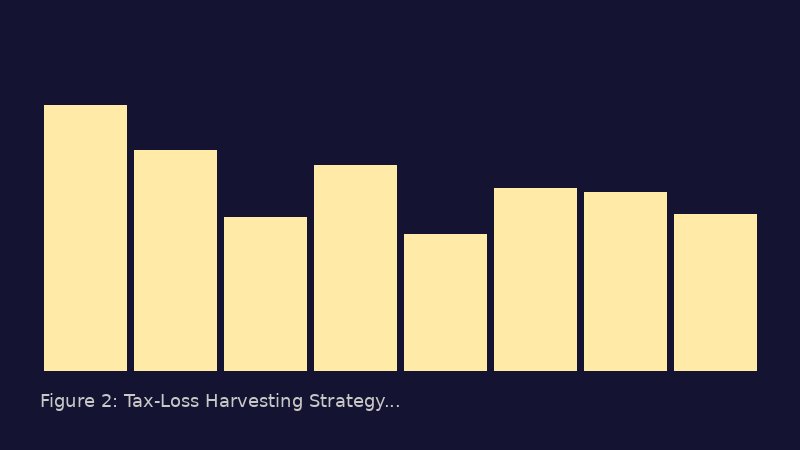
    Tax-Loss Harvesting Annual Benefit Distribution Analysis

    Common Mistakes to Avoid

    • Violating the wash-sale rule across accounts (including IRAs and spouse’s accounts)
    • Harvesting short-term losses when you have long-term gains (less tax-efficient)
    • Ignoring state tax implications
    • Failing to track carried-forward losses
    • Over-harvesting and creating excessive cash positions

    Risk Considerations

    Tax-loss harvesting is not without risks. Market timing—even unintentional—can reduce returns if the replacement security performs differently from the harvested position. Additionally, converting long-term capital gains into short-term gains through improper harvesting can increase your tax burden. Always consult a tax professional for personalized advice.

    References & Further Reading

    1. IRS Publication 550 — Investment Income and Expenses
    2. Vanguard Research — Tax-Alpha from Loss Harvesting
    3. AQR Capital Management — Tax Management Research

    Want to optimize your tax strategy? Use our Financial Tools to calculate your potential tax savings from loss harvesting.