Environmental, Social, and Governance (ESG) investing has moved from niche to mainstream, with global ESG assets exceeding $35 trillion according to Bloomberg. As investors increasingly seek to align their portfolios with their values, understanding ESG frameworks, performance implications, and implementation strategies becomes essential for modern portfolio construction.
Understanding ESG Criteria
Environmental (E)
Climate change risk, carbon emissions, energy efficiency, waste management, water usage, and biodiversity impact. Companies are scored on their environmental footprint and transition readiness.
Social (S)
Employee treatment, diversity and inclusion, labor practices, community relations, product safety, and human rights in supply chains. Social factors increasingly affect brand value and regulatory risk.
Governance (G)
Board composition, executive compensation, shareholder rights, accounting transparency, anti-corruption policies, and business ethics. Strong governance reduces fraud and mismanagement risk.
Does ESG Investing Sacrifice Returns?
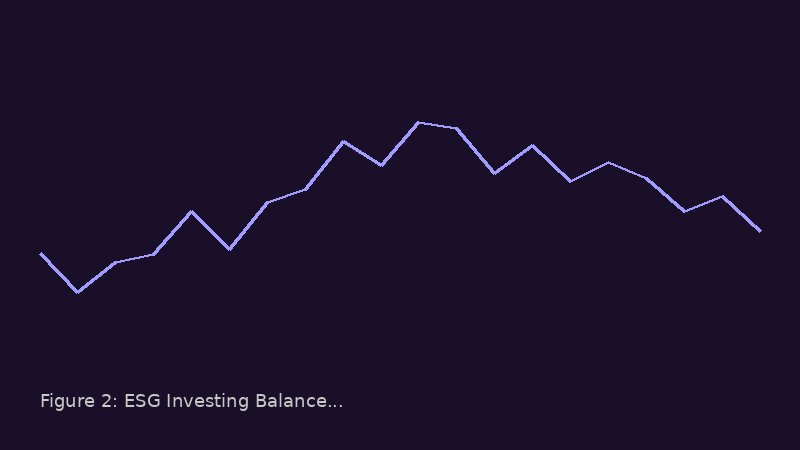
The evidence is mixed. Meta-analyses by MSCI suggest that companies with high ESG ratings exhibit lower cost of capital, lower volatility, and fewer tail risk events. However, ESG funds have underperformed in energy-heavy markets and may carry higher fees.
| ESG Strategy | Avg. Annual Return | Expense Ratio | Tracking Error |
|---|---|---|---|
| Broad ESG Index | 10.2% | 0.15% | 1.2% |
| Ex-Fossil Fuels | 9.8% | 0.20% | 2.1% |
| Best-in-Class | 10.5% | 0.35% | 1.8% |
| Impact/Thematic | 8.9% | 0.60% | 4.5% |
Practical ESG Implementation
- Start with low-cost ESG ETFs: iShares ESG Aware MSCI USA (ESGU) at 0.15% expense ratio
- Focus on material ESG issues: Not all ESG factors matter equally for each sector
- Avoid greenwashing: Look for funds with transparent methodology and third-party verification
- Maintain diversification: Don’t sacrifice core portfolio principles for ESG alignment
- Use active ownership: Vote proxies and engage with companies on ESG improvements

Risk Considerations
ESG ratings vary significantly across agencies—MSCI, Sustainalytics, and CDP often disagree on the same company. This inconsistency creates implementation challenges. Additionally, ESG exclusionary screens can reduce diversification and increase concentration risk. Always evaluate ESG strategies within the context of your overall portfolio objectives.
References & Further Reading
- MSCI — ESG Ratings and Research
- GIIN — Global Impact Investing Network
- UN PRI — Principles for Responsible Investment
Evaluate ESG scores with our Market Analysis tools.