Tag: housing

  • Housing Market Outlook 2025: What Homebuyers and Sellers Need to Know

    Housing Market Outlook 2025: What Homebuyers and Sellers Need to Know

    The U.S. housing market continues to evolve amid shifting mortgage rates, supply constraints, and demographic trends. According to National Association of Realtors, existing home sales have stabilized near 4.1 million units annually, while median prices have reached $420,000—a 5.2% increase year-over-year.

    Housing Market Trends and Mortgage Rate Impact

    Current Market Overview (2025–2026)

    The U.S. housing market is characterized by a persistent supply-demand imbalance. According to Freddie Mac, the 30-year fixed mortgage rate has stabilized near 6.5%, down from the 7.8% peak in late 2023 but well above the sub-3% rates of 2020–2021.

    Market Metric Current 1 Year Ago 5 Years Ago
    Median Home Price $420,000 $399,000 $280,000
    30-Year Mortgage Rate 6.5% 7.2% 3.0%
    Monthly Payment (Median) $2,110 $2,160 $943
    Existing Home Sales 4.1M AR 3.8M AR 5.6M AR
    Months of Supply 3.2 2.9 4.5

    Key Factors Shaping the Market

    Mortgage Rate Outlook

    Most economists expect rates to gradually decline toward 5.5–6.0% by late 2026 as the Fed continues easing. However, persistent inflation and fiscal concerns may keep rates elevated longer than anticipated. As analyzed in our Fed rate impact article, monetary policy is the primary driver of mortgage rates.

    Supply Constraints

    The U.S. faces a housing deficit estimated at 3–5 million units. New construction has increased but remains below the 1.5 million annual starts needed to keep pace with household formation and replacement of aging stock.

    Housing Affordability Index by Region

    Advice for Buyers and Sellers

    For Buyers

    • Get pre-approved before shopping—sellers require proof of financing
    • Focus on affordability (housing costs <30% of gross income) not timing
    • Consider ARMs if you plan to move within 7 years
    • Don’t wait for rates to drop significantly—refinance later if they do

    For Sellers

    • Price competitively—buyers have more options than in recent years
    • Invest in curb appeal and staging—first impressions matter
    • Consider rate buydowns to help buyers afford your home

    Home Price Forecast by Metropolitan Area

    Investment Implications

    For real estate investors, the current environment favors rental properties over flipping. Rising mortgage rates have increased the renter pool, supporting rental income growth. REITs may offer better liquidity and diversification than direct property ownership—see our REITs guide for details.

    Risk Warning

    Housing markets are local—national trends may not reflect conditions in your area. Always analyze local supply/demand dynamics, employment trends, and demographic shifts before making real estate decisions. Property investments carry illiquidity risk and concentration risk that differ from financial assets.

    References & Further Reading

    1. National Association of Realtors — Housing Market Data
    2. Freddie Mac — Primary Mortgage Market Survey

    Take the next step—explore our Financial Tools or Learning Center for more in-depth guidance.

  • Real Estate Investment Trusts (REITs): A Guide for Income Investors

    Real Estate Investment Trusts (REITs): A Guide for Income Investors

    Real Estate Investment Trusts (REITs) offer one of the most accessible ways to invest in real estate without the hassles of property management. By law, REITs must distribute at least 90% of taxable income as dividends, making them particularly attractive for income-focused investors. According to NAREIT, the FTSE Nareit All Equity REITs Index has delivered an average annual total return of 11.4% since 1972, combining price appreciation with substantial dividend income.

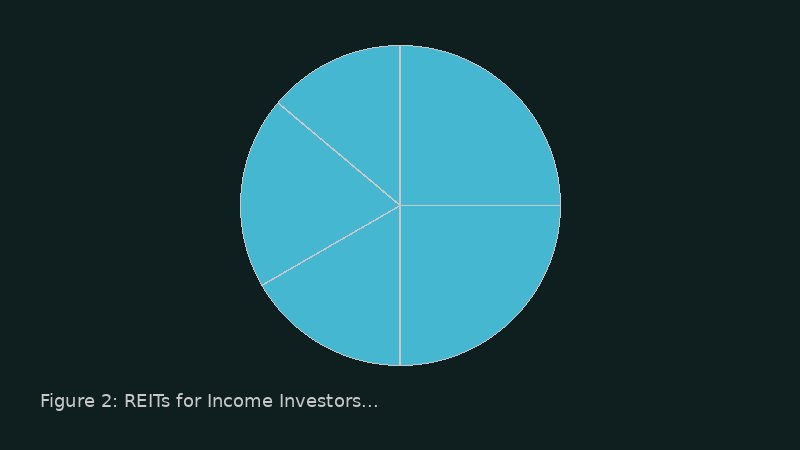
    REIT Sector Performance and Dividend Yield Comparison

    Types of REITs

    Equity REITs

    Own and manage income-producing real estate. Revenue comes primarily from rental income. These represent the majority of publicly traded REITs and offer the most direct exposure to property market fundamentals.

    Mortgage REITs (mREITs)

    Finance real estate by originating or purchasing mortgages and mortgage-backed securities. They earn the spread between their borrowing costs and the interest income on mortgage assets. mREITs offer higher yields but carry significant interest rate risk.

    Hybrid REITs

    Combine both equity and mortgage strategies, though these have become less common in recent years.

    REIT Sector Allocation and Performance by Property Type

    REIT Sector Dividend Yield YTD Return Key Risk
    Industrial/Logistics 3.2% +8.5% E-commerce slowdown
    Data Centers 3.8% +15.2% Tech spending cuts
    Residential 4.1% +5.3% Oversupply risk
    Healthcare 5.2% +3.1% Occupancy pressure
    Office 6.8% -2.4% Remote work trend
    Retail 5.5% +4.7% Consumer spending

    Benefits and Risks of REIT Investing

    Key Benefits

    • High Dividend Income: Average yield of 4–6%, significantly above the S&P 500 average
    • Inflation Protection: Property values and rents typically rise with inflation
    • Diversification: Low correlation with stocks and bonds (0.55–0.65 with S&P 500)
    • Liquidity: Publicly traded REITs can be bought and sold instantly, unlike physical property

    Key Risks

    • Interest Rate Sensitivity: REITs underperform during rising rate environments (see our Fed rate analysis)
    • Sector-Specific Risks: Office REITs face structural headwinds from remote work
    • Economic Sensitivity: Recession reduces occupancy and rental income
    • Leverage: Most REITs carry 30–50% debt-to-asset ratios

    REIT Correlation with Other Asset Classes

    How to Invest in REITs

    For most investors, broad REIT ETFs provide the best combination of diversification and low cost. Popular options include VNQ (Vanguard Real Estate ETF, 0.12% expense ratio) and VNQI (Vanguard Global ex-US Real Estate ETF). Allocate 5–15% of your portfolio to real estate, depending on your income needs and risk tolerance.

    References & Further Reading

    1. NAREIT — REIT Industry Data and Research
    2. Vanguard — REIT ETF Information
    3. CoStar — Commercial Real Estate Data

    Calculate your potential REIT income with our Investment Calculator.