Tag: inflation

  • Housing Market Outlook 2025: What Homebuyers and Sellers Need to Know

    Housing Market Outlook 2025: What Homebuyers and Sellers Need to Know

    The U.S. housing market continues to evolve amid shifting mortgage rates, supply constraints, and demographic trends. According to National Association of Realtors, existing home sales have stabilized near 4.1 million units annually, while median prices have reached $420,000—a 5.2% increase year-over-year.

    Housing Market Trends and Mortgage Rate Impact

    Current Market Overview (2025–2026)

    The U.S. housing market is characterized by a persistent supply-demand imbalance. According to Freddie Mac, the 30-year fixed mortgage rate has stabilized near 6.5%, down from the 7.8% peak in late 2023 but well above the sub-3% rates of 2020–2021.

    Market Metric Current 1 Year Ago 5 Years Ago
    Median Home Price $420,000 $399,000 $280,000
    30-Year Mortgage Rate 6.5% 7.2% 3.0%
    Monthly Payment (Median) $2,110 $2,160 $943
    Existing Home Sales 4.1M AR 3.8M AR 5.6M AR
    Months of Supply 3.2 2.9 4.5

    Key Factors Shaping the Market

    Mortgage Rate Outlook

    Most economists expect rates to gradually decline toward 5.5–6.0% by late 2026 as the Fed continues easing. However, persistent inflation and fiscal concerns may keep rates elevated longer than anticipated. As analyzed in our Fed rate impact article, monetary policy is the primary driver of mortgage rates.

    Supply Constraints

    The U.S. faces a housing deficit estimated at 3–5 million units. New construction has increased but remains below the 1.5 million annual starts needed to keep pace with household formation and replacement of aging stock.

    Housing Affordability Index by Region

    Advice for Buyers and Sellers

    For Buyers

    • Get pre-approved before shopping—sellers require proof of financing
    • Focus on affordability (housing costs <30% of gross income) not timing
    • Consider ARMs if you plan to move within 7 years
    • Don’t wait for rates to drop significantly—refinance later if they do

    For Sellers

    • Price competitively—buyers have more options than in recent years
    • Invest in curb appeal and staging—first impressions matter
    • Consider rate buydowns to help buyers afford your home

    Home Price Forecast by Metropolitan Area

    Investment Implications

    For real estate investors, the current environment favors rental properties over flipping. Rising mortgage rates have increased the renter pool, supporting rental income growth. REITs may offer better liquidity and diversification than direct property ownership—see our REITs guide for details.

    Risk Warning

    Housing markets are local—national trends may not reflect conditions in your area. Always analyze local supply/demand dynamics, employment trends, and demographic shifts before making real estate decisions. Property investments carry illiquidity risk and concentration risk that differ from financial assets.

    References & Further Reading

    1. National Association of Realtors — Housing Market Data
    2. Freddie Mac — Primary Mortgage Market Survey

    Take the next step—explore our Financial Tools or Learning Center for more in-depth guidance.

  • The Impact of Inflation on Your Investment Returns

    The Impact of Inflation on Your Investment Returns

    Inflation is often called the “silent thief” of investment returns because it erodes purchasing power gradually and invisibly. If your portfolio returns 8% but inflation runs at 3%, your real return is only about 5%. Over a 30-year retirement, this difference can mean hundreds of thousands of dollars in lost purchasing power. Understanding and protecting against inflation is essential for achieving your financial goals.

    The Impact of Inflation on Your Investment Returns - Figure 1

    Real vs. Nominal Returns: The Critical Distinction

    The nominal return is what you see on your statement. The real return—what actually matters—is the nominal return minus inflation. According to Bureau of Labor Statistics data, U.S. inflation has averaged approximately 3.1% annually since 1926.

    Real vs Nominal Investment Returns Over 30 Years

    Asset Class Nominal Return Inflation Real Return Purchasing Power After 30Y
    S&P 500 10.7% 3.1% 7.4% $1 → $8.15
    Long-Term Bonds 5.5% 3.1% 2.3% $1 → $2.00
    Cash/Money Market 4.5% 3.1% 1.4% $1 → $1.52
    Gold 5.2% 3.1% 2.0% $1 → $1.82
    Real Estate 8.5% 3.1% 5.2% $1 → $4.49

    Inflation-Resistant Investment Strategies

    1. TIPS (Treasury Inflation-Protected Securities): Principal adjusts with CPI; guaranteed real return
    2. I Bonds: Currently yielding above 3.5%; $10,000 annual purchase limit per person
    3. Real Estate: Property values and rental income tend to rise with inflation; explore our REITs guide
    4. Commodities: Gold, energy, and agricultural products serve as inflation hedges
    5. Equities with Pricing Power: Companies that can raise prices without losing customers
    6. Short-Duration Bonds: Less sensitive to rate hikes that accompany rising inflation

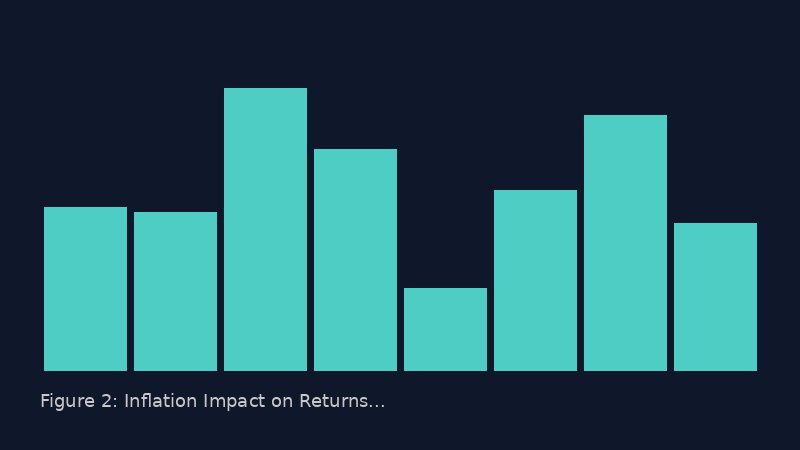
    Inflation Hedging Asset Performance Comparison

    Current Inflation Environment (2026)

    CPI has moderated from the 9.1% peak in June 2022 to approximately 2.8% as of mid-2026. However, services inflation remains sticky above 4%, and shelter costs continue to rise. The Fed’s target of 2% has not been sustainably achieved, suggesting that elevated inflation may persist longer than markets currently price in.

    Risk Warning

    No investment perfectly hedges inflation in all environments. Even TIPS can underperform during periods of rising real yields. Diversification across multiple inflation-sensitive assets provides the most robust protection. As discussed in our Fed rate analysis, monetary policy responses to inflation create additional portfolio risks.

    References & Further Reading

    1. Bureau of Labor Statistics — Consumer Price Index Data
    2. FRED — Inflation and Economic Data
    3. IMF — World Economic Outlook

    Take action on these insights—explore our Financial Tools or join our community for ongoing discussion.

  • 401(k) vs IRA: Which Retirement Account Is Right for You?

    401(k) vs IRA: Which Retirement Account Is Right for You?

    Choosing between a 401(k) and an IRA is one of the most consequential financial decisions you will make. Both offer significant tax advantages, but they differ in contribution limits, investment options, employer benefits, and withdrawal rules. This comprehensive comparison will help you optimize your retirement savings strategy.

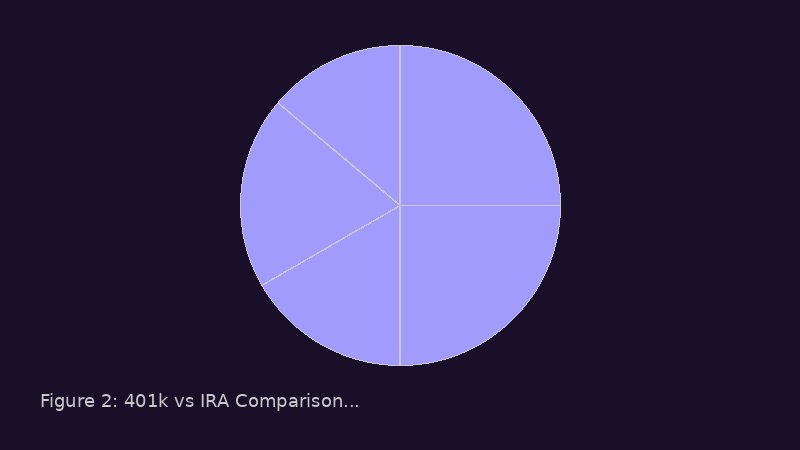
    401k vs IRA Comparison Chart Showing Key Differences

    Understanding 401(k) Plans

    A 401(k) plan is an employer-sponsored retirement account that allows pre-tax contributions, tax-deferred growth, and often includes employer matching contributions. According to IRS guidelines, the 2026 contribution limit is $23,000 ($30,500 for those aged 50+ with catch-up contributions).

    Key 401(k) Advantages

    • Higher Contribution Limits: $23,000 vs. $7,000 for IRAs—over 3x more tax-advantaged space
    • Employer Match: Free money—typically 3–6% of salary. Not matching is leaving compensation on the table
    • Roth Option: Many plans now offer a Roth 401(k) with no income limits (unlike Roth IRA)
    • Plan Loans: Ability to borrow up to 50% of vested balance (use with extreme caution)

    Understanding IRAs

    Individual Retirement Accounts offer greater investment flexibility and are available to anyone with earned income. The 2026 contribution limit is $7,000 ($8,000 if age 50+). As Investopedia details, IRAs come in two primary varieties with distinct tax treatments.

    Traditional vs Roth IRA Tax Treatment Comparison

    Feature 401(k) Traditional IRA Roth IRA
    Contribution Limit (2026) $23,000 $7,000 $7,000
    Employer Match Yes No No
    Income Limits None Deduction limits $146k–$161k (single)
    Tax Treatment Pre-tax Pre-tax After-tax
    Withdrawal Tax Ordinary income Ordinary income Tax-free
    RMD Age 73 73 None
    Investment Options Limited (plan-specific) Unlimited Unlimited

    The Optimal Strategy: Contribution Waterfall

    Financial advisors widely recommend the following priority order, which maximizes the combined benefits of both account types:

    1. 401(k) up to employer match — This is guaranteed return on your money. If your employer matches 50% up to 6%, contributing 6% yields an immediate 3% return
    2. Max out Roth IRA — Tax-free growth and withdrawal in retirement provides invaluable flexibility
    3. Return to 401(k) — Contribute remaining amount up to the $23,000 limit
    4. Consider HSA — If you have a high-deductible health plan, the HSA offers a triple tax advantage
    5. Taxable brokerage — For savings beyond tax-advantaged account limits

    Retirement Savings Priority Waterfall Strategy

    Common Mistakes to Avoid

    • Not capturing full employer match—this is equivalent to declining free compensation
    • Keeping default investments without reviewing fees and allocation
    • Cashing out when changing jobs instead of rolling over to an IRA
    • Taking early withdrawals (10% penalty plus taxes)
    • Ignoring Roth conversion opportunities during low-income years

    For a deeper dive into retirement income strategies, see our Social Security optimization guide and our asset allocation tools.

    Risk Considerations

    All retirement accounts involve investment risk. Your 401(k) or IRA balance will fluctuate with market conditions. However, the tax advantages of these accounts are guaranteed by law, making them superior to taxable saving for retirement regardless of market performance. Time in the market, not timing the market, is the key to success.

    References & Further Reading

    1. IRS — Retirement Plans Tax Information
    2. Investopedia — Retirement Account Comparison
    3. Vanguard — Retirement Planning Resources

    Ready to optimize your retirement savings? Try our Retirement Calculator or subscribe for weekly retirement planning tips.