Blog

  • Building an Emergency Fund: Your Financial Safety Net

    Building an Emergency Fund: Your Financial Safety Net

    An emergency fund is the foundation of financial resilience. It provides a critical buffer against unexpected expenses—medical bills, car repairs, job loss—without forcing you to liquidate investments at unfavorable prices or accumulate high-interest debt. According to the Federal Reserve’s Survey of Household Economics and Decisionmaking, nearly 37% of Americans would struggle to cover an unexpected $400 expense, highlighting the urgent need for emergency savings.

    Building an Emergency Fund - Figure 1

    How Much Should You Save?

    Financial experts generally recommend maintaining 3–6 months of essential living expenses in your emergency fund. However, the ideal amount depends on your personal circumstances:

    • Single, stable employment: 3 months of expenses
    • Married with dependents: 6 months of expenses
    • Self-employed or variable income: 6–12 months
    • Near retirement: 12–24 months (reduced ability to recover from setbacks)
    Emergency Fund Size Recommendations by Employment Type

    Where to Keep Your Emergency Fund

    The primary requirement is liquidity—you need immediate access when emergencies strike. According to Bankrate, the best vehicles include:

    Vehicle Current Yield Liquidity FDIC Insured Best For
    High-Yield Savings 4.5–5.0% Immediate Yes ($250k) Primary emergency fund
    Money Market 4.0–4.5% Check writing Yes Slightly larger expenses
    T-Bills (4-week) 4.3–4.8% Weekly auction US Gov Excess cash
    I Bonds 3.5%+ After 1 year US Gov Long-term inflation hedge

    Step-by-Step Building Strategy

    1. Start with $1,000: This mini emergency fund covers most minor unexpected expenses and prevents credit card reliance
    2. Automate contributions: Set up automatic transfers of 10–20% of take-home pay on payday
    3. Use windfalls wisely: Direct tax refunds, bonuses, and side income to your emergency fund until fully funded
    4. Reduce expenses: Temporarily cut discretionary spending by 15–20% during the building phase
    5. Maintain discipline: Only withdraw for genuine emergencies—define criteria in advance

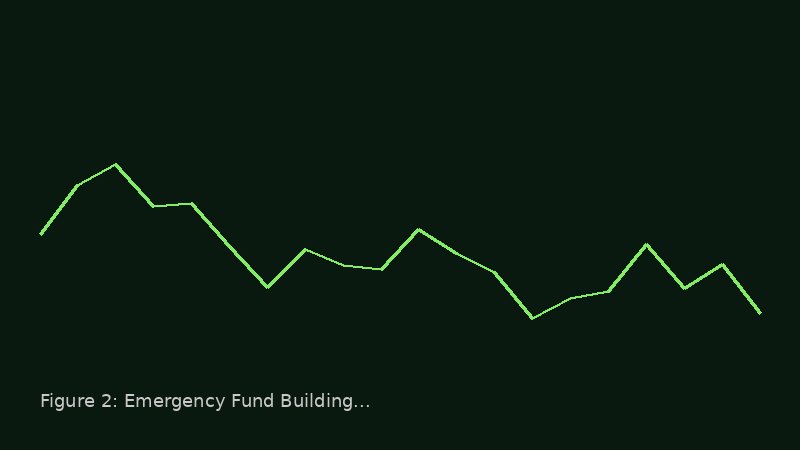
    Emergency Fund Building Timeline and Milestone Chart

    Common Mistakes

    • Keeping emergency funds in checking accounts earning 0% interest
    • Investing emergency funds in stocks (market downturns often coincide with job loss)
    • Using emergency funds for non-emergencies (vacations, planned expenses)
    • Not rebuilding after withdrawals
    • Confusing emergency funds with sinking funds for predictable expenses

    A properly funded emergency fund is the bridge between financial stability and long-term wealth building. Once established, you can confidently invest for the future, knowing you have a safety net. For related strategies, see our inflation impact analysis and tax optimization guide.

    References & Further Reading

    1. Federal Reserve — Household Economic Well-being Report
    2. Bankrate — High-Yield Savings Account Comparison
    3. Consumer Financial Protection Bureau — Emergency Savings Guidance

    Take action on these insights—explore our Financial Tools or join our community for ongoing discussion.


  • 401(k) vs IRA: Which Retirement Account Is Right for You?

    401(k) vs IRA: Which Retirement Account Is Right for You?

    Choosing between a 401(k) and an IRA is one of the most consequential financial decisions you will make. Both offer significant tax advantages, but they differ in contribution limits, investment options, employer benefits, and withdrawal rules. This comprehensive comparison will help you optimize your retirement savings strategy.

    401k vs IRA Comparison Chart Showing Key Differences

    Understanding 401(k) Plans

    A 401(k) plan is an employer-sponsored retirement account that allows pre-tax contributions, tax-deferred growth, and often includes employer matching contributions. According to IRS guidelines, the 2026 contribution limit is $23,000 ($30,500 for those aged 50+ with catch-up contributions).

    Key 401(k) Advantages

    • Higher Contribution Limits: $23,000 vs. $7,000 for IRAs—over 3x more tax-advantaged space
    • Employer Match: Free money—typically 3–6% of salary. Not matching is leaving compensation on the table
    • Roth Option: Many plans now offer a Roth 401(k) with no income limits (unlike Roth IRA)
    • Plan Loans: Ability to borrow up to 50% of vested balance (use with extreme caution)

    Understanding IRAs

    Individual Retirement Accounts offer greater investment flexibility and are available to anyone with earned income. The 2026 contribution limit is $7,000 ($8,000 if age 50+). As Investopedia details, IRAs come in two primary varieties with distinct tax treatments.

    Traditional vs Roth IRA Tax Treatment Comparison

    Feature 401(k) Traditional IRA Roth IRA
    Contribution Limit (2026) $23,000 $7,000 $7,000
    Employer Match Yes No No
    Income Limits None Deduction limits $146k–$161k (single)
    Tax Treatment Pre-tax Pre-tax After-tax
    Withdrawal Tax Ordinary income Ordinary income Tax-free
    RMD Age 73 73 None
    Investment Options Limited (plan-specific) Unlimited Unlimited

    The Optimal Strategy: Contribution Waterfall

    Financial advisors widely recommend the following priority order, which maximizes the combined benefits of both account types:

    1. 401(k) up to employer match — This is guaranteed return on your money. If your employer matches 50% up to 6%, contributing 6% yields an immediate 3% return
    2. Max out Roth IRA — Tax-free growth and withdrawal in retirement provides invaluable flexibility
    3. Return to 401(k) — Contribute remaining amount up to the $23,000 limit
    4. Consider HSA — If you have a high-deductible health plan, the HSA offers a triple tax advantage
    5. Taxable brokerage — For savings beyond tax-advantaged account limits

    Retirement Savings Priority Waterfall Strategy

    Common Mistakes to Avoid

    • Not capturing full employer match—this is equivalent to declining free compensation
    • Keeping default investments without reviewing fees and allocation
    • Cashing out when changing jobs instead of rolling over to an IRA
    • Taking early withdrawals (10% penalty plus taxes)
    • Ignoring Roth conversion opportunities during low-income years

    For a deeper dive into retirement income strategies, see our Social Security optimization guide and our asset allocation tools.

    Risk Considerations

    All retirement accounts involve investment risk. Your 401(k) or IRA balance will fluctuate with market conditions. However, the tax advantages of these accounts are guaranteed by law, making them superior to taxable saving for retirement regardless of market performance. Time in the market, not timing the market, is the key to success.

    References & Further Reading

    1. IRS — Retirement Plans Tax Information
    2. Investopedia — Retirement Account Comparison
    3. Vanguard — Retirement Planning Resources

    Ready to optimize your retirement savings? Try our Retirement Calculator or subscribe for weekly retirement planning tips.

  • Bitcoin at $100K: Analyzing the Crypto Market Rally

    Bitcoin at $100K: Analyzing the Crypto Market Rally

    Bitcoin has reached the historic $100,000 milestone, driven by institutional adoption, spot ETF approvals, and macroeconomic tailwinds. This analysis examines the key drivers behind this rally, evaluates sustainability factors, and provides a framework for prudent crypto allocation within a diversified portfolio.

    Bitcoin Price Chart Showing Rally to $100,000 Milestone

    Key Drivers of the Bitcoin Rally

    According to data from CoinDesk and Bloomberg, several factors have converged to push Bitcoin to six figures:

    1. Spot ETF Approvals

    The SEC’s approval of Bitcoin spot ETFs in January 2024 opened the floodgates for institutional capital. BlackRock’s iShares Bitcoin Trust (IBIT) has amassed over $50 billion in assets, making it one of the fastest-growing ETFs in history. This institutional validation has fundamentally changed Bitcoin’s market structure.

    2. The Halving Cycle

    Bitcoin’s fourth halving in April 2024 reduced the block reward from 6.25 to 3.125 BTC, cutting the rate of new supply entering the market by 50%. Historically, halving events have preceded significant bull runs within 12–18 months.

    3. Macro Environment

    Federal Reserve rate cuts beginning in late 2025 have boosted risk assets broadly. As we analyzed in our Fed rate impact article, easing monetary policy creates a favorable backdrop for speculative assets like Bitcoin.

    Bitcoin Institutional Adoption Trend and ETF Inflows

    Market Structure Evolution

    Metric 2023 2024 2025 2026 (YTD)
    Bitcoin Price $42,000 $68,000 $85,000 $100,000+
    ETF AUM $0 $25B $45B $60B+
    Daily Volume $15B $30B $45B $50B+
    Hash Rate 500 EH/s 600 EH/s 750 EH/s 850 EH/s

    Risks and Considerations

    Despite the bullish momentum, several risks warrant careful attention:

    • Regulatory Uncertainty: SEC enforcement actions and potential congressional legislation could restrict market access
    • Volatility: Bitcoin’s 60-day realized volatility remains above 50%, significantly higher than equities
    • Environmental Concerns: Proof-of-work mining consumes substantial energy, facing increasing ESG scrutiny
    • Competition: Central Bank Digital Currencies (CBDCs) and layer-1 alternatives could reduce Bitcoin’s market share
    • Correlation Risk: Bitcoin’s correlation with equities has increased, reducing its diversification benefit

    Crypto Portfolio Allocation Risk-Return Analysis

    Recommended Allocation Framework

    Based on research from Fidelity Digital Assets and our own analysis, we recommend the following approach:

    1. Core Allocation: 1–3% of total portfolio value for conservative investors; 3–5% for those with higher risk tolerance
    2. Entry Strategy: Use dollar-cost averaging over 6–12 months rather than lump-sum investing
    3. Storage: For allocations above 1%, consider self-custody with a hardware wallet; smaller amounts can remain on regulated exchanges
    4. Rebalancing: Set target allocation and rebalance quarterly—take profits when crypto exceeds target by more than 50%

    Risk Warning

    Cryptocurrency investments carry substantial risk, including the possibility of total loss. Bitcoin has experienced drawdowns exceeding 70% on multiple occasions. Never invest money you cannot afford to lose, and always maintain adequate emergency savings before allocating to speculative assets. For guidance on building your safety net, see our emergency fund guide.

    References & Further Reading

    1. IRS — Retirement Plans Tax Information
    2. Investopedia — Retirement Account Comparison
    3. Vanguard — Retirement Planning Resources

    Ready to optimize your retirement savings? Try our Retirement Calculator or subscribe for weekly retirement planning tips.

  • Tax-Loss Harvesting: A Strategy to Reduce Your Tax Bill

    Tax-Loss Harvesting: A Strategy to Reduce Your Tax Bill

    Tax-loss harvesting is one of the most powerful yet underutilized strategies available to investors in taxable accounts. By strategically selling investments at a loss to offset capital gains, you can significantly reduce your annual tax bill while maintaining your desired market exposure. According to IRS rules, this strategy is perfectly legal and widely recommended by financial advisors. In this guide, we will walk through the mechanics, rules, and best practices of tax-loss harvesting.

    Tax-Loss Harvesting Strategy Flowchart and Process Diagram

    How Tax-Loss Harvesting Works

    When you sell an investment that has declined in value, you realize a capital loss. This loss can be used to offset capital gains from other investments in the same tax year. If your total losses exceed your total gains, you can deduct up to $3,000 per year ($1,500 if married filing separately) against ordinary income, with any excess losses carried forward to future years.

    Consider this example: You have $10,000 in long-term capital gains from selling appreciated stocks. By harvesting $10,000 in losses from underperforming positions, you can eliminate your capital gains tax entirely for that year—potentially saving $1,500–$2,000 in taxes depending on your tax bracket.

    The Wash-Sale Rule: Critical IRS Regulation

    The IRS prohibits buying a “substantially identical” security within 30 days before or after selling at a loss. If you violate this rule, the loss is disallowed and added to the cost basis of the replacement security. This means you cannot simply sell and immediately repurchase the same stock to capture the tax benefit.

    Wash-Sale Rule Timeline and Compliance Requirements

    Practical Workarounds

    • ETF Substitution: Sell an S&P 500 mutual fund at a loss and purchase a total market ETF (e.g., replace VFIAX with VTI)
    • Sector Rotation: Swap between similar but not identical sector ETFs
    • Wait 31 Days: Sell the position and repurchase after the 31-day window

    Quantifying the Benefit

    Research from Vanguard estimates that tax-loss harvesting can improve after-tax returns by 0.5–1.5% annually for a typical diversified portfolio. Over a 30-year investment horizon, this seemingly small improvement can add hundreds of thousands of dollars to your wealth due to compounding.

    Portfolio Value Harvestable Loss Tax Savings (24% rate) 30-Year Compounded Value
    $100,000 $15,000 $3,600 $28,400+
    $500,000 $75,000 $18,000 $142,000+
    $1,000,000 $150,000 $36,000 $284,000+

    Best Practices for Tax-Loss Harvesting

    As we discussed in our dollar-cost averaging guide, systematic investment approaches tend to outperform ad-hoc strategies. The same principle applies to tax-loss harvesting:

    1. Harvest Throughout the Year: Don’t wait until December. Market dips can occur at any time, and early harvesting allows more time for recovery before repurchase.
    2. Consider Transaction Costs: Ensure the tax benefit exceeds trading commissions and bid-ask spreads.
    3. Maintain Market Exposure: Always reinvest proceeds immediately in a similar (but not identical) security to avoid cash drag.
    4. Track All Transactions: Use portfolio management software to monitor cost basis, wash-sale windows, and cumulative harvested losses.
    5. Coordinate with Rebalancing: Combine harvesting with portfolio rebalancing for dual benefit—tax savings plus improved asset allocation.

    Tax-Loss Harvesting Annual Benefit Distribution Analysis

    Common Mistakes to Avoid

    • Violating the wash-sale rule across accounts (including IRAs and spouse’s accounts)
    • Harvesting short-term losses when you have long-term gains (less tax-efficient)
    • Ignoring state tax implications
    • Failing to track carried-forward losses
    • Over-harvesting and creating excessive cash positions

    Risk Considerations

    Tax-loss harvesting is not without risks. Market timing—even unintentional—can reduce returns if the replacement security performs differently from the harvested position. Additionally, converting long-term capital gains into short-term gains through improper harvesting can increase your tax burden. Always consult a tax professional for personalized advice.

    References & Further Reading

    1. IRS Publication 550 — Investment Income and Expenses
    2. Vanguard Research — Tax-Alpha from Loss Harvesting
    3. AQR Capital Management — Tax Management Research

    Want to optimize your tax strategy? Use our Financial Tools to calculate your potential tax savings from loss harvesting.

  • Federal Reserve Interest Rate Decision: What It Means for Your Portfolio

    Federal Reserve Interest Rate Decision: What It Means for Your Portfolio

    The Federal Reserve’s interest rate decisions represent one of the most powerful forces shaping global financial markets. Every FOMC meeting has the potential to redirect trillions of dollars across asset classes, affecting everything from your savings account yield to your stock portfolio’s valuation. Understanding how Fed policy impacts your investments is not just academic—it is essential for making informed portfolio decisions.

    Federal Reserve Interest Rate Decision Impact on Financial Markets

    How the Federal Reserve Sets Interest Rates

    The Federal Open Market Committee (FOMC) meets eight times per year to set the target range for the federal funds rate. This rate influences the cost of borrowing throughout the entire economy. According to the Federal Reserve, the fed funds rate serves as the benchmark for short-term interest rates across the financial system.

    The current target rate as of mid-2026 stands at 4.75–5.00%, reflecting the Fed’s ongoing effort to balance inflation control with economic growth support. This follows the aggressive tightening cycle of 2022–2023 and the gradual easing that began in late 2025.

    Impact on Different Asset Classes

    Equities

    When the Fed raises rates, stock valuations face pressure through multiple channels. Higher discount rates reduce the present value of future earnings, particularly affecting growth stocks with distant cash flows. The technology sector, which comprises roughly 30% of the S&P 500, is especially sensitive to rate changes. As we explored in our S&P 500 complete guide, this concentration amplifies the index’s rate sensitivity.

    Interest Rate Impact on Different Asset Classes Bar Chart

    Fixed Income

    Bond prices move inversely to interest rates—a fundamental relationship that every investor must understand. When rates rise by 1%, a bond with a duration of 10 years will decline approximately 10% in price. However, rising rates also mean higher yields for new bond purchases, which benefits long-term income investors.

    Asset Class Rising Rate Impact Falling Rate Impact Sensitivity
    Growth Stocks Negative Positive High
    Value Stocks Mixed Mixed Moderate
    Long-Term Bonds Strongly Negative Strongly Positive Very High
    Short-Term Bonds Slightly Negative Slightly Positive Low
    Real Estate/REITs Negative Positive High
    Gold Mixed Mixed Variable
    Cash/Money Market Positive Negative Low

    Real Estate

    Higher mortgage rates directly reduce housing affordability and slow home price appreciation. The 30-year fixed mortgage rate has moved from historic lows near 2.65% in 2021 to above 6.5% in 2026, fundamentally altering the housing market dynamics. REITs also face pressure as higher borrowing costs compress profit margins.

    What Should Investors Do?

    According to research from BlackRock, the optimal portfolio response to changing rate environments involves several strategic adjustments:

    1. Review Fixed-Income Duration: In a rising rate environment, shorten bond portfolio duration. Consider shifting from long-term bond funds to short-term or floating-rate alternatives.
    2. Emphasize Quality: Focus on companies with strong balance sheets, consistent cash flows, and low debt-to-equity ratios. These firms are better positioned to weather higher borrowing costs.
    3. Maintain Diversification: As discussed in our inflation impact analysis, diversification across asset classes provides resilience against rate-driven market shifts.
    4. Consider Floating-Rate Instruments: Bank loan funds and floating-rate notes adjust their yields as rates change, providing natural hedging.
    5. Evaluate Cash Allocation: Money market funds and high-yield savings accounts now offer meaningful returns—take advantage of this opportunity.

    Portfolio Allocation Strategy Under Different Rate Environments

    Historical Rate Cycles and Market Performance

    Data from FRED (Federal Reserve Economic Data) shows that equity markets have historically performed well during the early stages of rate cutting cycles. The 12-month period following the first rate cut has produced average S&P 500 returns of approximately 15% since 1980.

    Risk Warning

    Interest rate predictions are inherently uncertain. The Fed’s decisions depend on evolving economic data, and markets can move sharply in either direction. Investors should avoid making dramatic portfolio changes based solely on rate expectations and instead focus on maintaining well-diversified, appropriately allocated portfolios aligned with their long-term goals.

    References & Further Reading

    1. Federal Reserve — FOMC Monetary Policy
    2. FRED — Federal Funds Rate Historical Data
    3. BlackRock — Investment Institute Research
    4. IMF — World Economic Outlook

    Stay ahead of Fed decisions—subscribe to our newsletter for real-time market analysis and actionable investment insights.

  • Understanding the S&P 500: A Complete Guide for Beginners

    Understanding the S&P 500: A Complete Guide for Beginners

    The S&P 500 is one of the most widely followed stock market indices in the world, serving as the primary benchmark for U.S. large-cap equities. Whether you are a seasoned investor or just beginning your financial journey, understanding how this index works is fundamental to building a well-diversified portfolio. In this comprehensive guide, we will explore the history, composition, performance characteristics, and practical investment strategies related to the S&P 500.

    S&P 500 Historical Performance Chart Showing Long-term Growth Trend

    What Is the S&P 500?

    The S&P 500, formally known as the Standard & Poor’s 500, is a market-capitalization-weighted index that tracks the performance of 500 leading companies listed on U.S. stock exchanges. Maintained by S&P Dow Jones Indices, it represents approximately 80% of the total U.S. equity market capitalization, making it the most representative gauge of American large-cap stocks.

    Unlike the Dow Jones Industrial Average, which is price-weighted and includes only 30 companies, the S&P 500 provides broader market exposure and is calculated using a float-adjusted market-cap methodology. This means that only shares available for public trading (free float) are counted, providing a more accurate reflection of investable market value.

    Historical Performance and Key Statistics

    According to data from Macrotrends, the S&P 500 has delivered an average annual return of approximately 10.7% before inflation and 7.4% after inflation since its inception in 1957. These returns have been remarkably consistent over long time horizons, despite significant short-term volatility.

    S&P 500 Sector Allocation Breakdown by Market Capitalization
    MetricValuePeriod
    Average Annual Return10.7%1957–2025
    Real Return (After Inflation)7.4%1957–2025
    Best Year+54.0%1954
    Worst Year-43.3%1931
    Average P/E Ratio16.5xHistorical
    Current Dividend Yield1.3%June 2026

    How to Invest in the S&P 500

    There are several ways to gain exposure to the S&P 500, each with distinct advantages. For most individual investors, low-cost index funds and ETFs represent the most efficient approach. As we discussed in our guide on dollar-cost averaging, consistent periodic investments in broad market indices have historically outperformed most active management strategies.

    Index Funds vs. ETFs

    Both index mutual funds and ETFs track the S&P 500, but they differ in trading mechanics and tax efficiency:

    • Vanguard 500 Index Fund (VFIAX) — Expense ratio: 0.04%, minimum investment: $3,000
    • SPDR S&P 500 ETF (SPY) — Expense ratio: 0.09%, trades like a stock throughout the day
    • iShares Core S&P 500 ETF (IVV) — Expense ratio: 0.03%, strong liquidity
    • Vanguard S&P 500 ETF (VOO) — Expense ratio: 0.03%, popular among long-term investors

    According to Morningstar, the average expense ratio for S&P 500 index funds has declined to just 0.05% as of 2025, making passive investing more cost-effective than ever.

    S&P 500 Asset Allocation Distribution Pie Chart

    Current Market Environment (2026)

    As of June 2026, the S&P 500 trades at a forward P/E ratio of approximately 21x, slightly above the historical average of 16.5x. The technology sector continues to dominate, representing roughly 30% of the index weight. Key factors influencing the current market include Federal Reserve monetary policy, AI-driven corporate earnings growth, and geopolitical uncertainties.

    For investors concerned about valuations, our analysis of inflation’s impact on returns provides important context for understanding real vs. nominal performance in the current environment.

    Risk Factors and Considerations

    While the S&P 500 has been an excellent long-term investment, investors should be aware of several risks:

    1. Market Concentration: The top 10 holdings represent over 35% of the index, creating concentration risk
    2. Valuation Risk: Current P/E ratios are elevated relative to historical norms
    3. Sector Imbalance: Technology overweight may amplify drawdowns during sector rotations
    4. Drawdown Risk: Historical maximum drawdown exceeded 50% during the 2008 financial crisis

    Practical Recommendations

    Based on our analysis, we recommend the following approach for S&P 500 investors:

    • Allocate 40–60% of your equity portfolio to S&P 500 index funds
    • Complement with international diversification (see our portfolio construction guide)
    • Use dollar-cost averaging for new investments
    • Rebalance annually to maintain target allocations
    • Keep investment costs below 0.10% when possible

    Conclusion

    The S&P 500 remains the gold standard for U.S. equity investing. Its broad diversification, low-cost accessibility, and consistent long-term returns make it an essential component of any investment portfolio. However, investors must remain mindful of concentration risk and valuation levels, particularly in the current elevated market environment.

    Disclaimer: This article is for informational purposes only and does not constitute investment advice. Past performance is not indicative of future results. Always consult a qualified financial advisor before making investment decisions.

    References & Further Reading

    1. S&P Dow Jones Indices — S&P 500 Methodology
    2. Macrotrends — S&P 500 Historical P/E Ratio Data
    3. Morningstar — Fund and ETF Research
    4. Bureau of Labor Statistics — Consumer Price Index Data
    5. Federal Reserve Economic Data (FRED) — Market and Economic Indicators

    Subscribe to our newsletter below for weekly market analysis and investment insights delivered directly to your inbox.