
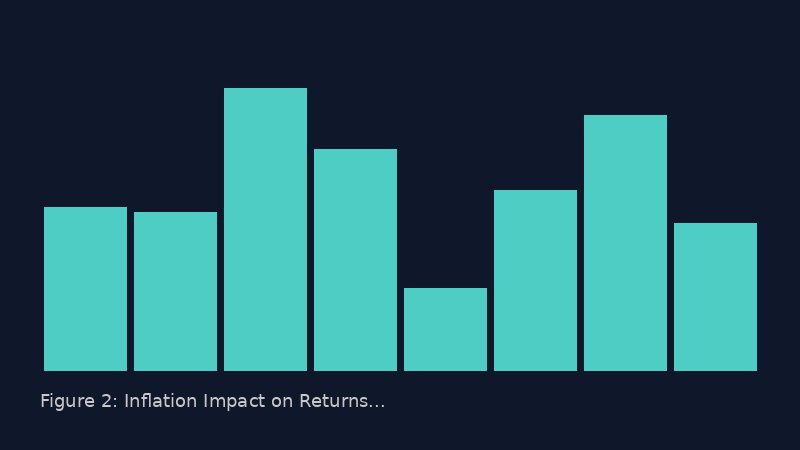
Inflation is often called the “silent thief” of investment returns because it erodes purchasing power gradually and invisibly. If your portfolio returns 8% but inflation runs at 3%, your real return is only about 5%. Over a 30-year retirement, this difference can mean hundreds of thousands of dollars in lost purchasing power. Understanding and protecting against inflation is essential for achieving your financial goals.

Real vs. Nominal Returns: The Critical Distinction
The nominal return is what you see on your statement. The real return—what actually matters—is the nominal return minus inflation. According to Bureau of Labor Statistics data, U.S. inflation has averaged approximately 3.1% annually since 1926.
| Asset Class | Nominal Return | Inflation | Real Return | Purchasing Power After 30Y |
|---|---|---|---|---|
| S&P 500 | 10.7% | 3.1% | 7.4% | $1 → $8.15 |
| Long-Term Bonds | 5.5% | 3.1% | 2.3% | $1 → $2.00 |
| Cash/Money Market | 4.5% | 3.1% | 1.4% | $1 → $1.52 |
| Gold | 5.2% | 3.1% | 2.0% | $1 → $1.82 |
| Real Estate | 8.5% | 3.1% | 5.2% | $1 → $4.49 |
Inflation-Resistant Investment Strategies
- TIPS (Treasury Inflation-Protected Securities): Principal adjusts with CPI; guaranteed real return
- I Bonds: Currently yielding above 3.5%; $10,000 annual purchase limit per person
- Real Estate: Property values and rental income tend to rise with inflation; explore our REITs guide
- Commodities: Gold, energy, and agricultural products serve as inflation hedges
- Equities with Pricing Power: Companies that can raise prices without losing customers
- Short-Duration Bonds: Less sensitive to rate hikes that accompany rising inflation
Current Inflation Environment (2026)
CPI has moderated from the 9.1% peak in June 2022 to approximately 2.8% as of mid-2026. However, services inflation remains sticky above 4%, and shelter costs continue to rise. The Fed’s target of 2% has not been sustainably achieved, suggesting that elevated inflation may persist longer than markets currently price in.
Risk Warning
No investment perfectly hedges inflation in all environments. Even TIPS can underperform during periods of rising real yields. Diversification across multiple inflation-sensitive assets provides the most robust protection. As discussed in our Fed rate analysis, monetary policy responses to inflation create additional portfolio risks.
References & Further Reading
- Bureau of Labor Statistics — Consumer Price Index Data
- FRED — Inflation and Economic Data
- IMF — World Economic Outlook
Take action on these insights—explore our Financial Tools or join our community for ongoing discussion.
Leave a Reply