
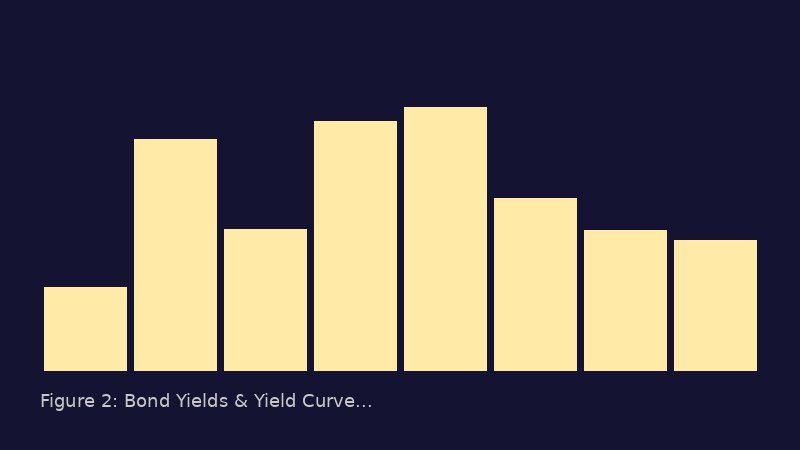
Bond yields and the yield curve are among the most important indicators in finance. The yield curve—a plot of bond yields across different maturities—provides crucial information about market expectations for economic growth, inflation, and interest rates. According to Federal Reserve research, an inverted yield curve has preceded every U.S. recession since 1950, making it one of the most reliable economic predictors available to investors.

Understanding Yield Curve Shapes
Normal (Upward-Sloping) Yield Curve
Long-term bonds yield more than short-term bonds, compensating investors for duration risk. This shape signals expectations of economic expansion and is the most common configuration, occurring approximately 75% of the time historically.
Inverted (Downward-Sloping) Yield Curve
When short-term yields exceed long-term yields, the curve inverts. This typically occurs when the Fed raises short-term rates to combat inflation while the bond market prices in future rate cuts due to expected economic weakness. Every recession in the past 70 years has been preceded by an inversion.
Flat Yield Curve
Short and long-term yields converge, often signaling a transition between economic regimes. This shape can indicate uncertainty about future economic direction.
| Inversion Date | Recession Start | Lead Time | S&P 500 Peak-to-Trough |
|---|---|---|---|
| Aug 2006 | Dec 2007 | 16 months | -56.8% |
| May 1998 | Mar 2001 | 34 months | -49.1% |
| Jun 1989 | Jul 1990 | 13 months | -20.4% |
| Nov 1978 | Jan 1980 | 14 months | -17.6% |
Key Yield Metrics Every Investor Should Track
- 2-Year/10-Year Spread: The most watched recession indicator; negative values signal inversion
- Real Yields: Nominal yield minus expected inflation; currently positive across most maturities
- Credit Spreads: Difference between corporate and Treasury yields; widening signals increasing risk aversion
- TIPS Breakeven: Difference between nominal and TIPS yields; measures market inflation expectations
Investment Implications
For bond investors, the current yield curve environment demands careful positioning. As we discussed in our Fed rate impact analysis, duration management is critical. Consider barbell strategies combining short and long-duration bonds, or simply maintain short-to-intermediate duration until the curve normalizes.
Risk Warning
Yield curve signals are probabilistic, not deterministic. Not every inversion leads to recession, and timing between inversion and economic downturn varies significantly. Avoid making dramatic portfolio changes based solely on yield curve signals.
References & Further Reading
- Federal Reserve — Monetary Policy and Yield Curve Research
- FRED — 10-Year/2-Year Spread Data
- Bloomberg — Fixed Income Analysis
Analyze bond yields and duration with our Financial Tools.
Leave a Reply