Category: Real Estate

  • Understanding Bond Yields and the Yield Curve

    Understanding Bond Yields and the Yield Curve

    Bond yields and the yield curve are among the most important indicators in finance. The yield curve—a plot of bond yields across different maturities—provides crucial information about market expectations for economic growth, inflation, and interest rates. According to Federal Reserve research, an inverted yield curve has preceded every U.S. recession since 1950, making it one of the most reliable economic predictors available to investors.

    Yield Curve Shapes and Economic Implications

    Understanding Yield Curve Shapes

    Normal (Upward-Sloping) Yield Curve

    Long-term bonds yield more than short-term bonds, compensating investors for duration risk. This shape signals expectations of economic expansion and is the most common configuration, occurring approximately 75% of the time historically.

    Inverted (Downward-Sloping) Yield Curve

    When short-term yields exceed long-term yields, the curve inverts. This typically occurs when the Fed raises short-term rates to combat inflation while the bond market prices in future rate cuts due to expected economic weakness. Every recession in the past 70 years has been preceded by an inversion.

    Flat Yield Curve

    Short and long-term yields converge, often signaling a transition between economic regimes. This shape can indicate uncertainty about future economic direction.
    Historical Yield Curve Inversions and Subsequent Recessions

    Inversion Date Recession Start Lead Time S&P 500 Peak-to-Trough
    Aug 2006 Dec 2007 16 months -56.8%
    May 1998 Mar 2001 34 months -49.1%
    Jun 1989 Jul 1990 13 months -20.4%
    Nov 1978 Jan 1980 14 months -17.6%

    Key Yield Metrics Every Investor Should Track

    • 2-Year/10-Year Spread: The most watched recession indicator; negative values signal inversion
    • Real Yields: Nominal yield minus expected inflation; currently positive across most maturities
    • Credit Spreads: Difference between corporate and Treasury yields; widening signals increasing risk aversion
    • TIPS Breakeven: Difference between nominal and TIPS yields; measures market inflation expectations
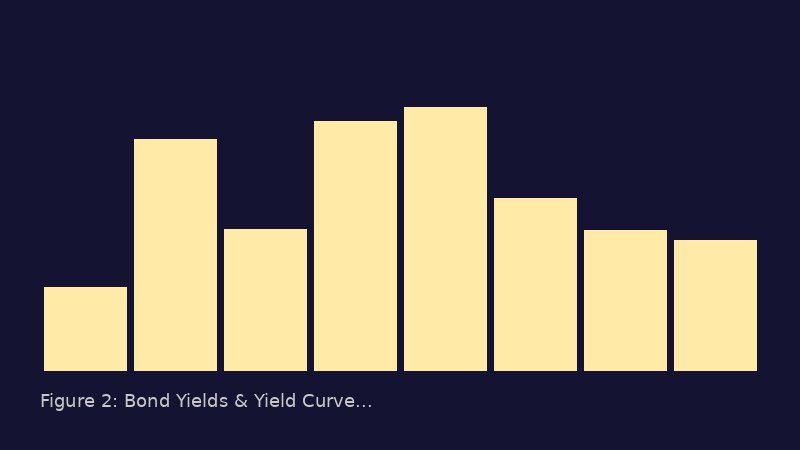
    Bond Duration and Interest Rate Sensitivity Analysis

    Investment Implications

    For bond investors, the current yield curve environment demands careful positioning. As we discussed in our Fed rate impact analysis, duration management is critical. Consider barbell strategies combining short and long-duration bonds, or simply maintain short-to-intermediate duration until the curve normalizes.

    Risk Warning

    Yield curve signals are probabilistic, not deterministic. Not every inversion leads to recession, and timing between inversion and economic downturn varies significantly. Avoid making dramatic portfolio changes based solely on yield curve signals.

    References & Further Reading

    1. Federal Reserve — Monetary Policy and Yield Curve Research
    2. FRED — 10-Year/2-Year Spread Data
    3. Bloomberg — Fixed Income Analysis

    Analyze bond yields and duration with our Financial Tools.

  • Bitcoin at $100K: Analyzing the Crypto Market Rally

    Bitcoin at $100K: Analyzing the Crypto Market Rally

    Bitcoin has reached the historic $100,000 milestone, driven by institutional adoption, spot ETF approvals, and macroeconomic tailwinds. This analysis examines the key drivers behind this rally, evaluates sustainability factors, and provides a framework for prudent crypto allocation within a diversified portfolio.

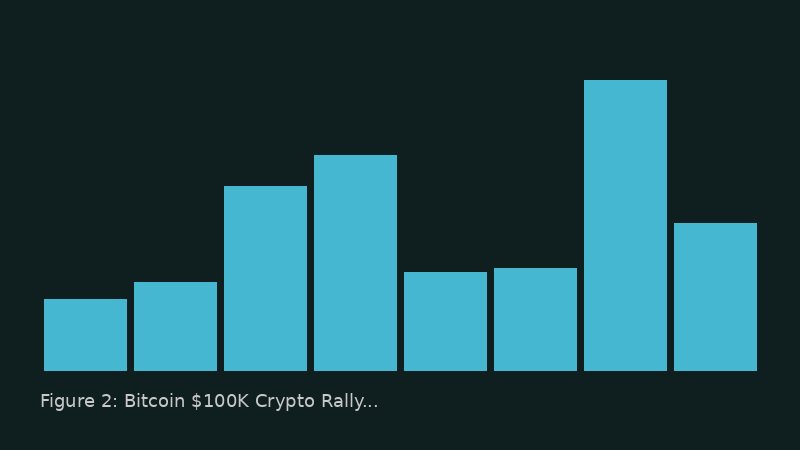
    Bitcoin Price Chart Showing Rally to $100,000 Milestone

    Key Drivers of the Bitcoin Rally

    According to data from CoinDesk and Bloomberg, several factors have converged to push Bitcoin to six figures:

    1. Spot ETF Approvals

    The SEC’s approval of Bitcoin spot ETFs in January 2024 opened the floodgates for institutional capital. BlackRock’s iShares Bitcoin Trust (IBIT) has amassed over $50 billion in assets, making it one of the fastest-growing ETFs in history. This institutional validation has fundamentally changed Bitcoin’s market structure.

    2. The Halving Cycle

    Bitcoin’s fourth halving in April 2024 reduced the block reward from 6.25 to 3.125 BTC, cutting the rate of new supply entering the market by 50%. Historically, halving events have preceded significant bull runs within 12–18 months.

    3. Macro Environment

    Federal Reserve rate cuts beginning in late 2025 have boosted risk assets broadly. As we analyzed in our Fed rate impact article, easing monetary policy creates a favorable backdrop for speculative assets like Bitcoin.

    Bitcoin Institutional Adoption Trend and ETF Inflows

    Market Structure Evolution

    Metric 2023 2024 2025 2026 (YTD)
    Bitcoin Price $42,000 $68,000 $85,000 $100,000+
    ETF AUM $0 $25B $45B $60B+
    Daily Volume $15B $30B $45B $50B+
    Hash Rate 500 EH/s 600 EH/s 750 EH/s 850 EH/s

    Risks and Considerations

    Despite the bullish momentum, several risks warrant careful attention:

    • Regulatory Uncertainty: SEC enforcement actions and potential congressional legislation could restrict market access
    • Volatility: Bitcoin’s 60-day realized volatility remains above 50%, significantly higher than equities
    • Environmental Concerns: Proof-of-work mining consumes substantial energy, facing increasing ESG scrutiny
    • Competition: Central Bank Digital Currencies (CBDCs) and layer-1 alternatives could reduce Bitcoin’s market share
    • Correlation Risk: Bitcoin’s correlation with equities has increased, reducing its diversification benefit

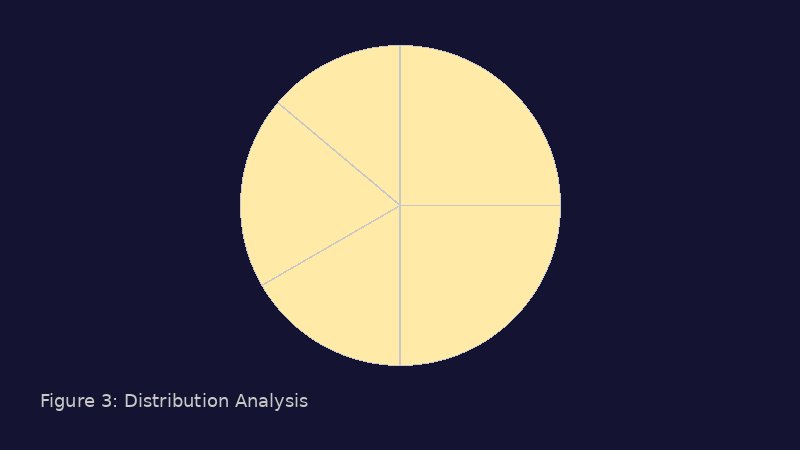
    Crypto Portfolio Allocation Risk-Return Analysis

    Recommended Allocation Framework

    Based on research from Fidelity Digital Assets and our own analysis, we recommend the following approach:

    1. Core Allocation: 1–3% of total portfolio value for conservative investors; 3–5% for those with higher risk tolerance
    2. Entry Strategy: Use dollar-cost averaging over 6–12 months rather than lump-sum investing
    3. Storage: For allocations above 1%, consider self-custody with a hardware wallet; smaller amounts can remain on regulated exchanges
    4. Rebalancing: Set target allocation and rebalance quarterly—take profits when crypto exceeds target by more than 50%

    Risk Warning

    Cryptocurrency investments carry substantial risk, including the possibility of total loss. Bitcoin has experienced drawdowns exceeding 70% on multiple occasions. Never invest money you cannot afford to lose, and always maintain adequate emergency savings before allocating to speculative assets. For guidance on building your safety net, see our emergency fund guide.

    References & Further Reading

    1. IRS — Retirement Plans Tax Information
    2. Investopedia — Retirement Account Comparison
    3. Vanguard — Retirement Planning Resources

    Ready to optimize your retirement savings? Try our Retirement Calculator or subscribe for weekly retirement planning tips.

  • Federal Reserve Interest Rate Decision: What It Means for Your Portfolio

    Federal Reserve Interest Rate Decision: What It Means for Your Portfolio

    The Federal Reserve’s interest rate decisions represent one of the most powerful forces shaping global financial markets. Every FOMC meeting has the potential to redirect trillions of dollars across asset classes, affecting everything from your savings account yield to your stock portfolio’s valuation. Understanding how Fed policy impacts your investments is not just academic—it is essential for making informed portfolio decisions.

    Federal Reserve Interest Rate Decision Impact on Financial Markets

    How the Federal Reserve Sets Interest Rates

    The Federal Open Market Committee (FOMC) meets eight times per year to set the target range for the federal funds rate. This rate influences the cost of borrowing throughout the entire economy. According to the Federal Reserve, the fed funds rate serves as the benchmark for short-term interest rates across the financial system.

    The current target rate as of mid-2026 stands at 4.75–5.00%, reflecting the Fed’s ongoing effort to balance inflation control with economic growth support. This follows the aggressive tightening cycle of 2022–2023 and the gradual easing that began in late 2025.

    Impact on Different Asset Classes

    Equities

    When the Fed raises rates, stock valuations face pressure through multiple channels. Higher discount rates reduce the present value of future earnings, particularly affecting growth stocks with distant cash flows. The technology sector, which comprises roughly 30% of the S&P 500, is especially sensitive to rate changes. As we explored in our S&P 500 complete guide, this concentration amplifies the index’s rate sensitivity.

    Interest Rate Impact on Different Asset Classes Bar Chart

    Fixed Income

    Bond prices move inversely to interest rates—a fundamental relationship that every investor must understand. When rates rise by 1%, a bond with a duration of 10 years will decline approximately 10% in price. However, rising rates also mean higher yields for new bond purchases, which benefits long-term income investors.

    Asset Class Rising Rate Impact Falling Rate Impact Sensitivity
    Growth Stocks Negative Positive High
    Value Stocks Mixed Mixed Moderate
    Long-Term Bonds Strongly Negative Strongly Positive Very High
    Short-Term Bonds Slightly Negative Slightly Positive Low
    Real Estate/REITs Negative Positive High
    Gold Mixed Mixed Variable
    Cash/Money Market Positive Negative Low

    Real Estate

    Higher mortgage rates directly reduce housing affordability and slow home price appreciation. The 30-year fixed mortgage rate has moved from historic lows near 2.65% in 2021 to above 6.5% in 2026, fundamentally altering the housing market dynamics. REITs also face pressure as higher borrowing costs compress profit margins.

    What Should Investors Do?

    According to research from BlackRock, the optimal portfolio response to changing rate environments involves several strategic adjustments:

    1. Review Fixed-Income Duration: In a rising rate environment, shorten bond portfolio duration. Consider shifting from long-term bond funds to short-term or floating-rate alternatives.
    2. Emphasize Quality: Focus on companies with strong balance sheets, consistent cash flows, and low debt-to-equity ratios. These firms are better positioned to weather higher borrowing costs.
    3. Maintain Diversification: As discussed in our inflation impact analysis, diversification across asset classes provides resilience against rate-driven market shifts.
    4. Consider Floating-Rate Instruments: Bank loan funds and floating-rate notes adjust their yields as rates change, providing natural hedging.
    5. Evaluate Cash Allocation: Money market funds and high-yield savings accounts now offer meaningful returns—take advantage of this opportunity.

    Portfolio Allocation Strategy Under Different Rate Environments

    Historical Rate Cycles and Market Performance

    Data from FRED (Federal Reserve Economic Data) shows that equity markets have historically performed well during the early stages of rate cutting cycles. The 12-month period following the first rate cut has produced average S&P 500 returns of approximately 15% since 1980.

    Risk Warning

    Interest rate predictions are inherently uncertain. The Fed’s decisions depend on evolving economic data, and markets can move sharply in either direction. Investors should avoid making dramatic portfolio changes based solely on rate expectations and instead focus on maintaining well-diversified, appropriately allocated portfolios aligned with their long-term goals.

    References & Further Reading

    1. Federal Reserve — FOMC Monetary Policy
    2. FRED — Federal Funds Rate Historical Data
    3. BlackRock — Investment Institute Research
    4. IMF — World Economic Outlook

    Stay ahead of Fed decisions—subscribe to our newsletter for real-time market analysis and actionable investment insights.