How to Brew a Better Cup of Coffee at Home
Grind size, water temperature, and a steady pour matter far more than an expensive machine. Here is how to dial in three common methods.
Co-authored by:
Dana Whitfield
Coffee Educator & Barista Trainer
Steps
3 methods1.Using a Pour-Over Dripper
- 1
Start with a 1:16 ratio
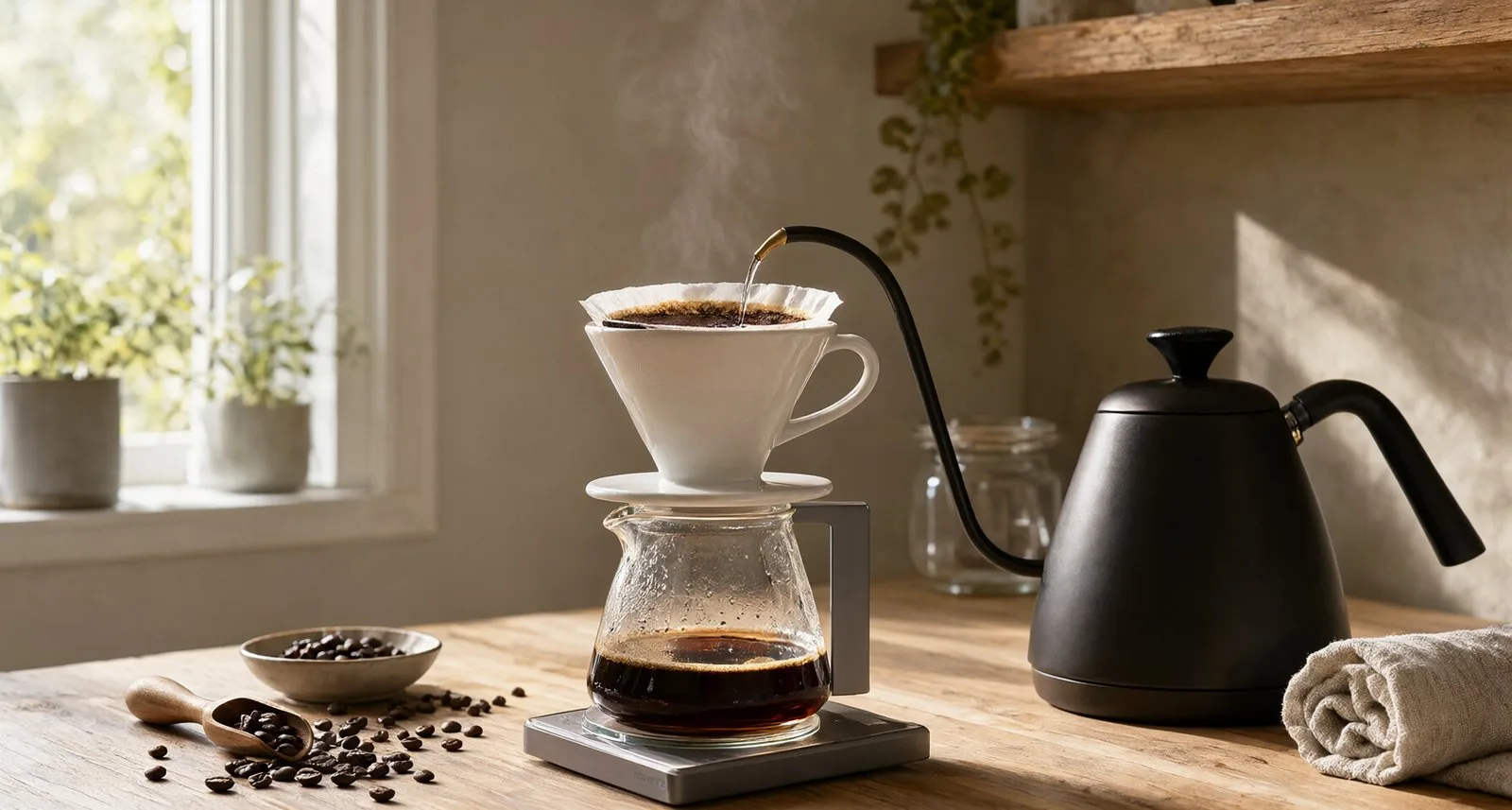
Weigh your beans and water instead of using scoops. For a 350 ml cup, use 22 g of coffee to 350 g of water. A cheap kitchen scale makes this the single biggest upgrade you can make.
If you like it stronger, go to 1:15; if it tastes thin or sharp, loosen to 1:17 before you change anything else.
Tip: Use filtered water — coffee is about 98% water, and chlorine taste will not brew out.
- 2
Grind just before brewing
Ground coffee loses aroma within minutes, so grind as close to brewing as you can. For a pour-over, aim for a medium grind that feels like coarse sand between your fingers.
Blade grinders produce uneven particles that extract at different rates, which is why the cup can taste simultaneously bitter and sour. A burr grinder is the tool worth saving up for.
- 3
Rinse the filter and preheat the brewer
Place the paper filter in the dripper and pour hot water through it, then dump the rinse water. This removes the papery taste and warms the glass or ceramic so the brew temperature does not crash on contact.
A dripper that starts 20 degrees cooler will stall the whole extraction, no matter how good your beans are.
- 4
Bloom, then pour in slow circles
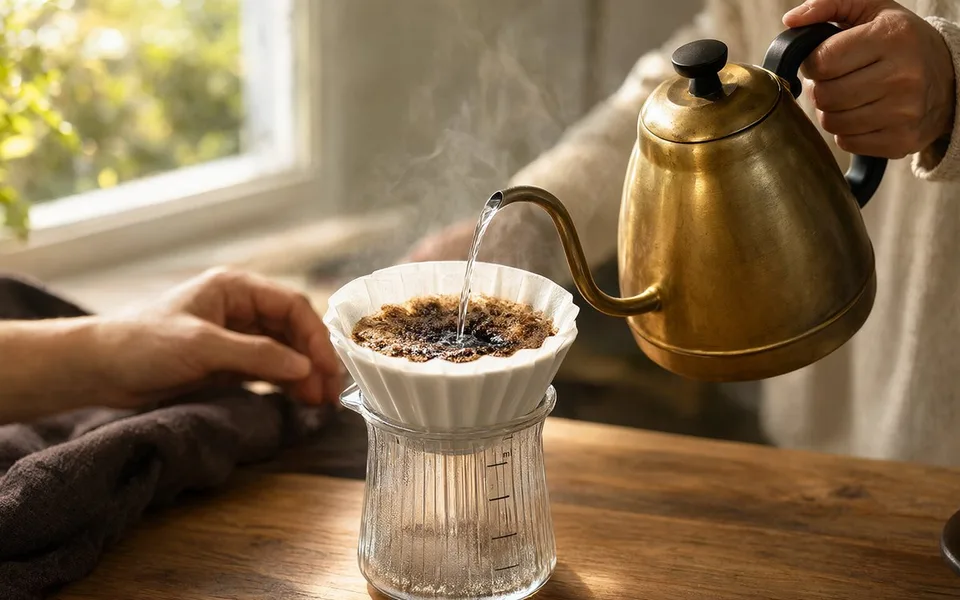
Wet all the grounds with roughly twice their weight in water (about 45 g) and wait 30–45 seconds. You will see the bed swell and bubble as carbon dioxide escapes — that is the bloom.
Then pour in slow, concentric circles starting at the centre and moving outward, staying off the paper. Pour in two or three short pulses rather than one long stream so the water level stays steady.
- 5
Let it drain and stir once
Give the carafe a gentle swirl or one stir before the last drops finish draining, then let the drawdown complete. Total brew time should land between 2:30 and 3:30.
If it finished in under two minutes and tastes sour, grind finer. If it crawled past four minutes and tastes dry and bitter, grind coarser.
2.Using a French Press
- 1
Use a coarse grind
A press needs coffee that looks like sea salt. Fine particles slip through the mesh and turn the cup muddy and over-extracted.
Use 30 g of coffee for a 500 ml press, or roughly two heaped tablespoons per cup if you do not have a scale.
- 2
Add water just off the boil
Boil the water, then wait about 30 seconds before pouring. Target 92–96 °C. Pour until all grounds are saturated and give the bed one quick stir to make sure nothing is floating dry on top.
- 3
Steep for four minutes
Set a timer. Four minutes is the sweet spot for most roasts: shorter tastes sour and empty, longer pulls out the harsh woody notes.
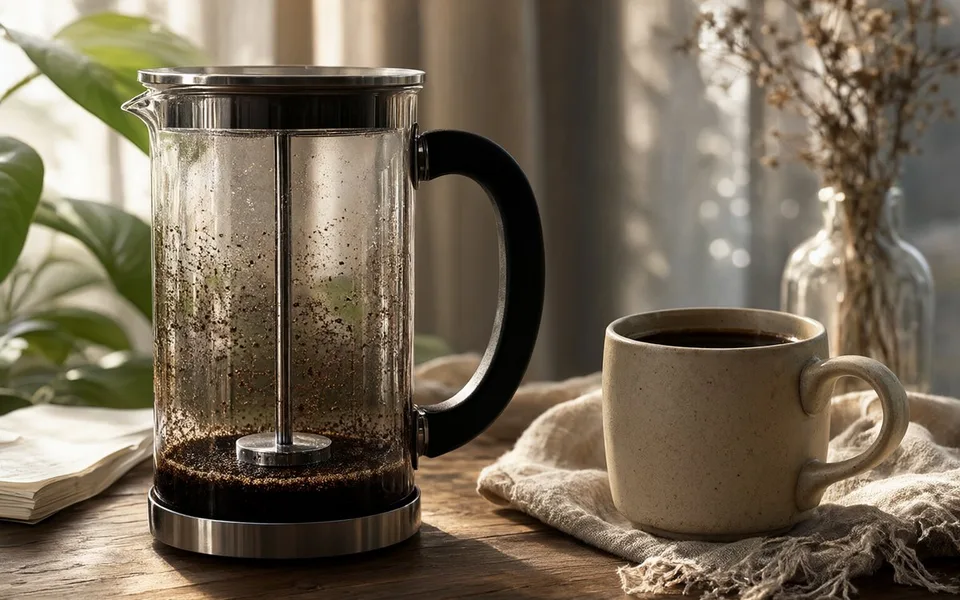
After four minutes, a crust of grounds will sit on the surface. Break it with a spoon and skim off the foam and floating bits — this is what makes a press taste clean instead of muddy.
- 4
Press slowly and pour right away
Press the plunger down with steady, gentle pressure — do not force it. Stop just above the coffee bed and pour the whole press into a mug or carafe immediately.
Left sitting in the press, the grounds keep extracting and the second cup will be noticeably harsher than the first.
3.Making Cold Brew Without Special Gear
- 1
Combine coarse coffee and cold water
Use a 1:8 ratio for a concentrate — 100 g of coffee to 800 g of water — in any clean jar or pitcher. The grind should be coarse, the same setting you would use for a French press.
- 2
Stir, cover, and wait 16 hours
Stir once so every ground is wet, cover, and leave it on the counter. Sixteen hours at room temperature gives a balanced extraction; go to 20 hours if you like it heavier, or 12 if you prefer brightness.
Tip: Cold brew is not iced coffee. Nothing is heated, so the cup comes out sweeter and far less acidic.
- 3
Filter twice
Scoop the grounds out through a fine mesh sieve, then pour the liquid through a paper filter or a clean cloth to catch the fines. This second pass is what separates gritty cold brew from smooth cold brew.
- 4
Dilute to taste
Serve the concentrate over ice cut with water or milk, starting at one part concentrate to one part water. Adjust from there; the ratio is your decision, not the recipe's.
Kept sealed in the fridge, concentrate stays good for about two weeks.
Tips
- Freshness beats equipment: beans roasted within the last 2–4 weeks will outperform a $400 machine brewing month-old coffee.
- Water makes up about 98% of the cup, so brew with filtered water if your tap water tastes of chlorine.
- Grind finer to increase strength and body; grind coarser to reduce bitterness. Change one variable at a time.
- Preheat your mug with hot water so the first sip is not three degrees cooler than the last.
- Store beans in an opaque, sealed container at room temperature — the fridge and freezer introduce moisture and odours.
- A $15 kitchen scale improves consistency more than most upgrades to a grinder.
- If a coffee tastes sour, it is usually under-extracted: grind finer, pour slower, or use hotter water.
Warnings
- Coffee at brewing temperature can scald you. Rinse filters and preheat brewers with care, and keep kettles away from the edge of the counter.
- Never leave a stovetop kettle or a hot plate unattended, and unplug electric grinders before cleaning the burrs.
Community Q&A
How long do whole coffee beans stay fresh?+
Whole beans stay at their best for about 2–4 weeks after roasting. Once ground, most of the aroma is gone within a few days, so grind small batches as you need them.
Does the type of water really matter?+
Yes. Water that is too soft tastes flat and under-extracts, while very hard water mutes flavour and leaves scale in your kettle. Filtered tap water with a little mineral content works well.
Why does my coffee taste bitter even when I follow a recipe?+
Bitterness usually means over-extraction: the grind is too fine, the water too hot, or the brew too long. Grind one step coarser and drop the temperature to about 94 °C.
Can I make pour-over coffee without a gooseneck kettle?+
You can, but a gooseneck gives you control over pour rate, which is what keeps the bed even. If you use a standard kettle, pour slowly from a height close to the grounds.
How much caffeine is in a cup of home-brewed coffee?+
An 8 oz (240 ml) cup of drip coffee typically has 80–100 mg of caffeine. Cold brew concentrate can be higher per sip because it is brewed strong and then diluted.
Is a blade grinder ever good enough?+
For casual drinking, yes — but expect uneven particles and more fines. If you care about clarity in the cup, a burr grinder is the better spend.
References
- Specialty Coffee Association — brewing standards and water guidance
- National Coffee Association — brewing methods and caffeine information
- U.S. Food and Drug Administration — caffeine in your food and beverages
About This Article
Written by Site Admin. A subject-matter reviewer checked the steps before publication. Last updated Oct 27, 2026. 12,840 readers have viewed this guide.
87% of readers found this article helpful.
214 votes - 87%
Click a star to add your vote
Hannah R.
Oct 21, 2026
“I bought a scale after reading this and stopped buying coffee out on weekdays. The 1:16 ratio is the whole trick.”