How to Start a Balcony Garden
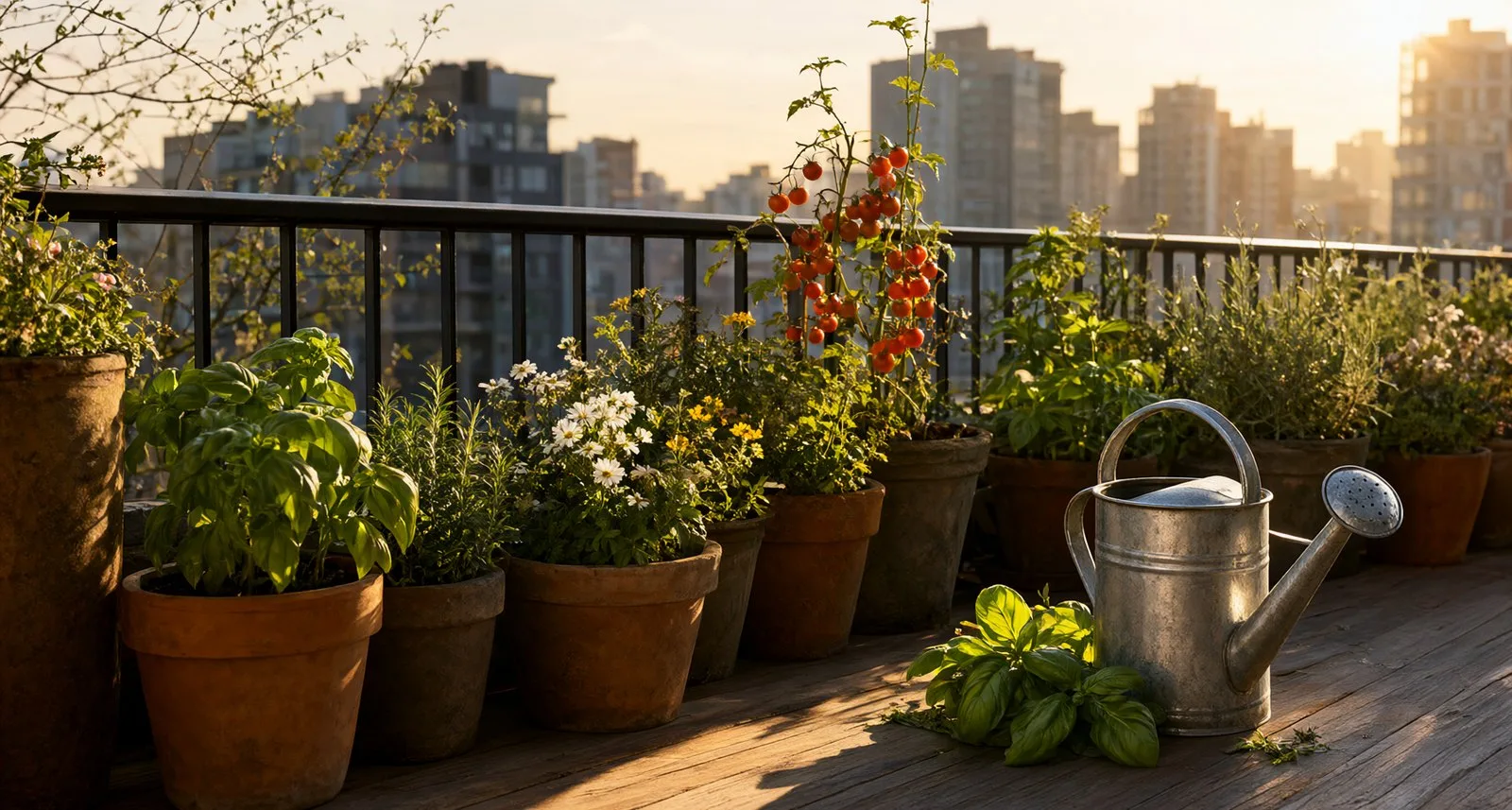
Six hours of light, containers that drain, and a soil mix that stays loose is all a productive balcony needs. Start with herbs, then expand.
Co-authored by:
Marcus Lee
Master Gardener, Container Specialist
Steps
3 methods1.Reading Your Space Before You Buy Anything
- 1
Measure your light honestly
Track the balcony through one sunny day and write down when direct sun arrives and leaves. Fruiting crops like tomatoes and peppers need six to eight hours; leafy herbs and greens manage with four.
A north-facing balcony in the northern hemisphere rarely gets that. It is still a good space for mint, parsley, chives, and salad leaves — plan for those instead of fighting the light.
- 2
Check weight limits and wind
Keep heavy pots near the wall where the balcony is strongest, and avoid loading the outer edge with big containers of wet soil. Wind at height dries pots fast and can topple tall plants.
If your railing is open, add a mesh or bamboo screen on the windward side. It protects plants and stops mulch and leaves from ending up downstairs.
Tip: Wet potting soil is heavy: a 40 cm terracotta pot can weigh 20 kg after watering.
- 3
Confirm what your building allows
Read the rules on hanging items, watering runoff, and anything mounted to the railing. Fixing it early saves you from moving a mature plant — or losing one.
2.Choosing Containers and Soil
- 1
Choose containers with drainage
Every pot needs at least one hole, and the saucer under it should be emptied after watering. Roots sitting in standing water suffocate and rot, which is the most common way balcony gardens fail.
Start with three to five pots in the 25–35 cm range rather than one large one. Several small pots let you spread risk and adjust to your light.
- 2
Use a lightweight potting mix
Fill with a soilless potting mix, not garden soil. Garden soil compacts in a container and drowns the roots. A mix of two parts peat or coir, one part perlite, and one part compost drains well and holds moisture evenly.
Wet the mix before you fill the pot — dry peat resists water and will stay in a dry clump at the bottom of the container.
- 3
Match the plant to the pot
Basil, mint, parsley, and chives are happy in 20–25 cm pots. Tomatoes need at least 30 cm of depth and a stake. Cut-and-come-again lettuce works in shallow trays, which makes it ideal for a crowded railing.
Tip: Mint spreads through any container it touches. Give it its own pot.
3.Watering, Feeding, and Harvesting
- 1
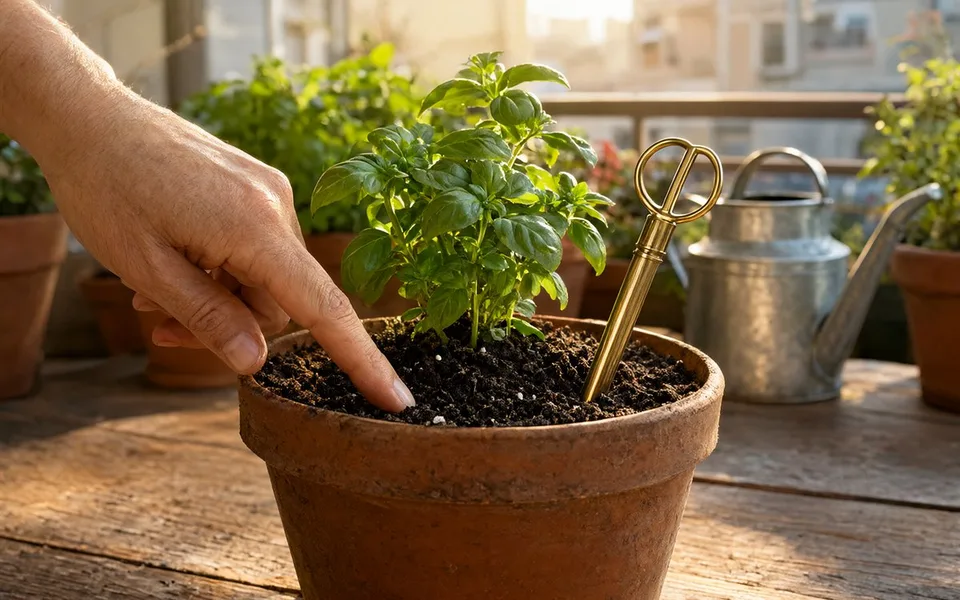
Water when the top inch is dry
Push a finger into the soil to the second knuckle. If that layer is dry, water slowly until it runs from the drainage holes, then stop. If it is still damp, leave it another day.
Balcony pots dry out far faster than ground beds — in midsummer, once a day, sometimes twice. Morning watering is best; evening leaves foliage wet overnight.
- 2
Feed every two weeks
Nutrients flush out of containers with every watering, so potted plants need regular food. Use a balanced liquid fertiliser at half strength every second week during active growth.
For fruiting crops, switch to a tomato or high-potassium feed once the first flowers open, or you will get lush leaves and few fruits.
- 3
Harvest often and from the top
Pinch herbs just above a leaf node and the plant will send out two shoots where there was one. Regular harvesting stops basil and mint from bolting to flower and losing flavour.
Pick courgettes and beans young; a mature fruit left on the plant tells it to stop producing.
- 4
Watch for pests weekly
Turn leaves over and look at the stems once a week. Aphids cluster on new growth, and spider mites thrive in the hot, dry air a balcony provides.
Blast small infestations off with water, or treat with insecticidal soap or neem in the evening so you do not scorch the leaves or hit pollinators.
Tips
- Start with three plants: basil, mint, and one tomato. They forgive mistakes and give you quick results.
- Group pots together — they shade each other, share humidity, and dry out more slowly than isolated containers.
- A self-watering planter or a cheap drip spike buys you a weekend of freedom in summer.
- Line the inside of terracotta pots with a coffee filter to keep soil from washing out with the drainage.
- Rotate containers a quarter turn every week so plants do not grow permanently leaning toward the light.
- Save egg shells for compost, not for the pot — they do not meaningfully prevent blossom-end rot.
- Clean and refresh pots with a vinegar rinse before reusing them next season.
Warnings
- Do not place pots on the balcony edge or on railings where they can fall. A wind gust can send a container from height.
- Check local rules before installing anything that attaches to the building or drains onto a neighbour's space.
- Some balcony floors get extremely hot in afternoon sun; use pot feet or a pallet to keep roots from cooking.
Community Q&A
How many hours of sun do vegetables need?+
Fruiting vegetables such as tomatoes, peppers, and courgettes need six to eight hours of direct sun. Leafy greens and most herbs do fine with four.
Can I garden on a shaded balcony?+
Yes. Choose mint, parsley, chives, chard, and salad leaves. They grow more slowly and need less water, but they will crop all season.
What size pot does a tomato need?+
At least 25–30 litres of soil, roughly a 35 cm deep container. Cherry tomatoes cope with less than beefsteaks.
Why are my seedlings tall, thin, and floppy?+
They are reaching for light. Move them to a brighter spot or add a grow light, and thin them so the strongest seedlings are not competing.
Is balcony garden soil reusable next year?+
Yes. Refresh it by mixing in a third of fresh compost or worm castings and a slow-release organic fertiliser, and pick out old roots.
How do I water while on holiday?+
Group pots, mulch the surface with straw or wood chips, move them out of harsh afternoon sun, and ask someone to water every second day. Self-watering containers extend that to about a week.
References
- Royal Horticultural Society — growing vegetables in containers
- USDA Natural Resources Conservation Service — urban and container gardening guidance
- Oregon State University Extension — potting mixes for containers
About This Article
Written by Site Admin. A subject-matter reviewer checked the steps before publication. Last updated Oct 27, 2026. 9,420 readers have viewed this guide.
89% of readers found this article helpful.
168 votes - 89%
Click a star to add your vote
Kwame A.
Oct 23, 2026
“Four pots of basil and two tomatoes on a west-facing balcony. I have not bought herbs since June.”