How to Build a Simple Skincare Routine
Three products used consistently will do more than ten used sporadically. Here is how to choose a cleanser, a moisturiser and a sunscreen, add anything else slowly, and recognise when a product is doing harm rather than good.

Co-authored by:
Alice Yoon
Dermatologist

Steps
3 methods · 12 steps · 12 illustrationsPart 1 of 3
Starting With Three Products
 Step 1 / 12
Step 1 of 12: Work out your skin type in one morning 1Work out your skin type in one morning
Wash your face with lukewarm water, pat dry, and touch your skin again after thirty minutes without applying anything. Tight and slightly rough suggests dry; shine across the forehead and nose suggests oily; shine in some areas and tightness in others suggests combination; stinging or redness suggests sensitivity, which matters more than the type. This test is rough, but it stops you buying for an imaginary skin.
Tip: Sensitivity is a reason to choose fewer products, not a reason to buy special expensive ones.
 Step 2 / 12
Step 2 of 12: Buy three things and nothing else 2Buy three things and nothing else
A gentle non-foaming cleanser, a basic moisturiser, and a broad-spectrum sunscreen of at least SPF 30. That is the entire routine for the first eight weeks. Serums, essences, toners, and tools are optional additions that only make sense once the basic three are habitual, because the basics do most of the work.
Tip: If a product promises to fix a specific problem, it belongs in step five, not in the starting three.
 Step 3 / 12
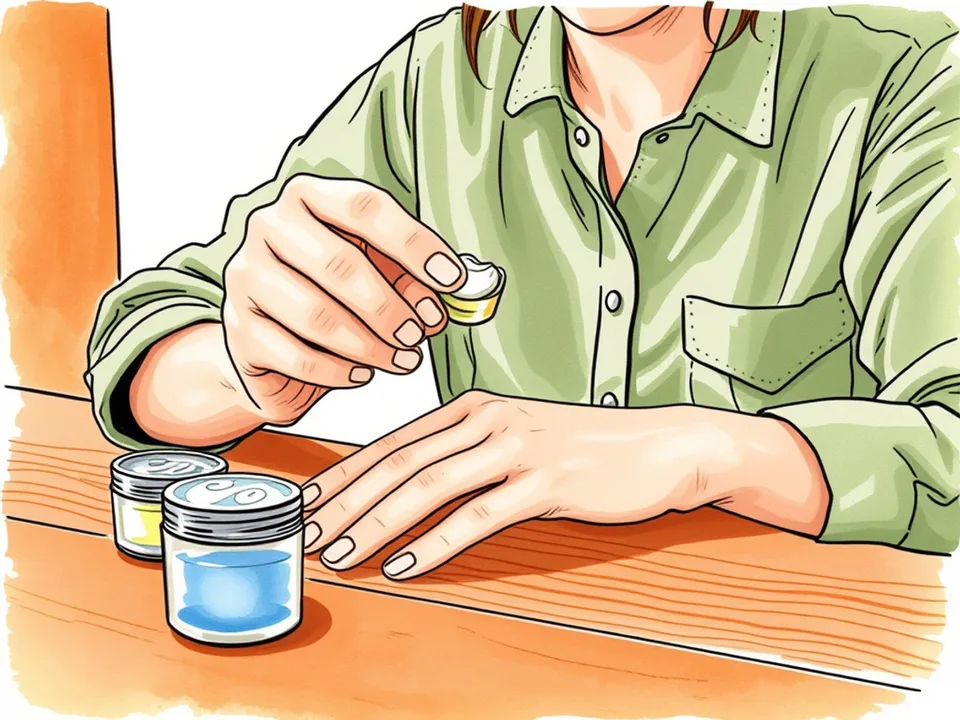
Step 3 of 12: Patch test anything new for three nights 3Patch test anything new for three nights
Apply a small amount to the inside of your forearm for three consecutive evenings, then to a small area of your jaw for another three. This does not catch every reaction, but it catches the obvious ones before they cover your face. Products that sting immediately are not working; they are irritating.
Tip: Do not patch test on the day of an event. It is exactly when you will react.
 Step 4 / 12
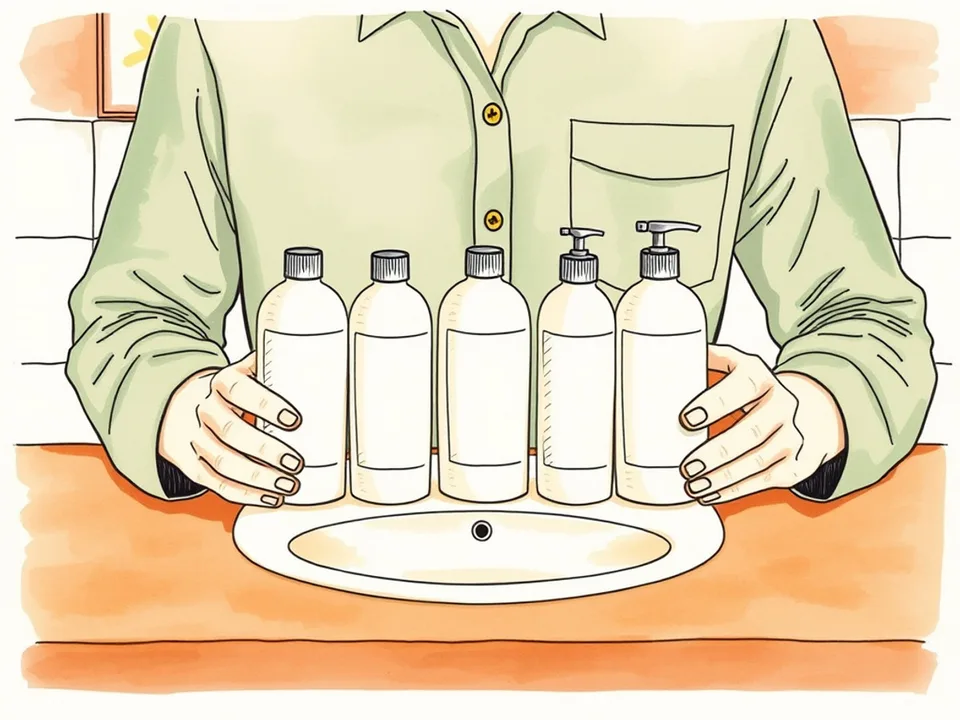
Step 4 of 12: Apply thinnest to thickest, sunscreen last 4Apply thinnest to thickest, sunscreen last
In the morning: cleanse, moisturise, sunscreen. In the evening: cleanse, moisturise. Anything genuinely thin, like a serum, goes before the moisturiser; sunscreen always goes last in the morning and is never replaced by a moisturiser that happens to contain SPF, because people do not apply enough of it.
Tip: Sunscreen is the single most effective thing in the routine and the one most often skipped in winter.
Part 2 of 3
Adding Actives Without Wrecking Your Skin
 Step 5 / 12
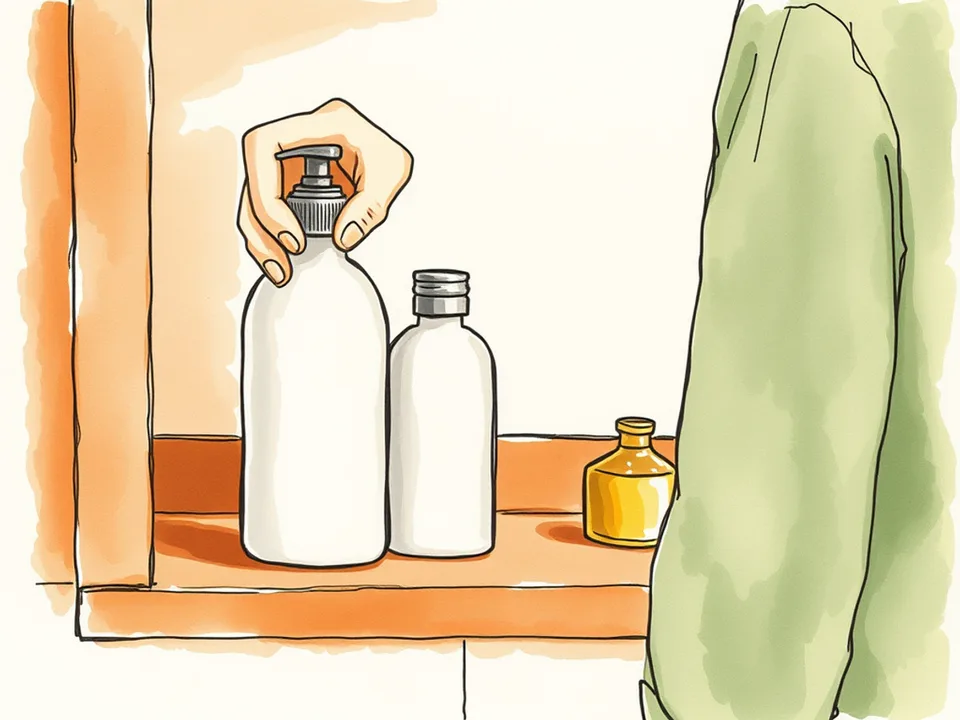
Step 5 of 12: Add one new product at a time, two weeks apart 5Add one new product at a time, two weeks apart
If you add three products in a week and your skin reacts, you have no idea which one caused it. Introduce one, wait two weeks, and judge. Keep everything else unchanged during that window, including your diet and sleep if you can, because skin reacts to those too.
Tip: Write down the date you started. Two weeks later you will not remember.
 Step 6 / 12
Step 6 of 12: Keep mornings simple 6Keep mornings simple
Most actives belong in the evening: retinoids, exfoliating acids, and anything that makes skin more sensitive to sun. A morning routine should be short, calm, and finish with sunscreen. If your morning routine takes more than three minutes, something in it is optional.
Tip: Do not use retinoids in the morning. Sun exposure plus a retinoid is a predictable irritation.
 Step 7 / 12
Step 7 of 12: Stop over-cleansing 7Stop over-cleansing
Twice a day is plenty for most people, and once plus water is enough for many. Lukewarm water, no scrubbing, no cleansing brushes, and no foaming cleanser that leaves skin squeaking. That squeak is stripped skin, and stripped skin produces more oil and more sensitivity, which leads to more products.
Tip: If your skin feels tight after washing, the cleanser is too strong or the water is too hot.
 Step 8 / 12
Step 8 of 12: Keep a two-line log 8Keep a two-line log
Note the date you started or stopped a product, and one word about your skin that week. Two lines per product is enough. When something goes wrong, this log is the difference between a solvable question and an expensive guessing game.
Tip: Photograph your skin in the same light once a month. Change is slow and memory is unreliable.
Part 3 of 3
Reading Your Skin and Knowing When to Stop
 Step 9 / 12
Step 9 of 12: Give a product eight weeks before judging 9Give a product eight weeks before judging
Skin turnover takes roughly four to six weeks, so nothing meaningful happens in three days. Unless a product is actively irritating, use it consistently for eight weeks before deciding. Changing products weekly guarantees that nothing gets a fair test, and it is the main reason people conclude that nothing works.
Tip: Consistency beats strength. A mild product used daily outperforms a strong one used twice.
 Step 10 / 12
Step 10 of 12: Tell irritation apart from adjustment 10Tell irritation apart from adjustment
Mild tingling for a few minutes can be normal with some actives. Stinging that lasts, redness, swelling, peeling, or a rash is not adjustment, it is irritation, and the product should be stopped and reintroduced later at a lower frequency or not at all. Pain is not proof of efficacy.
Tip: If you cannot tell, stop for a week and reintroduce once. The reaction will tell you.
 Step 11 / 12
Step 11 of 12: Know what needs a professional 11Know what needs a professional
Painful or cystic acne, acne that is scarring, a mole that is changing, a persistent rash, sudden hair loss, or skin that does not respond to eight weeks of sensible basics are all reasons to see a doctor rather than buy another serum. Prescription treatments exist and work; the internet is not a substitute for them.
Tip: In many countries a dermatologist visit costs less than three mid-range serums. Go earlier than feels necessary.
 Step 12 / 12
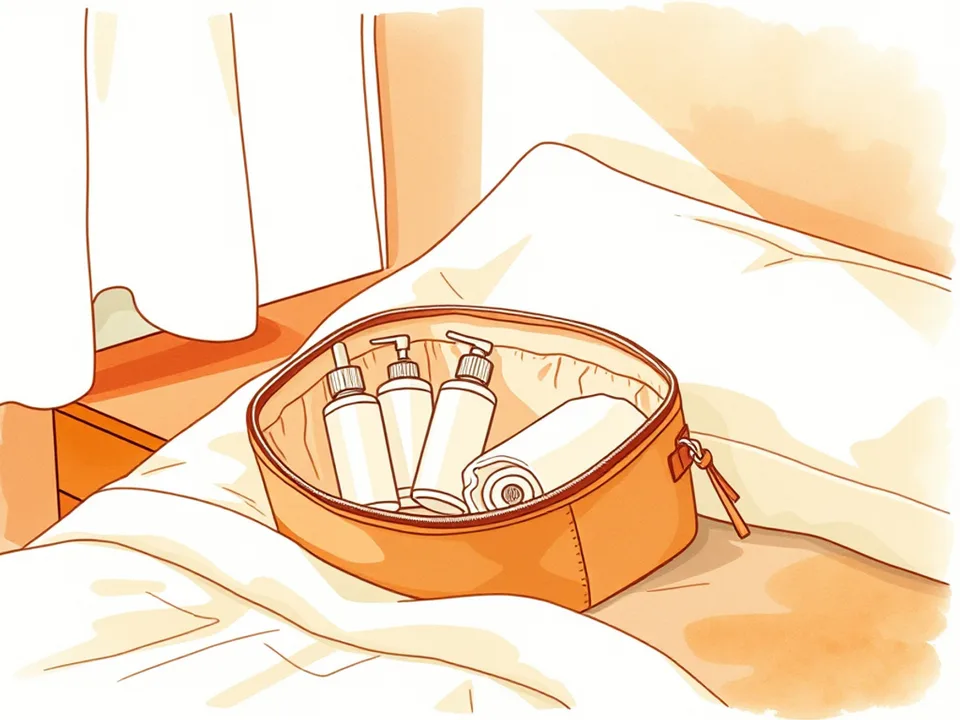
Step 12 of 12: Keep a minimal kit for low-motivation weeks 12Keep a minimal kit for low-motivation weeks
Travel, illness, grief, and deadlines all break routines, and a broken routine often becomes no routine. Keep a small kit with a cleanser, a moisturiser, and a sunscreen, and treat those three as the floor rather than the ideal. Two weeks of basics is a routine, not a failure.
Tip: Store the minimal kit packed. The easier it is to take, the more likely it survives a bad week.
Tips
- Buy the cheapest version of each of the three basics you will actually use daily; price is a poor predictor of tolerability.
- Apply sunscreen generously, roughly two finger-lengths for the face and neck, and reapply if you are outside for hours.
- Introduce nothing new in the week before a wedding, a holiday, or a photo shoot.
- Sleep and stress show on skin faster than most serums change it.
Warnings
- Stop any product and seek medical advice if you develop swelling, difficulty breathing, or a rash that spreads quickly; this can be an allergic reaction.
- Do not use exfoliating acids and retinoids on the same night, and do not combine several acids in one routine without professional advice.
- Do not use lemon juice, baking soda, or toothpaste on your face. They damage the skin barrier and cause more problems than they solve.
- If you are pregnant or breastfeeding, check any active ingredient with a clinician before starting it, especially retinoids.
Community Q&A
Do I need a toner or essence?+
No. They are optional and often duplicate what a cleanser and moisturiser already do. Add one only if the basic three are working and you have a specific reason.
Is expensive skincare better?+
Not reliably. Formulation and tolerability matter more than price, and sunscreen efficacy depends far more on how much you apply than on what it costs.
How do I stop my skin getting oily by lunchtime?+
Usually by cleansing less harshly and moisturising consistently. Over-cleansing strips the barrier and the skin compensates by producing more oil. A light gel moisturiser and a gentle cleanser often fix it within a month.
Can I use vitamin C in the morning?+
Yes, it is generally used in the morning under sunscreen. If it stings or oxidises quickly into a brown colour, the product or the concentration is wrong for you, not the ingredient itself.
How long should a routine take?+
Under three minutes in the morning and under two at night. If it takes longer, it is unlikely to survive a busy week, and consistency matters more than completeness.
References
- American Academy of Dermatology. “Face washing 101” and “Sunscreen FAQ.” 2024.
- Draelos, Z. D. “The science behind skin care: moisturizers.” Journal of Cosmetic Dermatology, 2018.
- Sander, M. et al. “The efficacy and safety of sunscreen use.” Deutsches Ärzteblatt International, 2020.
- National Institute for Health and Care Excellence (NICE). “Acne vulgaris: management.” 2021.
Related on Howly
About This Article
Written by Site Admin. A subject-matter reviewer checked the steps before publication. Last updated Oct 29, 2026. 42,154 readers have viewed this guide.
91% of readers found this article helpful.
523 votes - 91%
Click a star to add your vote
Hana K.
Oct 23, 2026
“I cut back from nine products to three and my skin calmed down in about six weeks. I had been treating irritation with more products, which was making the irritation worse.”