How to Pack for a Week in a Carry-On
One bag, seven days, no checked luggage. Learn how to plan a capsule, pack clothes so they arrive with fewer creases, and keep liquids and cables under control.
Co-authored by:
Sofia Reyes
Travel Editor & Carry-On Packer
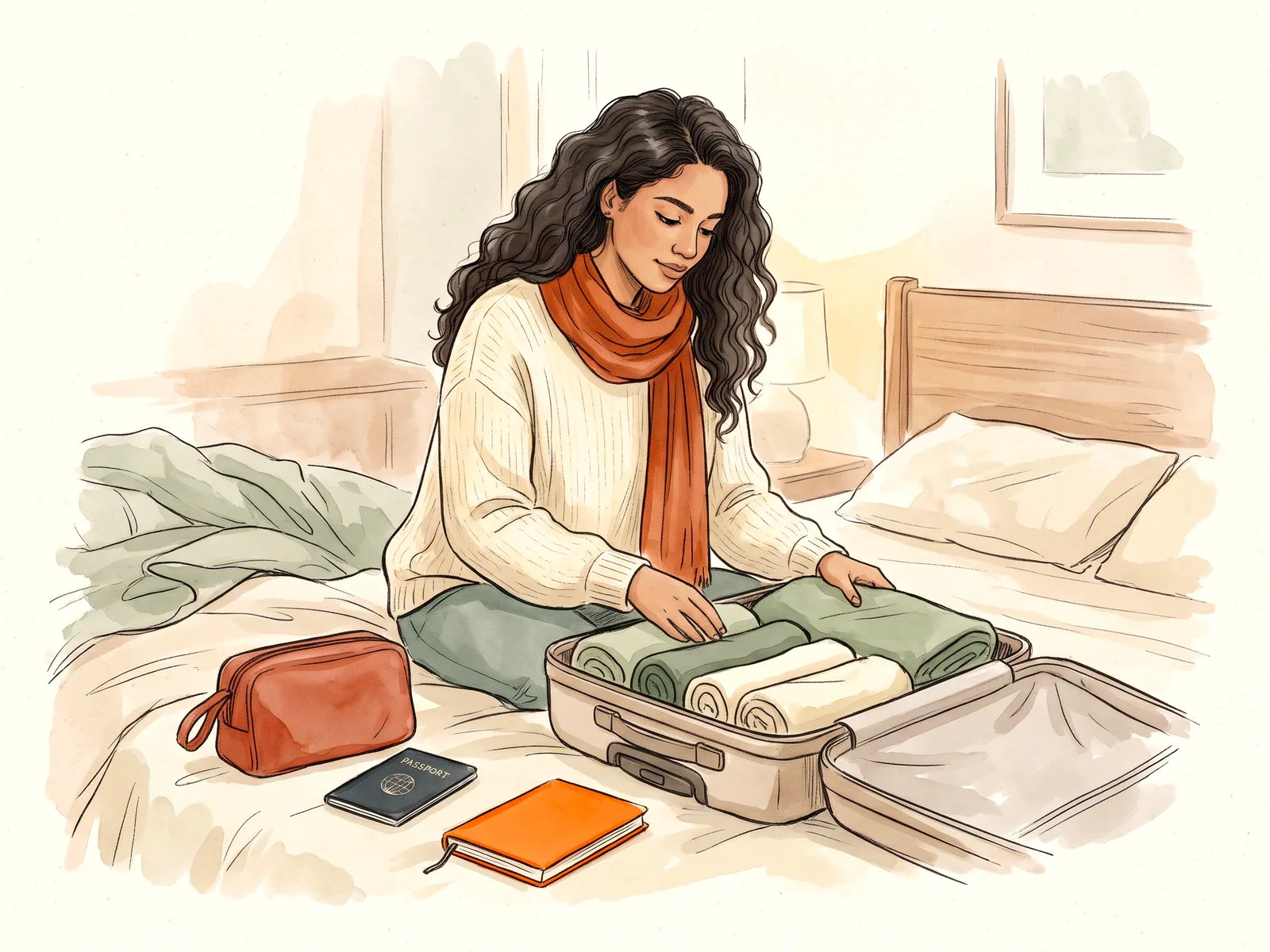
Steps
3 methods · 12 steps · 12 illustrationsPart 1 of 3
Planning Before You Pack
 Step 1 / 12
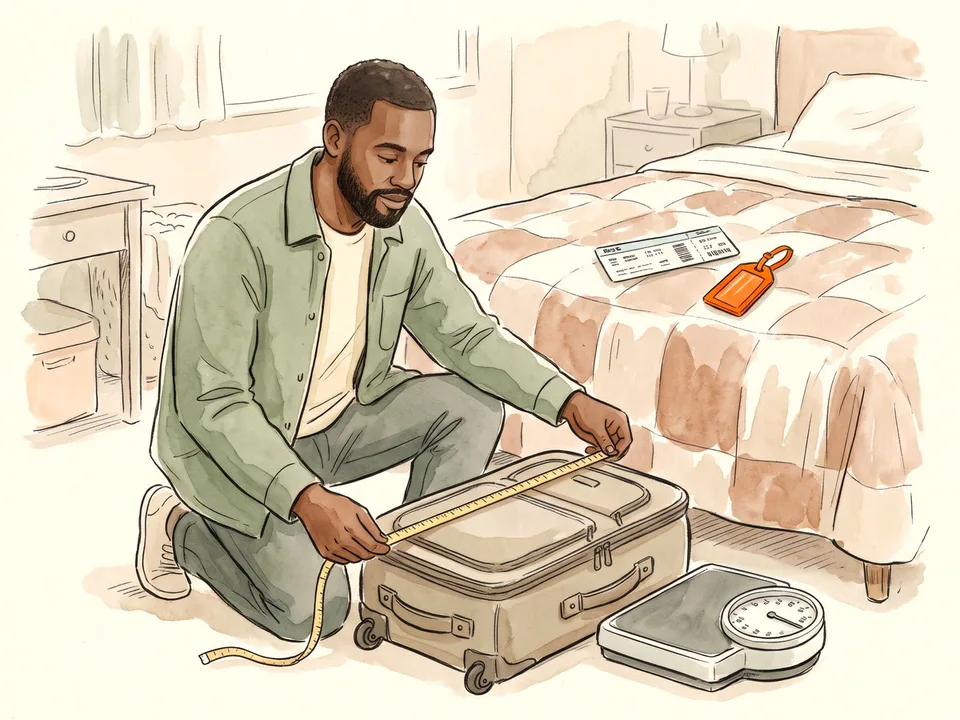
Step 1 of 12: Check the airline carry-on rules 1Check the airline carry-on rules
Look up the exact size and weight limits for your airline, not just the general rule. Budget carriers often allow a smaller personal item than a full-size carry-on, and some weigh the bag at the gate. Measure your bag with a tape measure, including wheels and handles.
Check the liquid limits for the countries you are visiting, and whether you need a clear bag for security. If you are transferring to a smaller airline, the stricter rule applies. Take a screenshot of the rules so you can show them at check-in if needed.
 Step 2 / 12
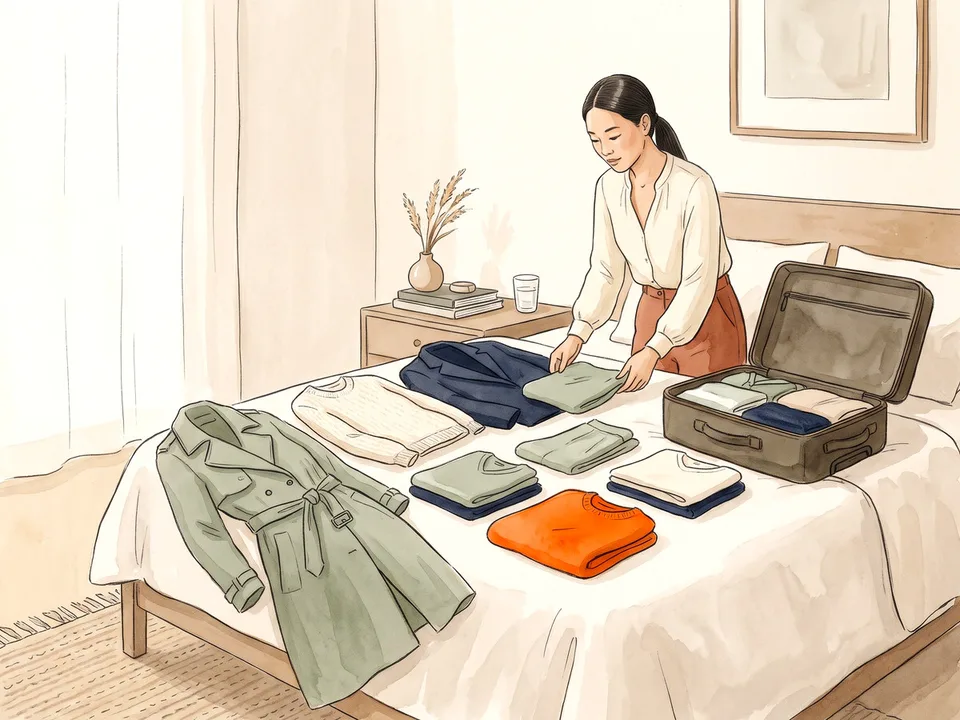
Step 2 of 12: Choose a color capsule 2Choose a color capsule
Pick two base colors and one accent, then make sure every top, bottom, and layer works with those colors. A navy, grey, and white capsule can produce a week of outfits with fewer pieces than a bag full of single-use outfits. Dark bottoms hide travel stains; light tops brighten the palette.
Choose fabrics that resist wrinkles and dry quickly: merino, technical blends, and tightly woven cotton. Avoid heavy denim and bulky knits unless you plan to wear them on the plane. Everything should layer, so a cold morning and a warm afternoon do not require two separate wardrobes.
Tip: Lay the capsule on the bed and photograph it. If you cannot make five outfits from the photo, you have too many single-purpose pieces.
 Step 3 / 12
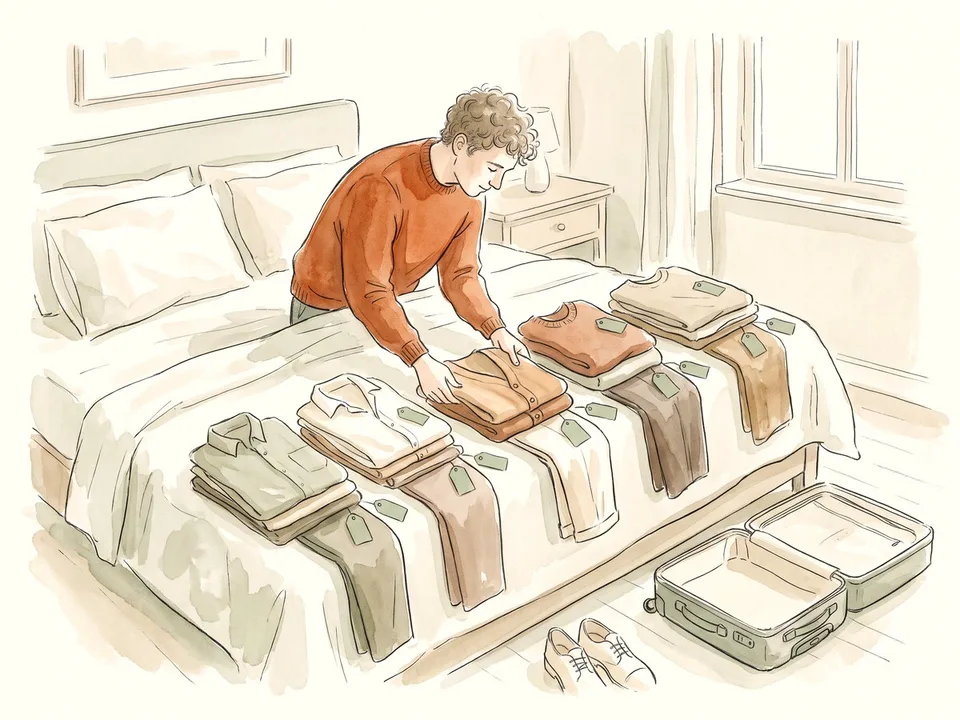
Step 3 of 12: Lay out outfits for each day 3Lay out outfits for each day
Plan one outfit per day, plus one travel outfit and one backup top. Include shoes in the plan, because they take up the most space. If a day needs a different outfit for dinner, build it from the same pieces rather than adding a separate evening wardrobe.
Put the bulkiest items on the plane: wear the jacket, jeans, and walking shoes rather than packing them. Roll socks and underwear into the shoes or gaps. Anything you have not worn in the last month is probably not worth carrying for a week.
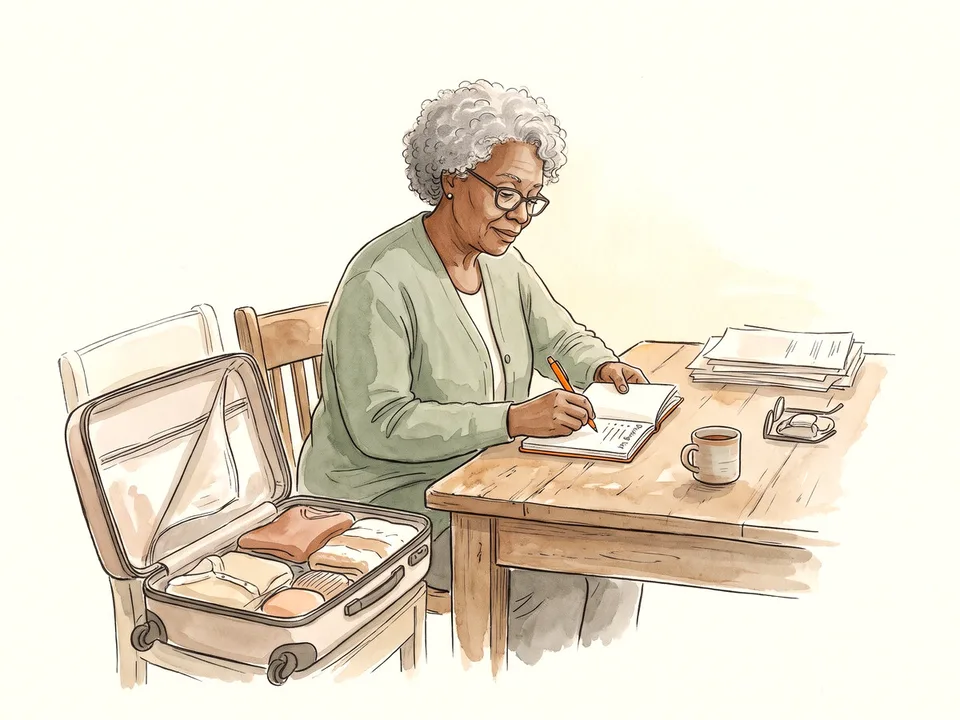 Step 4 / 12
Step 4 of 12: Make a packing list 4Make a packing list
Write a list by category: clothes, toiletries, tech, documents, health, and extras. Check off each item as it goes into the bag, then keep the list in your phone for the next trip. A list prevents the classic mistake of packing four shirts and no charger.
Include a small repair kit, a reusable water bottle, and a foldable tote for souvenirs. Put passport, medication, and a change of underwear in your personal item, not the overhead bag. If the airline forces you to check the carry-on, you will still have the essentials.
Tip: Photograph your packed bag and the list. If a item is missing on the return trip, the photo tells you what it was.
Part 2 of 3
Packing Clothes Efficiently
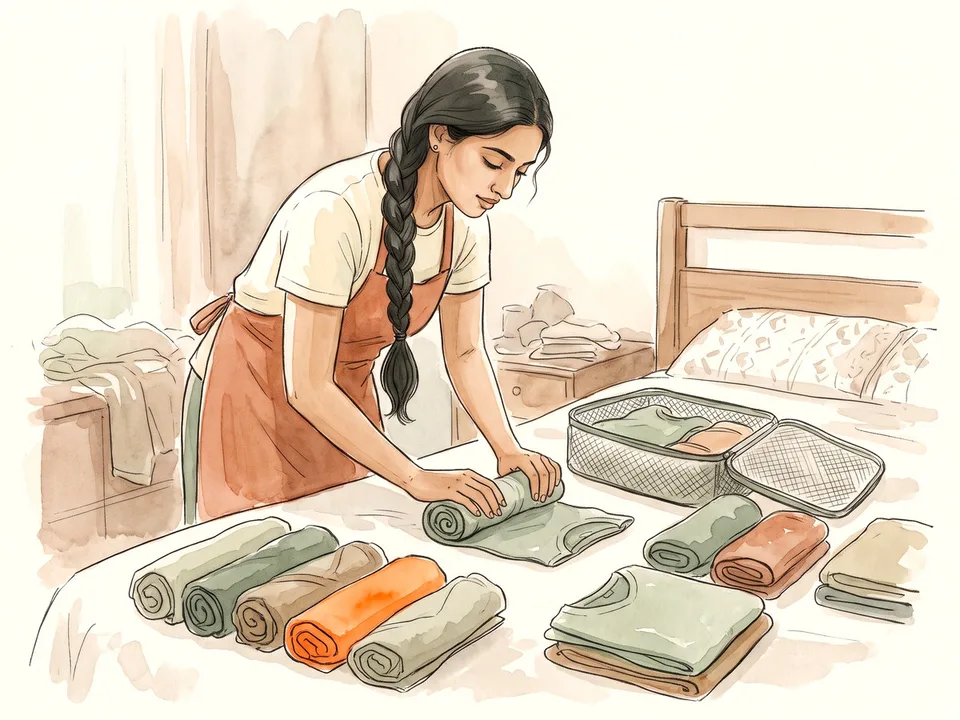 Step 5 / 12
Step 5 of 12: Roll or fold with intention 5Roll or fold with intention
Rolling works best for casual clothes, knitwear, and anything that can tolerate a soft crease. Folding works better for structured shirts, blazers, and trousers. Whichever you choose, smooth the fabric first and keep the bundle compact; loose bundles take up more space than neat ones.
Use the bundle method for a wrinkle-prone shirt: lay it face down, fold the sleeves across the back, and wrap the shirt around a core of softer clothes. For heavy items, roll and secure with a rubber band or packing cube. Do not over-compress delicate fabrics.
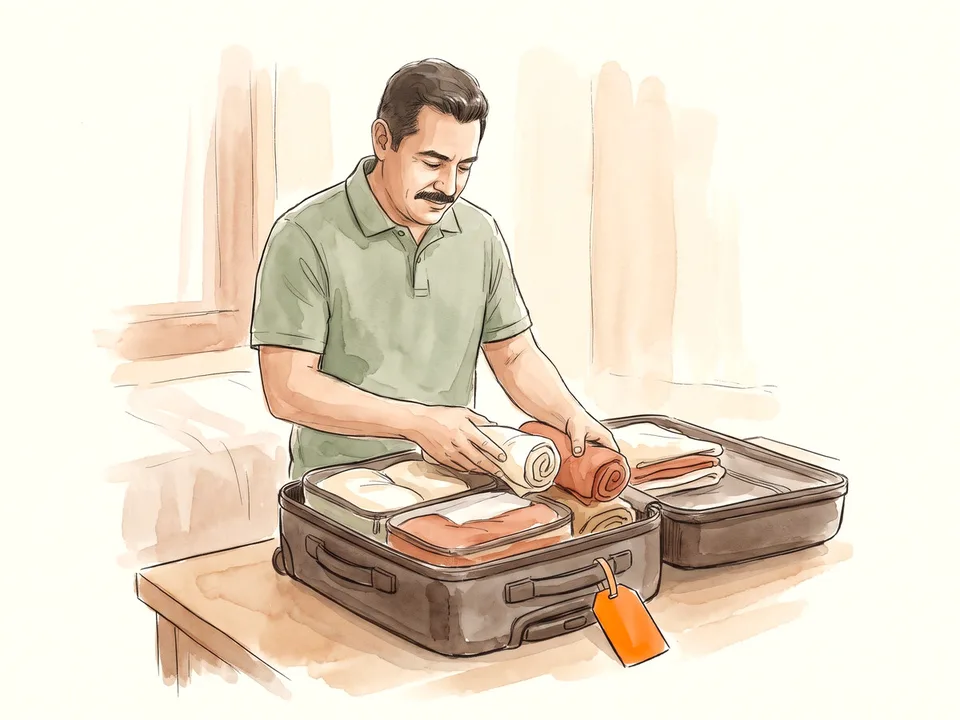 Step 6 / 12
Step 6 of 12: Use packing cubes 6Use packing cubes
Pack one cube for tops, one for bottoms, and one for underwear and socks. Cubes keep the bag organised and make security searches less chaotic. Choose cubes that fit the bag exactly; a cube that is too full is harder to compress than loose clothes.
Put the cube you will need first on top, and the one you will not touch until day four at the bottom. Compression cubes save space but can crease clothes, so use them for casual items rather than a pressed shirt. Weigh the bag after packing; cubes can hide how heavy it has become.
Tip: A laundry bag takes almost no space and keeps dirty clothes away from clean ones. Roll it into the bottom of the bag.
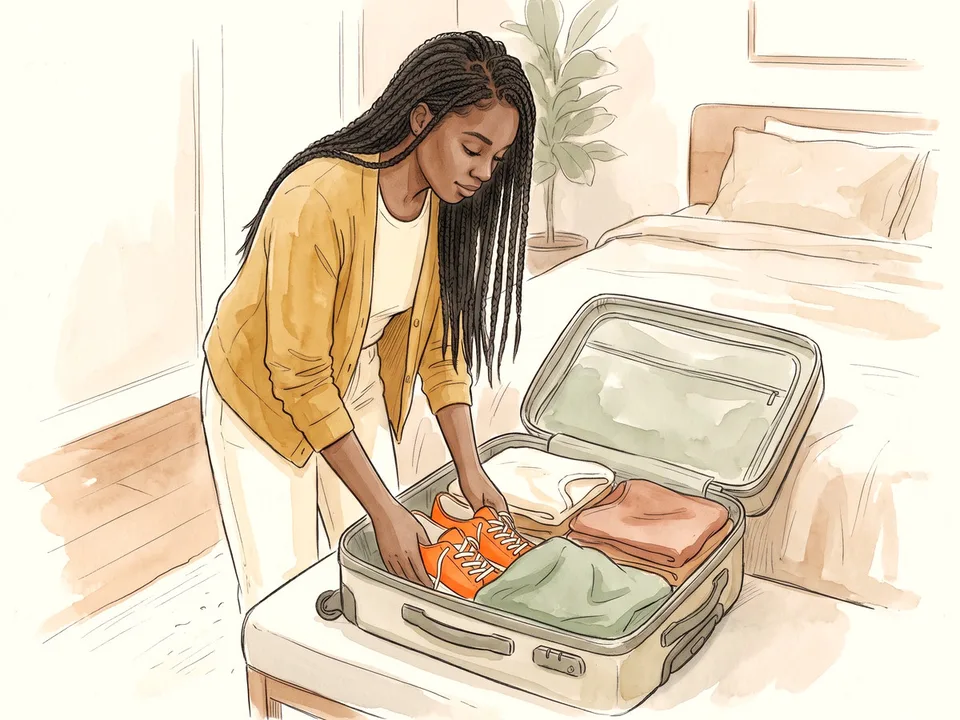 Step 7 / 12
Step 7 of 12: Pack shoes at the bottom 7Pack shoes at the bottom
Put shoes heel-to-toe at the bottom of the bag, where they act as a base. Stuff socks, chargers, or small items inside the shoes to use the empty space. Clean the soles first, and bag each shoe if it is muddy or wet.
Limit yourself to two pairs: one comfortable walking shoe and one smarter pair that works for dinner. Wear the bulkiest pair on the plane. If you need athletic shoes, choose a lightweight pair that packs flat.
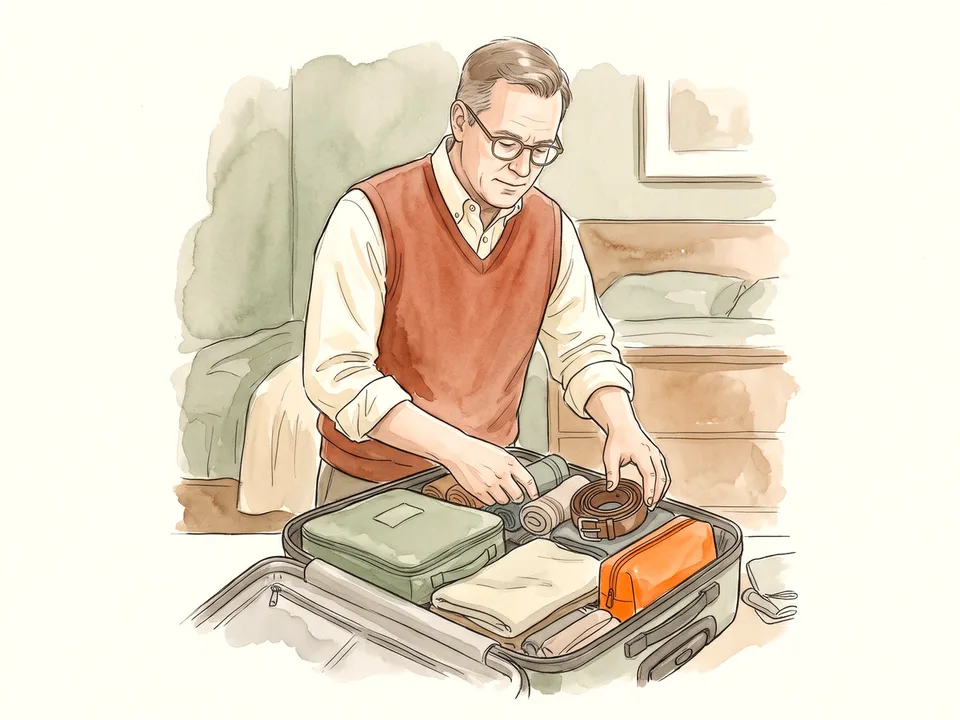 Step 8 / 12
Step 8 of 12: Fill gaps and use the space 8Fill gaps and use the space
After the main cubes are in, fill the gaps with soft items: socks, a scarf, a folded tote, or a light jacket. Do not leave large empty pockets; they collapse and waste space. Use the inside of hats and the space between the bag's liner and shell if the bag allows it.
Keep the bag slightly under its maximum so you can close it without forcing the zipper. A bag that is packed too tight is hard to repack on the return trip. Leave one small pocket empty for souvenirs or dirty laundry.
Part 3 of 3
Toiletries, Tech, and Essentials
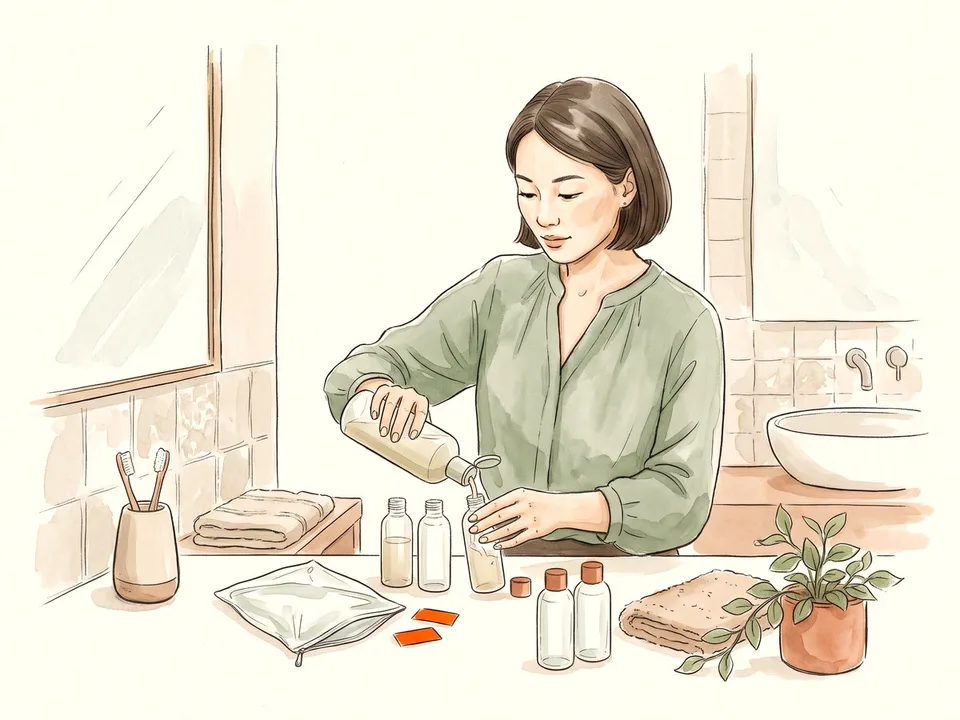 Step 9 / 12
Step 9 of 12: Decant toiletries 9Decant toiletries
Transfer shampoo, conditioner, and lotion into small leak-proof bottles. Label each one, and put a strip of tape around the cap or use a silicone sleeve. A full-size bottle is heavy, bulky, and likely to exceed the liquid limit.
Take only what you will use for the trip, plus a little extra. Solid shampoo bars and bar soap save liquid space and rarely leak. Put powders and solids in a separate pouch so they do not dust your clothes.
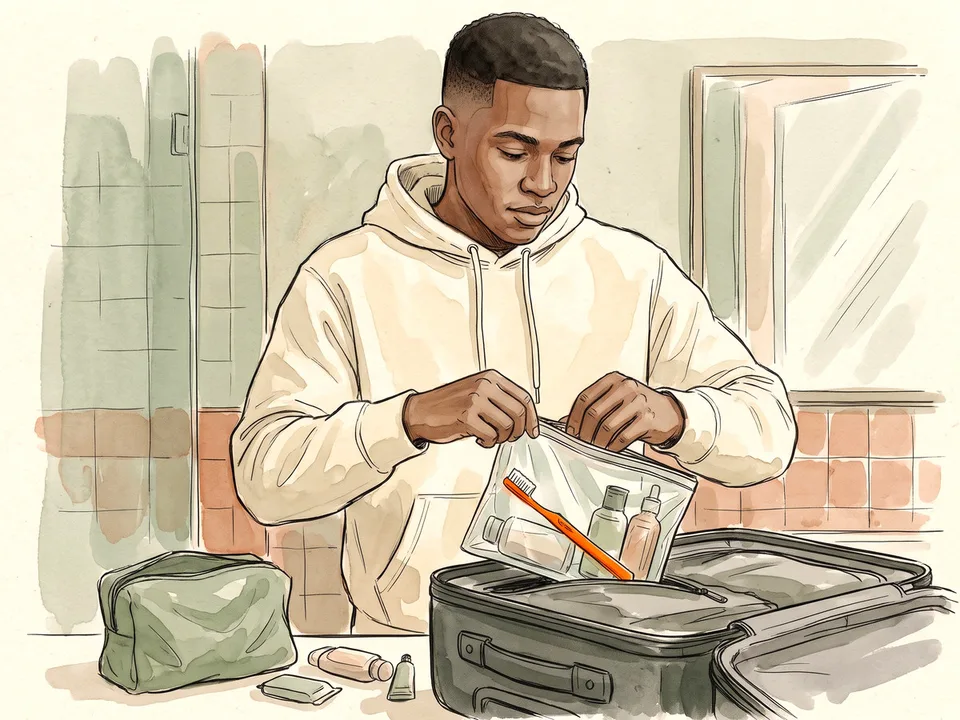 Step 10 / 12
Step 10 of 12: Use a clear liquids bag 10Use a clear liquids bag
Pack liquids, gels, and aerosols in a clear, resealable bag that meets the airport's size limit. Put the bag at the top of your personal item so you can take it out quickly at security. Do not fill it to bursting; security staff need to see the contents.
Check the rules for each airport, because some countries require the bag to be removed from the cabin bag while others allow it to stay inside. Keep a second bag for non-liquid toiletries so the liquids bag stays easy to inspect.
Tip: A quart-sized freezer bag is usually the right size for US security. Check the exact dimensions before you fly.
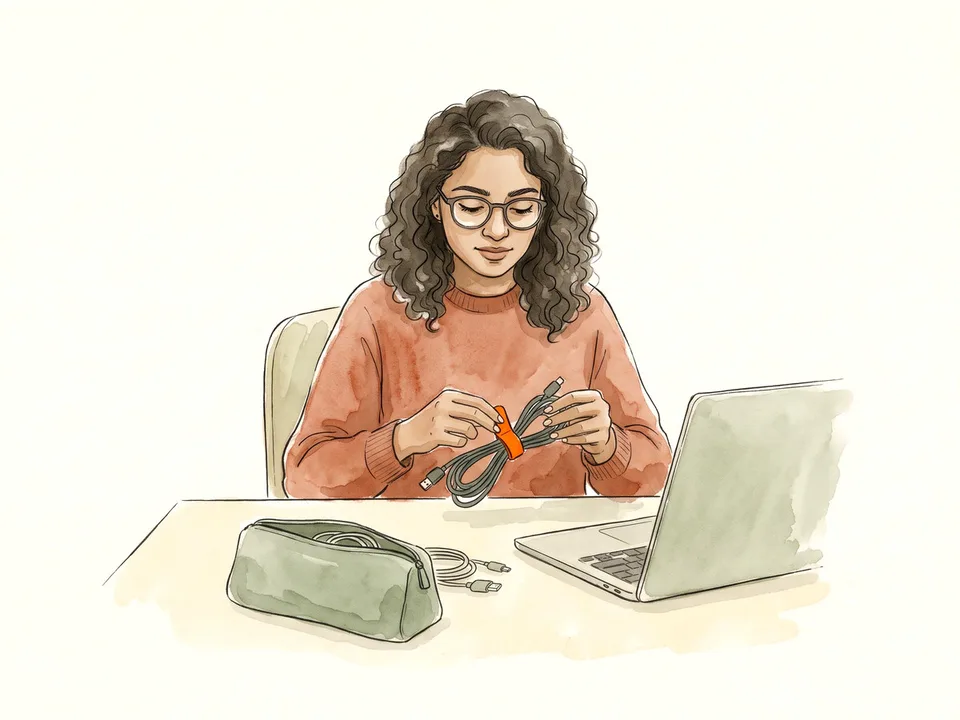 Step 11 / 12
Step 11 of 12: Organise cables and tech 11Organise cables and tech
Use a small pouch or an elastic wrap for cables, and label each charger with a piece of tape. Coil cables loosely rather than wrapping them around your hand; tight coils damage the wire. Keep the charger you need for the flight in your personal item.
Put power banks and spare lithium batteries in your carry-on, never in checked luggage. Check the airline's watt-hour limit before you fly. A universal adapter is worth the space if you are crossing regions, and a short extension cord can turn one outlet into three.
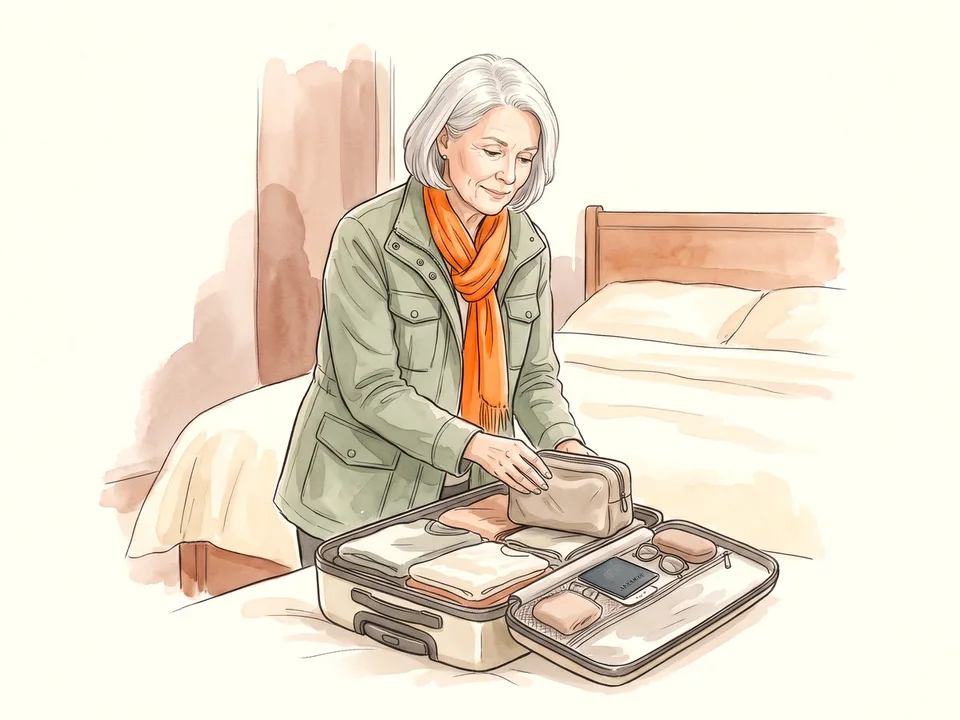 Step 12 / 12
Step 12 of 12: Keep essentials at the top 12Keep essentials at the top
Pack passport, boarding pass, medication, glasses, and a pen in the top pocket or personal item. You should be able to reach them without opening the main compartment. A small pouch for documents keeps them from sliding to the bottom.
Add a refillable water bottle, a snack, and a light layer for the plane. Empty the bottle before security and fill it after. If you are checking the carry-on at the gate, move medication and valuables into your personal item first.
Tip: Take a photo of your passport and insurance details and store them offline. Do not rely on airport Wi-Fi when you need them.
Tips
- Wear your heaviest shoes and jacket on travel day; it saves space and keeps the bag lighter.
- Pack a small laundry bag and a travel detergent sheet. Washing one load can halve the clothes you need.
- Choose a bag with a wide opening and a flat bottom. You will repack it several times during the trip.
- Put a change of clothes and medication in your personal item in case the carry-on is gate-checked.
- Leave 10% of the bag empty for souvenirs and dirty laundry.
Warnings
- Lithium batteries and power banks must go in the cabin, not checked baggage. Check the airline's watt-hour limit.
- Do not carry aerosol cans or flammable liquids that exceed the security limits. They may be confiscated at the gate.
- If you take prescription medication, keep it in the original labelled container and carry a copy of the prescription.
Community Q&A
What size carry-on is usually allowed?+
Most major airlines allow a bag around 55 × 40 × 20 cm, but budget carriers often allow less. Check your airline's exact dimensions and weight before packing.
How many outfits do I need for a week?+
Aim for five everyday outfits built from a capsule, plus one travel outfit and one nicer outfit. Mix tops and bottoms rather than packing seven separate looks.
Can I bring full-size shampoo in a carry-on?+
No, liquids are limited to containers of 100 ml or less in a clear bag at most airports. Decant into small bottles or switch to solid shampoo.
How do I avoid wrinkles?+
Roll casual clothes, fold structured items, and use the bundle method for shirts. Pack tightly enough to reduce movement but not so tightly that the fabric is crushed.
What should I keep in my personal item?+
Passport, boarding pass, medication, valuables, a charger, and one change of clothes. If the carry-on is gate-checked, those items stay with you.
References
- Transportation Security Administration. “Liquids rule.” 2024.
- International Air Transport Association. “Baggage standards and guidance.” 2024.
- Federal Aviation Administration. “Lithium batteries.” 2024.
- CDC. “Travelers' health.” 2024.
Related on Howly
About This Article
Written by Site Admin. A subject-matter reviewer checked the steps before publication. Last updated Oct 28, 2026. 21,462 readers have viewed this guide.
88% of readers found this article helpful.
284 votes - 88%
Click a star to add your vote
Hannah W.
Oct 26, 2026
“The color capsule was the breakthrough. I packed five tops and two bottoms and still had a different outfit every day.”