How to Study for an Exam Without Cramming
Six weeks of short, spaced sessions beats one heroic night, and the difference is in what you do during them. Here is how to set up, practise retrieval, and walk into the exam having actually slept.

Co-authored by:
Nadia Ofori
Academic Skills Adviser

Steps
3 methods · 12 steps · 12 illustrationsPart 1 of 3
Setting Up Before You Study
 Step 1 / 12
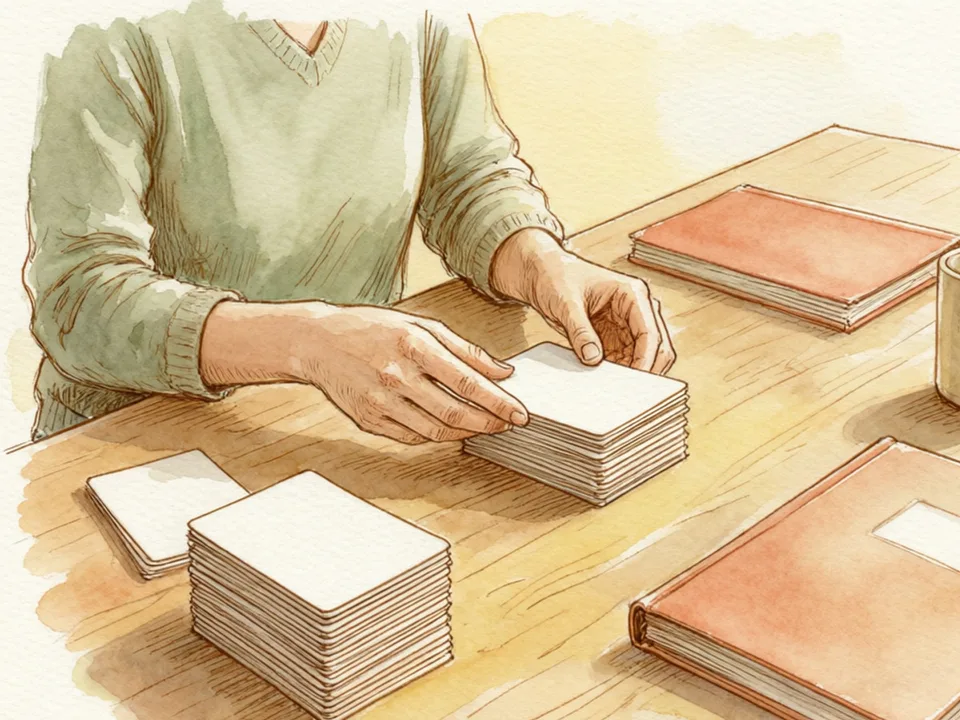
Step 1 of 12: Find out exactly what the exam covers 1Find out exactly what the exam covers
Cramming usually starts with studying the wrong material. Get the syllabus, the learning outcomes, and the format: is it essays, multiple choice, short answers, or a practical? Those rewards favour different practice, and students who prepare essays for a multiple-choice paper lose marks for reasons that have nothing to do with knowledge. Mark which topics carry the most marks, then compress the whole thing onto one page you can actually hold.
Tip: If the syllabus is vague, email the lecturer one specific question. They almost always answer, and the answer is worth more than a week of guessing.
 Step 2 / 12
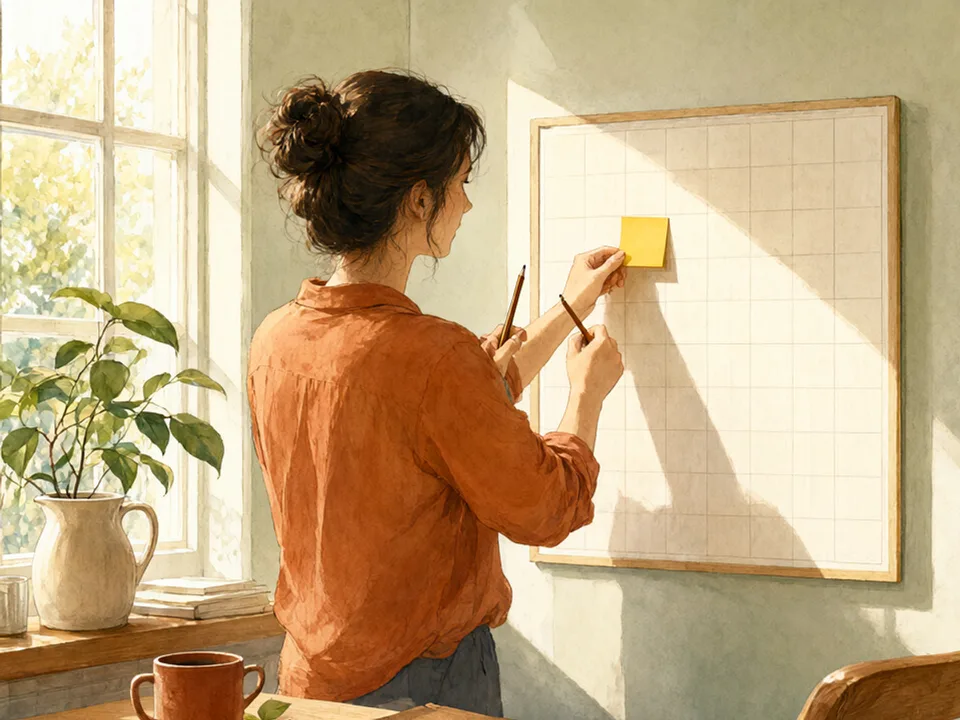
Step 2 of 12: Count the days you have, then halve them 2Count the days you have, then halve them
Students plan for thirty days and use twelve. Count the days you can genuinely study, excluding work, travel, and the evenings you know you will not open anything. Then halve that number, because life always takes a bite, and build the timetable around the smaller figure. A plan you can finish beats an ambitious plan you abandon in week one.
Tip: If you have ten usable days, plan for five. The plan has to survive contact with your actual life.
 Step 3 / 12
Step 3 of 12: Turn the syllabus into questions, not notes 3Turn the syllabus into questions, not notes
Rewrite each topic as something you must be able to answer from memory: explain why a process happens, compare two approaches, list four causes. A list of questions is reusable and testable; a page of copied notes is neither. Aim for eight to twelve questions per lecture. If you are generating thirty, you are transcribing rather than compressing.
Tip: Keep the questions in one document. That document, not your notes, becomes your revision plan.
 Step 4 / 12
Step 4 of 12: Choose one place and one start ritual 4Choose one place and one start ritual
Same table, same lamp, same first action: phone in another room, timer set, water poured. Rituals lower the cost of starting, and starting is where most sessions die. A desk near a window with a closed laptop and an open notebook is enough; the point is that the place tells your brain what comes next.
Tip: Phone out of the room, not face down on the desk. Proximity is the strongest predictor of interruptions.
Part 2 of 3
Studying in a Way That Sticks
 Step 5 / 12
Step 5 of 12: Test yourself before you feel ready 5Test yourself before you feel ready
Close the book and write everything you remember about a topic on a blank page, then open the book and check. This feels worse than rereading and works considerably better, because exams ask you to produce knowledge, not recognise it. The discomfort of a blank page is the practice, not a sign you have not studied enough.
Tip: If the blank page is too intimidating, look away for thirty seconds, then write. Struggle before retrieval is what builds the memory.
 Step 6 / 12
Step 6 of 12: Mix topics instead of finishing one at a time 6Mix topics instead of finishing one at a time
Blocked practice, where you do twenty questions on one topic, feels smooth and prepares you poorly. Exams do not tell you which topic a question belongs to. So shuffle: one question from this week, one from last week, one from the first lecture. It feels messier and it trains the recognition you will actually need.
Tip: Start every session with one question from the previous week. It costs four minutes and repairs the forgetting curve.
 Step 7 / 12
Step 7 of 12: Explain it out loud to someone who does not know it 7Explain it out loud to someone who does not know it
Teaching forces structure. Gaps appear as mumbling, unexplained jumps, or phrases like 'it just does'. Explain the topic to a friend, a flatmate, or an empty chair, without notes. Wherever you stall is the next thing to study, and you will find those places faster this way than by rereading.
Tip: If you cannot explain it in plain words, you have memorised the label rather than the idea.
 Step 8 / 12
Step 8 of 12: Do past papers under exam conditions 8Do past papers under exam conditions
Timed, no notes, no phone, one sitting. Then mark it against the rubric rather than against your feelings. Past papers teach the exam's language: how much detail earns a mark, how long an answer should be, which topics recur. Working them under real conditions also rehearses the endurance the exam demands.
Tip: Do the oldest paper first so the most recent paper is your final rehearsal, not your first attempt.
Part 3 of 3
Managing the Days Around the Exam
 Step 9 / 12
Step 9 of 12: Treat sleep as part of the study plan 9Treat sleep as part of the study plan
Memory consolidates during sleep, so cutting sleep to add study hours often removes more than it adds. In the last week, keep a fixed bedtime and stop new material by nine in the evening. Review is fine late; new topics are not, because they create the feeling of unfinished work that keeps you awake.
Tip: An all-nighter before an exam is usually a net loss of marks. It is a familiar strategy, not an effective one.
 Step 10 / 12
Step 10 of 12: Do one full mock, then stop adding material 10Do one full mock, then stop adding material
Forty-eight hours out, sit one complete mock under time, then review only two things: your question bank and your errors page. New material this late generates anxiety faster than marks. The goal for the final two days is consolidation and confidence, not coverage.
Tip: Build a one-page last-look sheet with the five things you keep forgetting. Everything else stays closed.
 Step 11 / 12
Step 11 of 12: Plan the logistics like a small trip 11Plan the logistics like a small trip
Know the room, the start time, the ID you need, the route, and what is allowed inside: calculator, water bottle, notes if the exam is open-book. Logistics anxiety consumes working memory that should be going into the paper. Laying everything by the door the night before removes a whole category of morning panic.
Tip: Check the start time twice. Arriving at the wrong hour is more common than people admit.
 Step 12 / 12
Step 12 of 12: Protect your state in the last hour 12Protect your state in the last hour
Do not join the group outside the hall comparing what everyone revised. Skim your one-page sheet, arrive early, and breathe. Once the paper is in front of you, spend two minutes reading it and choosing your order: easiest question first, to get your writing brain moving, and the highest-value question while you are freshest.
Tip: If you blank on a question, write the parts you do know. Partial answers earn partial marks and often restart the memory.
Tips
- Study in forty-minute blocks with five-minute breaks, and take a longer break after three blocks. Fatigue looks like distraction.
- Keep an errors page. The same mistakes repeat, and that page becomes your highest-value reading in the final week.
- Keep flashcard decks small. Forty cards reviewed properly beat four hundred cards made and never opened.
- Tell one person your study schedule. Social accountability survives bad moods better than any app.
Warnings
- Do not study in bed. It blurs the cue for sleep and makes both studying and sleeping worse.
- Do not count a study group as studying if the group mostly talks about the exam. Two hours of shared anxiety is not revision.
- If exam anxiety is causing panic symptoms or stopping you from functioning, contact your GP or campus wellbeing service. Extra time and separate rooms are legitimate, common accommodations.
- Do not take a friend's prescription stimulants. It is a medical risk and an academic offence, and it does not improve recall.
Community Q&A
How far ahead should I start?+
Six weeks is comfortable, two weeks is workable at forty-five minutes a day, and five days of spaced practice still beats one night. Whatever time you have, spend the first session on past papers rather than on reading, because the papers tell you what to study.
Is highlighting useless?+
It is not useless, but it is low-value on its own because it builds recognition rather than recall. Highlight the parts you will turn into questions, then test yourself on those questions with the book closed.
What if I have already wasted most of the time?+
Triage by marks. Do one past paper, mark it, and list the three topics where you lost the most marks. Spend your remaining sessions only on those, and accept that the rest will be approximate.
Do study apps help?+
They help with scheduling, blocking distractions, and timing sessions. The learning still happens when you close the app and try to remember something, so treat the app as scaffolding rather than as the work.
How do I stop cramming the night before?+
Decide your cutoff in advance, for example eight in the evening, and plan something specific for after it: a walk, a film, an early night. A cutoff with a plan is easier to keep than a rule with nothing on the other side.
References
- Dunlosky, J. et al. “Improving Students' Learning With Effective Learning Techniques.” Psychological Science in the Public Interest, 2013.
- Roediger, H. L. & Karpicke, J. D. “Test-Enhanced Learning: Taking Memory Tests Improves Long-Term Retention.” Psychological Science, 2006.
- Cepeda, N. J. et al. “Spacing Effects in Learning: A Temporal Ridgeline of Optimal Retention.” Psychological Science, 2008.
- Walker, M. P. & Stickgold, R. “Sleep, Memory, and Plasticity.” Annual Review of Psychology, 2006.
Related on Howly
About This Article
Written by Site Admin. A subject-matter reviewer checked the steps before publication. Last updated Oct 29, 2026. 24,310 readers have viewed this guide.
92% of readers found this article helpful.
412 votes - 92%
Click a star to add your vote
Rosa M.
Oct 25, 2026
“I stopped rereading and started writing blank-page summaries. The first one was humiliating. By the third week I could reconstruct the whole topic in ten minutes, which I had never managed in three years of highlighting.”