How to Start a Club at School
A club survives on three things: a room, a time, and someone who writes things down. Here is how to get all three before you print a single poster.
Co-authored by:
Hannah Vester
Secondary School Activities Coordinator

Steps
3 methods · 12 steps · 12 illustrationsPart 1 of 3
Testing the Idea
 Step 1 / 12
Step 1 of 12: Pick a club you can actually run for a year 1Pick a club you can actually run for a year
The most common failure is a club built around one person's enthusiasm for six weeks. Choose something you would still want to attend in February, with a format that does not depend on a single expert — a debate club works without you, a club about your own niche hobby often does not. Write one sentence describing what members will do in a session.
Tip: If the sentence needs the word 'maybe' or 'sometimes', the club is not defined yet.
 Step 2 / 12
Step 2 of 12: Read the school's club rules before you recruit 2Read the school's club rules before you recruit
Find the student activities handbook or ask the office for the requirements: minimum members, a staff sponsor, a budget form, poster approval, and any rules about meeting times. Ten minutes of reading prevents the specific humiliation of a club that cannot be announced because the paperwork is missing.
Tip: Ask the office for the form first and read it in full. Requirements are usually buried in the third paragraph.
 Step 3 / 12
Step 3 of 12: Find one teacher who will sponsor you 3Find one teacher who will sponsor you
Ask a teacher who already knows your name and has some connection to the topic — not necessarily the most senior one. Bring the one-sentence description, the proposed meeting time, and exactly what you need from them: a signature, a room booking, and forty minutes a week of presence. Be clear that the work of running the club is yours.
Tip: Ask in person, after class, with the form already filled in. A signed form beats a good conversation.
 Step 4 / 12
Step 4 of 12: Prove demand with a sign-up sheet 4Prove demand with a sign-up sheet
Collect twenty names and contact details before you book anything. Not a show of hands in a corridor — an actual list, with an email column, from people who know what the club is. Twenty named people is a club; five enthusiastic friends and a good poster is a rumour.
Tip: Ask for email addresses, not just names. You will need them the week attendance drops.
Part 2 of 3
Launching It
 Step 5 / 12
Step 5 of 12: Write a one-page plan for the first month 5Write a one-page plan for the first month
Four sessions, each with a topic, a format, and the ten minutes at the end where you decide the next one. One page goes to your sponsor and the office, and it also stops the third meeting from becoming a conversation about what the club should be. You can change the plan; you just cannot arrive without one.
Tip: Plan the first four sessions only. A full-year calendar becomes obsolete in week two and discourages everyone.
 Step 6 / 12
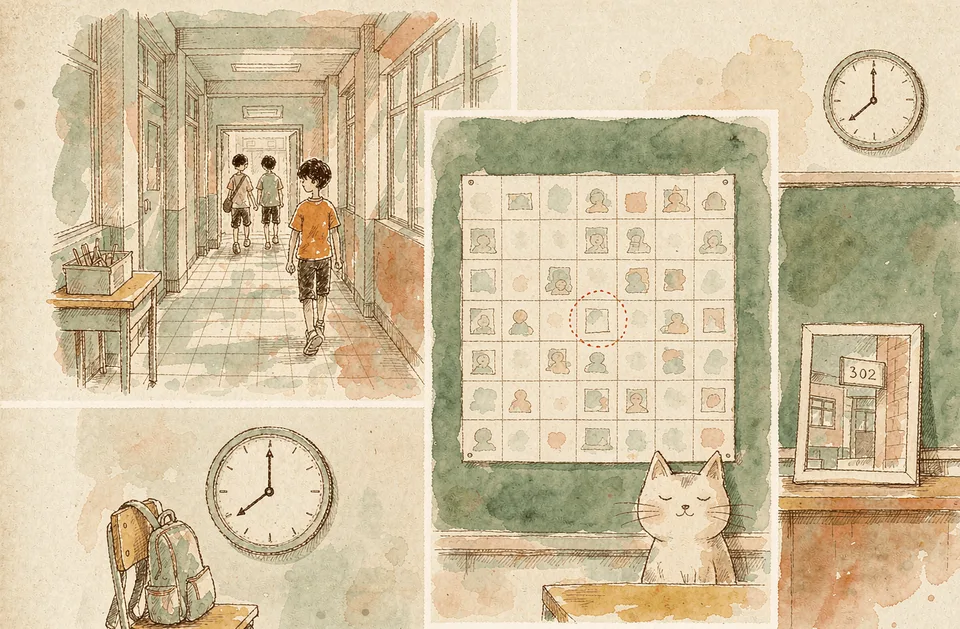
Step 6 of 12: Book a room and a repeating slot 6Book a room and a repeating slot
Choose a day and time that survives sport, rehearsal, and the bus schedule, and book it for the whole term rather than week by week. A fixed slot is the single strongest predictor of a club still existing in March. Announce the time in the same sentence as the club name, every time.
Tip: Avoid Monday mornings and the last period on Friday. Both sound fine in September and are empty in November.
 Step 7 / 12
Step 7 of 12: Run a first meeting worth returning to 7Run a first meeting worth returning to
Start with something members do in the first five minutes — a question, a small task, a vote — rather than a speech about your plans. End on time with a specific ask for next week. People decide whether to come back in the first eight minutes and again in the last three.
Tip: Bring a sign-in sheet to every meeting. Attendance numbers are how you defend the room booking later.
 Step 8 / 12
Step 8 of 12: Give every member one small job 8Give every member one small job
Hand out roles that take minutes: notes, room setup, the group chat, the poster, the equipment. People who own something come back, and people who only attend drift. Keep the jobs small enough that nobody has to be chased, and rotate them each term so the club is not eight people watching two.
Tip: Write the roles on the sign-in sheet so it is public. Public jobs get done.
Part 3 of 3
Keeping It Alive
 Step 9 / 12
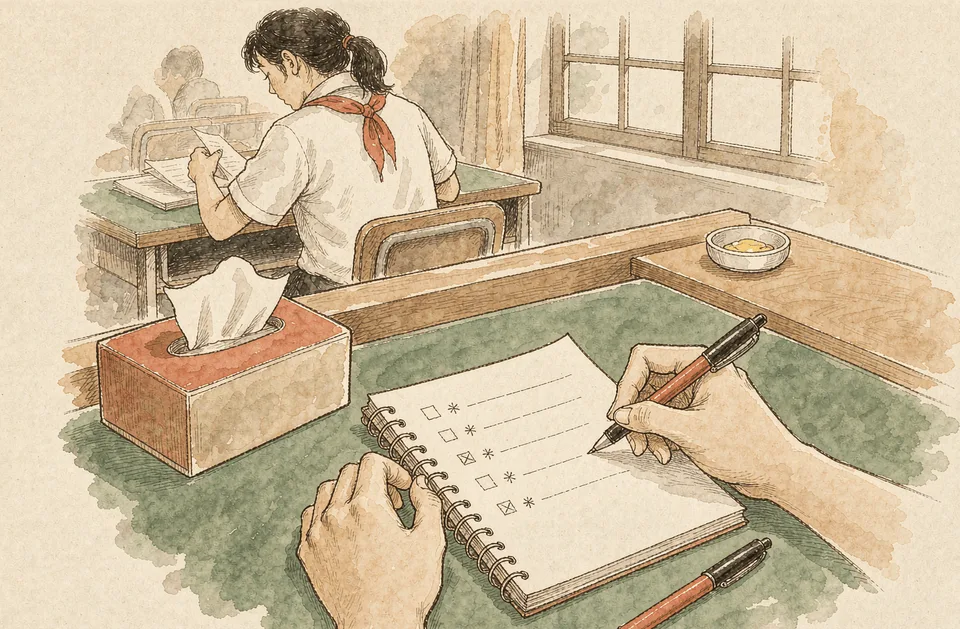
Step 9 of 12: Write five lines after every meeting 9Write five lines after every meeting
What happened, who came, what was decided, who agreed to do what, and the plan for next week. Five lines takes two minutes and becomes the club's memory — and the evidence your sponsor needs at budget time. Clubs die quietly in the gap between two people remembering different things.
Tip: Keep it in one shared document, not in three chat threads. Chat is where decisions go to be forgotten.
 Step 10 / 12
Step 10 of 12: Make the club visible outside its own room 10Make the club visible outside its own room
Take photos, run a stall at the activities fair, put one session's output in a corridor display, or write a paragraph for the school newsletter. Visibility is what turns a club into something new students ask to join, and it is what makes the office take your room requests seriously.
Tip: Ask permission before posting photos of members. It is one message and it prevents a real problem.
 Step 11 / 12
Step 11 of 12: Plan for the week-four drop-off 11Plan for the week-four drop-off
Attendance almost always falls in the fourth or fifth week, once novelty ends and homework arrives. Prepare for it: change the format, bring in a guest, run a session members chose themselves. Treat the dip as a scheduling fact rather than a verdict on the club.
Tip: If numbers fall below five for three weeks running, ask the remaining members whether to change the format or stop. Both are legitimate answers.
 Step 12 / 12
Step 12 of 12: Hand it over before you leave 12Hand it over before you leave
Train one or two younger members on the boring parts — the room booking, the form, the account passwords — a full term before you graduate. Write a one-page handover: who sponsors it, when it meets, where the documents live, and what not to repeat. A club that ends with its founder is a hobby, not a club.
Tip: Give the handover document to your sponsor as well. Adults stay; students leave.
Tips
- Recruit in pairs. People join clubs they were invited to by a friend far more often than clubs they saw on a poster.
- Keep the first four sessions cheap and equipment-free. A club that needs a budget before its first meeting usually never has a first meeting.
- Put the next meeting's date and room in the group chat before you leave the room. 'See you next week' has no fixed meaning.
- Ask your sponsor what they need to justify the club at the end of term, and collect it as you go rather than reconstructing it in December.
Warnings
- Do not promise activities you cannot supervise or afford — off-site trips and equipment purchases need approval weeks in advance and can end a club that over-promised.
- Do not run the club as a group chat only. A club with no fixed room and time is a conversation, and conversations fade.
- Do not let one person hold every password, form, and phone number. The term someone is ill is the term the club disappears.
Community Q&A
How many members do I need to start a club?+
Most schools require somewhere between five and ten to recognise a club officially. Ask the office for the exact number, then recruit to twenty so the club survives a normal attendance drop.
What if no teacher will sponsor us?+
Ask why, specifically. Often it is time rather than interest, and a clear offer — forty minutes a week, all admin done by students — changes the answer. If it is still no, ask the activities coordinator to suggest someone, or run as a project inside an existing club for a term.
Can a club raise or spend money?+
Usually only through the school's procedures, with a sponsor's signature. Find out the rules before you collect a single coin; unapproved collections are the fastest way to lose a club you just started.
What do we do if attendance collapses?+
Ask the remaining members what they would change, and change one thing — the format, the time, or the topic. If it stays below five for three weeks after that, close it honestly and put the energy into something that works.
Do clubs look good on applications?+
Only when you can describe what you actually did — ran twelve sessions, recruited thirty members, handed it to a successor. Founding a club that met twice is a weaker sentence than joining one and running its events well.
References
- National Association of Secondary School Principals. “Student Activities and Club Handbook Guidance.” 2021.
- Search Institute. “Developmental Relationships and Youth Participation in Organised Activities.” 2020.
- U.S. Department of Education. “Promoting Student Engagement Through Extracurricular Activities.” 2022.
- Australian Institute for Teaching and School Leadership. “Student Voice and School Clubs.” 2019.
Related on Howly
About This Article
Written by Site Admin. A subject-matter reviewer checked the steps before publication. Last updated Oct 29, 2026. 29,610 readers have viewed this guide.
91% of readers found this article helpful.
289 votes - 91%
Click a star to add your vote
Noor H.
Oct 23, 2026
“The sign-up sheet was the turning point. Twenty-two emails meant the office gave us a room without arguing, and half of those people were still coming in March.”