How to Declutter Your Closet in One Afternoon
Four boxes, one written rule, and a hard stop before dinner. The point is not a showroom closet — it is to decide each item once, so you stop deciding again at seven in the morning.
Co-authored by:
Howly editors
Steps
3 methods · 6 steps · 6 illustrationsPart 1 of 3
Set the Room and the Rule
 Step 1 / 6
Step 1 of 6: Clear the floor and build four zones 1Clear the floor and build four zones
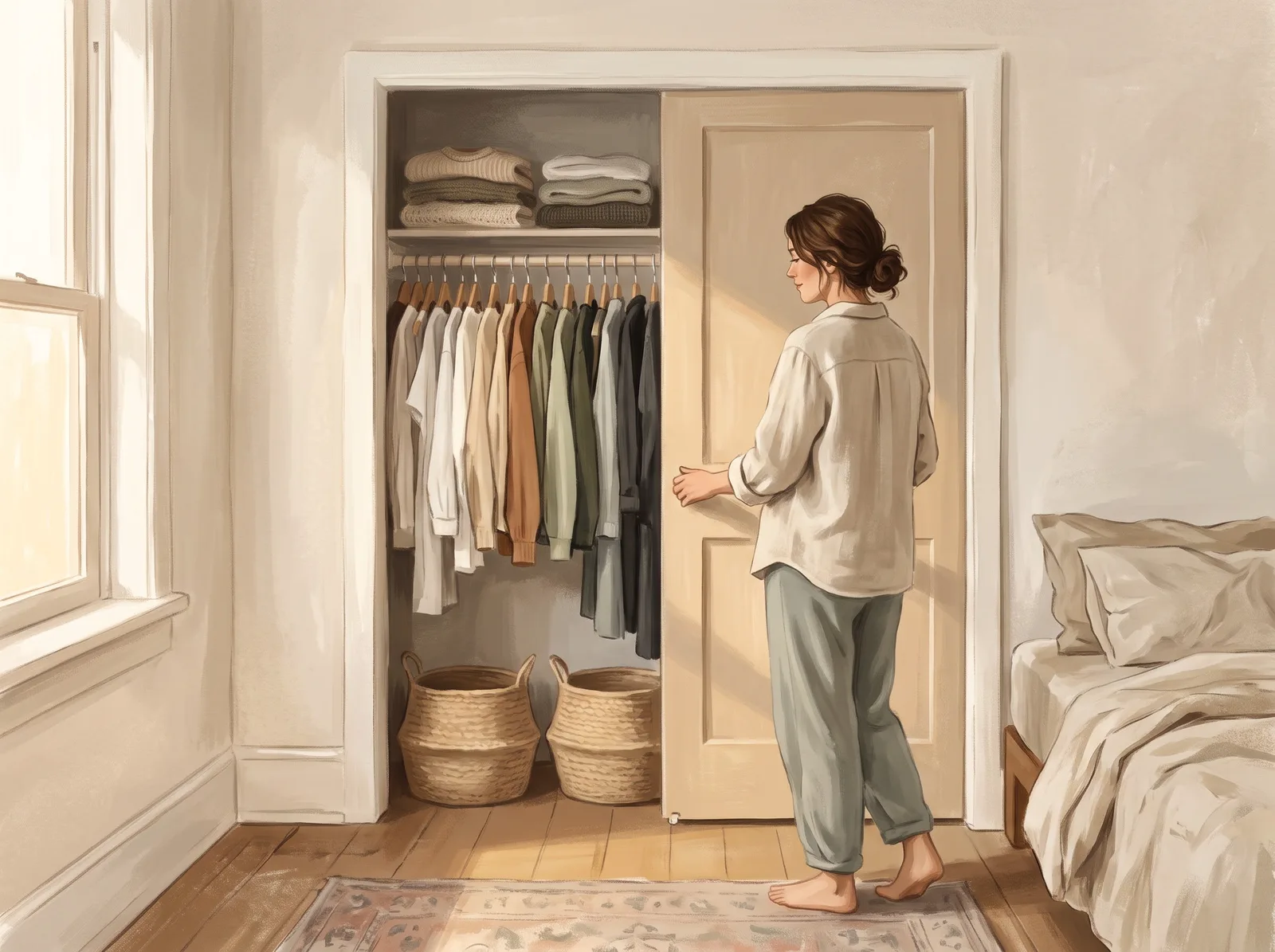
Empty a strip of floor about two metres long — usually the space between the bed and the closet — and put down four containers in a row: keep, repair or clean, donate, and bin. Cardboard boxes and laundry baskets you already own are better than anything you would buy, because you have not yet earned the right to buy containers for clothes you have not decided about.
Keep the zones narrow. A wide donate pile turns into a second closet within an hour; a box you can actually carry forces a decision. Put the bin bag last and put it by the door, so it can leave the room before you lose your nerve.
Tip: Label the boxes on masking tape, not sticky notes. Sticky notes fall off, and you spend the afternoon re-deciding which pile is which.
 Step 2 / 6
Step 2 of 6: Write the keep rule before you touch a hanger 2Write the keep rule before you touch a hanger
Closets stay cluttered because the rule changes item by item, not because people cannot sort. "I might wear this" survives every purge. So write one sentence on a card and keep it in view: I keep this if I wore it in the last twelve months, it fits me today, and I would wear it out of the house this week.
Add exactly two exceptions, no more: one formal outfit, and one set of clothes for a job you are actively interviewing for. Everything else that fails the rule is not a maybe — it is a no you are still negotiating with.
Set a timer for 45 minutes per section. The timer is not there to rush you; it is there to stop a decision from turning into a research project.
Tip: If you share the closet, agree the rule out loud first. A rule one person wrote and the other discovers mid-purge reads as a betrayal, not a system.
Part 2 of 3
Empty It and Decide
 Step 3 / 6
Step 3 of 6: Empty one category at a time, never one shelf at a time 3Empty one category at a time, never one shelf at a time
Sorting shelf by shelf keeps duplicates invisible: three black cardigans on three shelves look like one cardigan each time you glance in. Pull out one category — all the knitwear, then all the trousers — and put it somewhere you can see the whole category at once. The KonMari method makes the same argument: gather everything in a category before you judge any of it.
Work in the order that is easiest to be honest about: obvious rubbish first, then duplicate everyday items, then occasion wear, then sentimental pieces last. Sentimental clothing is a separate job and it will eat the whole afternoon if you let it.
Tip: Keep a laundry basket beside you for anything clean enough to donate but not clean enough to store. Wash it tonight, not next month.
 Step 4 / 6
Step 4 of 6: Decide in ten seconds and do not reopen a closed box 4Decide in ten seconds and do not reopen a closed box
Pick the item up, hold it, and answer one question: would I put this on today, for where I am actually going? If the answer needs a story about a future version of your life — the wedding, the smaller size, the office job that might come back — it goes in the donate box, not the keep pile.
Fit is not negotiable and neither is condition. Anything with a broken zip, a pulled seam or a stain you have already failed to remove goes into the repair box with a date on it. If the date passes and it is still not repaired, it leaves.
The ten-second limit is the whole technique. Long deliberation does not produce better decisions; it produces the same decisions with more guilt attached.
Tip: Do not try things on in front of the mirror unless the fit is genuinely uncertain. A mirror turns a sorting job into a fashion show, and the afternoon disappears.
Part 3 of 3
Put It Back and Close the Loop
 Step 5 / 6
Step 5 of 6: Hang by outfit, not by category 5Hang by outfit, not by category
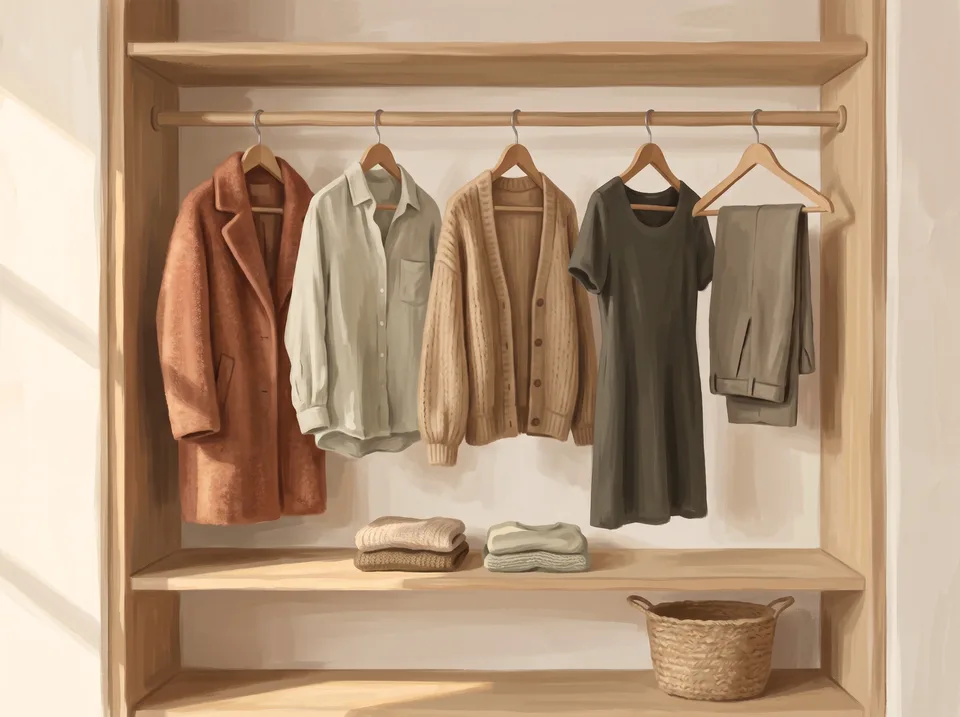
Most closets are arranged like a shop: all shirts, then all trousers. That arrangement is easy to build and useless at seven in the morning, because it makes you assemble an outfit from three separate parts of the rail. Hang in complete sets instead — the jacket, top and trousers that go together on one hanger — so getting dressed is a single decision.
Then leave air. Aim to fill roughly 80 per cent of the rail and the shelves. A closet packed to the edges cannot be used without disturbing the whole row, which is how the pile on the chair starts again. Use one hanger type for everything you keep: mixed hangers waste a few centimetres each and make a rail look full when it is not.
Tip: Fold knitwear flat on a shelf, never on a hanger. A jumper on a hanger grows shoulder bumps and slides off within a week.
 Step 6 / 6
Step 6 of 6: Photograph it, then get the boxes out of the house 6Photograph it, then get the boxes out of the house
Take one photo of the finished closet and one of the donate pile before it leaves. The closet photo is your reference for the weekly reset; the donate photo is a record of what you actually let go, which makes the next purge much easier to start.
Put the donate bags in the car today — not in the hallway. Check the local rules for what your chosen charity accepts, because unattended bins are not always run by the charity they appear to serve, and worn-out textiles usually belong in textile recycling rather than resale. Then do a ten-minute reset on Sunday: anything on the chair goes back on its hanger, and anything that has sat there for three weeks goes into the donate box.
Tip: If the repair box is still unopened after a month, donate the contents. Unfinished repairs are a storage problem disguised as good intentions.
Tips
- Hang one empty laundry basket inside the closet door. The chair pile is not laziness; it is a missing container in the right place.
- Photograph the donate pile before it leaves. It is the fastest cure for the "I might need it" feeling that undoes a purge three weeks later.
- Store off-season clothes on the top shelf of the same closet, not in another room. Anything stored out of sight for a season gets replaced rather than retrieved.
- Declutter before you buy bins, dividers or matching hangers. Organisers sized to the wrong inventory are just clutter with a receipt.
Warnings
- Do not start with sentimental clothing, wedding outfits or a child's first shoes. They take longer than everything else combined and will end the afternoon before the everyday clothes are done.
- Check what your local donation centre actually accepts before you drive over. Many take clean, wearable clothing only, and some unattended bins are commercial operations rather than charities.
- Read the label before using cedar blocks, mothballs or sealed storage bags. Some chemical moth treatments are not safe around children and pets, and sealed plastic can trap damp.
- Never vacuum-pack wool or down for storage. Compressing the loft is what keeps those fibres warm, and it does not fully come back.
Community Q&A
How long does a closet declutter actually take?+
For one average closet, plan three to four hours: 45 minutes to set up and write the rule, about two hours of sorting, and 45 minutes to put everything back and clear the boxes. Two people sharing one closet should plan a full afternoon and stop at dinner even if a pile is left. Stopping with a labelled box is recoverable; pushing through while tired is how the whole pile ends up back on the floor.
What if I genuinely cannot decide about an item?+
Put it in a maybe box, write the date six weeks out on the lid, and seal it. If you have not opened the box by that date, donate it unopened — your behaviour has already made the decision. A maybe box exists to keep you moving, not to become a second closet.
Should I pack away winter clothes to make room?+
Only if the closet genuinely cannot hold both seasons. Moving off-season clothes to the top shelf keeps them visible and retrievable; moving them to a garage or storage unit usually means buying replacements in November. Fold them flat rather than hanging heavy knits, and keep wool and down out of vacuum bags.
What do I do with clothes too worn to donate?+
Textile recycling. Some charity shops sell unsellable fabric on to recyclers instead of sending it to landfill, but policies differ by region, so ask before you drop it off. Shoes with worn soles and single socks often go the same route.
How do I stop the closet filling up again?+
Leave about a fifth of the rail empty, keep one basket for the daily reset, and treat the photo you took as the standard. Clutter returns through the chair rather than the closet: if the chair stays clear for a month, the closet usually holds.
References
- KonMari. How to Fold Clothes with the KonMari Method.
- Goodwill Industries International. Donate Clothes, Household Goods & Electronics.
- Goodwill of the Olympics & Rainier Region. Donation Guidelines.
- Good Housekeeping. Easy Ways to Declutter, Donate, and Sell Old Clothes.
Related on Howly
About This Article
Last updated Nov 1, 2026. 1 readers have viewed this guide.
100% of readers found this article helpful.
1 vote - 100%
Click a star to add your vote
Priya
Oct 9, 2026
“I owned four black cardigans and had been wearing the same one for two years. Seeing all four on the bed at once was the entire declutter. I did not need a system, I needed to see the pile.”